August 29, 2026 • Renata Solís • 8 min reading time • Specs verified June 5, 2026
Adjustable Ankle Weights for Progressive Overload: Increment Precision Matters
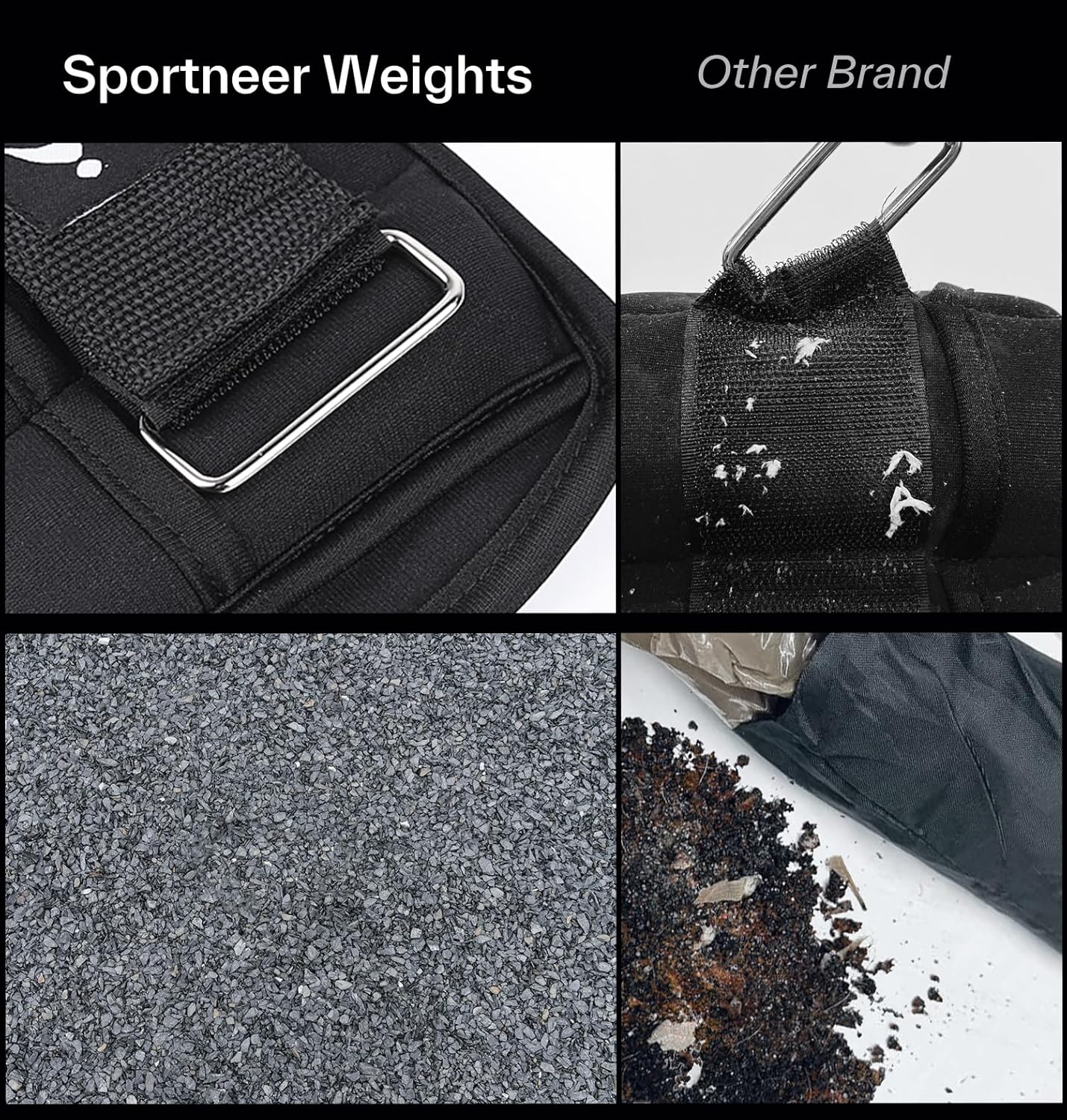
Ankle weights are exactly what they sound like — small weighted pouches or wraps that strap around your ankles to add resistance to bodyweight movements like leg lifts, donkey kicks, or walking. The simple idea behind them is called progressive overload: the principle that your body only gets stronger when the challenge you give it increases over time, even if that increase is tiny. Add a little more resistance each week, and your muscles keep adapting. Stay at the same weight forever, and progress stalls. The catch is that “a little more” has to be genuinely small — especially for the hip flexors, glutes, and lower-leg muscles ankle weights target most. That’s where increment precision — how fine the weight jumps between each setting are — stops being a spec-sheet detail and starts being the whole story. This article breaks down what to look for, what the published record says about common setups, and how to make a clear decision if you’re buying for yourself or outfitting a group class.
| EDITOR'S PICKBala Bangles Wrist & Ankle Weig… | Mid-tierThe Cuff Original Adjustable An… | Budget pickHenkelion 1 Pair 2 3 5 10 Lbs A… | |
|---|---|---|---|
| Weight | — | 5 lb single | 2 / 3 / 5 / 10 lb |
| Sold as | — | Single | Pair |
| Material | Silicone | — | — |
| Price | $55.00 | $29.80 | $25.99 |
| See on Amazon → | See on Amazon → | See on Amazon → |
Why Increment Size Is the Variable That Determines Results
The standard advice in strength programming is to apply the minimum effective dose of added load — the smallest increase that still gives your neuromuscular system something new to adapt to. ACE Fitness, in their overview of progressive overload principles, puts the general guideline at roughly a 5–10% load increase per progression step for accessory and isolation work. For most ankle-weight exercises, that math lands you in a tight range.
If you’re doing lying leg raises with 2 lbs of ankle weight, a 10% step is 0.2 lbs. Even a 5% step is 0.1 lbs — practically immeasurable. In practice, anything under 0.5 lbs is beyond what most ankle-weight designs can deliver cleanly, but anything over 1 lb is a blunt instrument when the working load is still under 5 lbs total. This is the window where increment design separates genuinely useful products from ones that look adjustable on the package but behave more like a fixed-weight set.
The three categories you’ll encounter:
- Pocket-and-sandbag systems — a neoprene or fabric sleeve with removable weighted inserts, typically in 0.5 lb increments. The most common design at the $20–$55 price band.
- Dial or sliding-bar adjustables — mechanical adjustment with click-stop precision, usually 0.25 lb steps; rare but growing in the $60–$90 range.
- Velcro-stack designs — layered plates with a shared cuff, allowing 0.25–0.5 lb steps depending on plate thickness. Common in instructor-grade sets from commercial suppliers.
Verywell Fit’s training-oriented overview of ankle weights specifically flags the pocket-insert design as the most forgiving for beginners but notes that the soft insert system can develop fit inconsistencies — inserts shifting mid-rep — if the sleeve quality is low. That shifting matters more than it sounds: uneven load distribution during a controlled leg extension changes the moment arm (the effective leverage of the weight against your joint), which can stress the knee or hip in ways that fixed or dial-lock designs don’t.
Reading the Spec Sheet Like a Practitioner
Once you’ve identified which design category a product falls into, three numbers tell most of the story:
Minimum increment — the smallest single step. This is the number that determines whether your programming can actually use the product as a progressive tool. A product advertised as “adjustable from 1–5 lbs” is not useful if the steps are 1 lb jumps. That’s a five-weight fixed set in a shared cuff.
Maximum load per ankle — relevant both for your ceiling as a practitioner and for structural durability. A cuff rated to 10 lbs per ankle that uses 0.5 lb inserts has 20 pockets. At that density, stitching and closure integrity become the durability question, especially in commercial settings with multiple daily sessions.
Cuff width and closure system — wider cuffs (3–4 inches) distribute load more evenly across the ankle and lower shin, reducing the “digging” sensation that reviewers across Shape’s trainer roundups consistently flag as the top comfort complaint in narrow single-strap designs.
By the Numbers
| Increment Size | Appropriate Load Range | Typical Design |
|---|---|---|
| 0.25 lb | 1–5 lbs | Dial/mechanical or thin-plate stack |
| 0.5 lb | 2–10 lbs | Pocket-insert neoprene |
| 1.0 lb | 5–20 lbs | Fixed-plate stack or wide-sleeve insert |
| 2.0 lb+ | 10–30 lbs | Powerlifting/rehab cuff — not ankle-weight category |
Where the Practitioner Community Reports Failure
BarBend’s research-oriented coverage of ankle weights for strength training documents the most common failure modes in owner-reported reviews: closure systems (velcro losing grip after repeated washing), insert pocket seams fraying under sustained load cycling, and — most relevant for precision work — inserts compressing over time so that the stated 0.5 lb insert delivers closer to 0.4 lbs after several months of use. That’s an argument for insert systems that use sealed, rigid-fill bladders rather than loose sand or iron filings in fabric pockets, where settling changes effective weight.
Garage Gym Reviews’ roundup coverage of adjustable ankle weight systems notes a consistent pattern: products in the $25–$40 band use a single wide velcro strap and loose-fill inserts, while products in the $55–$90 range more reliably offer dual-closure systems, reinforced pocket stitching, and labeled insert weights verified at manufacture. The reviewers there specifically flag that for instructors running multiple clients through the same set, the labeling durability (whether the weight markings wash off or stay legible) is a real operational concern that almost never shows up in initial reviews.
For Zumba educators and group-fitness instructors specifically: the load asymmetry risk is worth naming directly. In a class setting where participants self-select their ankle weight level, there’s a tendency to round up — grabbing a heavier insert than the progression calls for — because the lower-precision inserts make the “right” weight feel arbitrary. That’s not a discipline problem; it’s an equipment-design problem. Finer increments give participants a reason to use the step-up rationale you’re teaching them.
The Decision Framework
The question you’re actually trying to answer when buying adjustable ankle weights is: does this product’s increment resolution match the progression rate my programming requires? Here’s a clean set of if/then decision rules drawn from what the published spec record and the practitioner community report.
If your programming is rehabilitative or early-stage corrective work (1–4 lbs working load): You need 0.25–0.5 lb increments with a consistent, shift-resistant fit. Pocket-insert designs with sealed bladders or precision-fill inserts are the call. Prioritize cuff width and closure redundancy over max load ceiling — you don’t need 10 lbs per ankle if you’re working in the 1–3 lb zone, and extra pockets add unnecessary bulk and failure surface.
If you’re programming for intermediate strength or cardio-resistance work (4–8 lbs working load): The 0.5 lb increment is functional here — the 5–10% step guideline from ACE’s framework is achievable at this load range with half-pound jumps. A well-constructed pocket-insert cuff with dual-closure and labeled inserts is the right product tier. Budget $40–$65 per pair. Per-unit cost for a studio set of six to eight pairs lands at $240–$520, where durability of the closure and stitching needs to be the primary evaluation criterion, not unit price.
If you’re outfitting a group class with mixed-level participants: Buy two tiers — a lighter set (1–5 lbs, 0.5 lb increments) and a heavier set (5–10 lbs, 1 lb increments) — rather than one set that spans the full range at coarse steps. The math favors this: a dual-tier setup at $50–$65 per pair outperforms a single “adjustable to 10 lbs” product at $70 per pair when the cheaper option has 1 lb steps that your lighter participants can’t use meaningfully.
If you need maximum load precision for personal periodization (home gym, serious practitioner): The dial-and-click or rigid-plate designs in the $70–$90 range are worth evaluating. Published specs put the best mechanical systems at 0.25 lb steps — twice the resolution of a good pocket system — and owner reviews consistently report better weight consistency over a 12-month ownership window. The tradeoff is bulk: mechanical adjusters and rigid plates create a stiffer cuff profile that some users report as uncomfortable during dynamic movements like high knee drills or step-touch cardio patterns.
The Detail That Separates a Tool from a Toy
Progressive overload works because specificity works. The research consensus documented in ACE Fitness’s published training principles is that your neuromuscular system responds to precise, incremental stimulus — not to approximate increases. Ankle weights occupy a particular niche where the absolute loads are small enough that increment resolution becomes the primary product variable, not max capacity or brand name.
Shape’s trainer-sourced coverage of ankle weight selection phrases it well: the best ankle weight is the one you can actually progress on, week over week, without guessing whether you’ve actually added load. That’s a design requirement, not a marketing claim — and it’s the spec worth interrogating before you buy.
If you’re at the decision point right now: pull the increment number from the spec sheet, run the 5–10% calculation against your current working load, and ask whether the jump makes sense for where you are in your programming. If the answer is yes, the product earns its place in your kit. If the math shows a 40% jump between the only two available settings, you’re buying a fixed-weight set in a adjustable wrapper — and your progress will tell you that within a month.