September 15, 2026 • Renata Solís • 10 min reading time • Specs verified June 5, 2026
Adjustable Cement and Steel Dumbbell Sets vs. Fixed Rubber Hex: Which Makes More Sense for a Home Gym Starter

If you’re setting up a workout space at home and you’ve started shopping for dumbbells, you’ve almost certainly hit a fork in the road: do you buy a fixed set — meaning dumbbells where the weight is permanently cast or molded and cannot be changed — or an adjustable system where you add or remove weight plates to hit different loads? Both paths work. Neither is universally correct. The difference between getting this choice right and getting it wrong isn’t about money alone; it’s about how you actually train, how much floor space you have, and whether your program requires changing weight quickly in the middle of a session. This article lays out the real-world tradeoffs between the two most common budget-to-mid-range options you’ll encounter in 2026 — adjustable cement or steel plate systems (where you load small plates onto a handle and secure them with a collar or clamp) and fixed rubber hex dumbbells (solid, knurled-handle weights coated in vulcanized rubber, shaped so the ends won’t roll) — so you can make the call with eyes open.
| EDITOR'S PICKNorthdeer Steel Dumbbells Ultra… | Mid-tierCAP Barbell Coated Hex Dumbbell… | Budget pickAmazon Basics Rubber Hex Dumbbe… | |
|---|---|---|---|
| Weight | 30 lb (pair) | 30 lb (single) | 20 lb (single) |
| Adjustable | ✓ | ✗ | ✗ |
| Handle | Chrome, foam grip | Chrome | — |
| Shape | — | Hex | Hex |
| Coating | — | Coated | Rubber |
| Units | Pair | Single | Single |
| Price | $230.90 | $36.99 | $28.99 |
| See on Amazon → | See on Amazon → | See on Amazon → |
What You’re Actually Comparing
Before the specifics, it helps to frame the decision at the system level, not the product level.
Adjustable cement or steel systems give you a range of weights in a single handle. You load plates, tighten a clamp or spin-lock collar, and lift. The space footprint is minimal: one pair of handles plus a stack of plates. The cost to enter a wide weight range is lower per pound than buying multiple fixed dumbbells.
Fixed rubber hex dumbbells are what you see racked on the floor at most commercial gyms. Each dumbbell is one weight, forever. You need one dumbbell per weight increment you want to train with. That means more floor space and higher upfront cost if you’re buying across a range — but also zero setup time between sets.
The operational difference is deceptively large. Buyer guides and fitness programming resources consistently surface the same pattern: adjustable systems reward planned, progressive workouts; fixed hex sets reward fluid, circuit-style training.
Adjustable Systems: Three Tiers Worth Knowing
Budget Entry: Cement-Fill Plate-Loadable Sets
Cement-fill adjustable sets represent the lowest cost-per-pound path to a wide training range. A pair of handles plus a modest plate stack covering 5 to 52 lb occupies roughly two square feet of floor space. Garage Gym Reviews, in their Best Dumbbells buyer guide (2025 edition), consistently notes that plate-loadable adjustable sets occupy a fraction of the rack space needed for an equivalent range of fixed weights — a meaningful advantage for anyone training in a bedroom, apartment, or shared garage.
The cement-fill format earns consistent praise from owners for clamp security — reviewers report the clamps hold weight reliably through normal lifting. But the same owner cohort delivers a consistent warning that shapes which exercises make sense: cement-filled plates should not be dropped. The fill material can crack on impact, and the plates are not designed to absorb the force involved in dumbbell snatches, aggressive drop sets, or any movement where the dumbbell contacts the floor forcefully at the end of a rep.
ACE Fitness, in their Resistance Training for Beginners programming guide, identifies foundational movements like goblet squats, Romanian deadlifts, and press variations as the core of most beginner programming. Those exercises don’t require dropping. For that subset of training, cement-fill adjustable systems perform as advertised. For anything ballistic or involving floor contact, the format creates real durability risk.
Mid-session weight changes are the second structural limitation. Spin-lock and collar systems realistically require 60 to 120 seconds to reconfigure. For programs with rest intervals under 60 seconds — HIIT circuits, supersets, timed station work — that timeline breaks session flow. This is not a defect in any individual product; it is an inherent property of the format.
Amazon
$28.99
In stock on Amazon
Check price on AmazonMid-Tier: Neoprene-Handle Adjustable Sets
Neoprene-handle adjustable systems add grip comfort to the plate-loadable format. Owners doing light conditioning, rehabilitation-style movements, or low-effort accessory work consistently prefer the softer grip feel over bare knurled metal at equivalent load levels. Verywell Fit, in their Best Dumbbells for Home Gyms overview (2025), notes that foam and neoprene handles feel more comfortable at low to moderate effort levels — a genuine advantage for users not yet working with heavy loads.
The tradeoff surfaces under heavier compound work. Verywell Fit’s coverage also flags that knurled steel handles provide more grip feedback under load than foam or neoprene handles, particularly for movements like rows and Romanian deadlifts where grip fatigue can precede muscular fatigue. Soft coatings compress under grip pressure and reduce tactile control at higher rep counts or heavier loads. Owners doing primarily light conditioning will find the neoprene-handle system comfortable and functional. Owners progressing toward compound work at meaningful loads will likely find it limiting.
The mid-session switching constraint applies here identically to the budget cement-fill category. Owner feedback is explicit: mid-session weight changes are not the practical use case for any spin-lock adjustable format. The system is built for planned progression between workouts, not fluid weight changes within a circuit.

CAP
$36.99
In stock on Amazon
Check price on AmazonPremium Adjustable: Compact Chrome Modular Systems
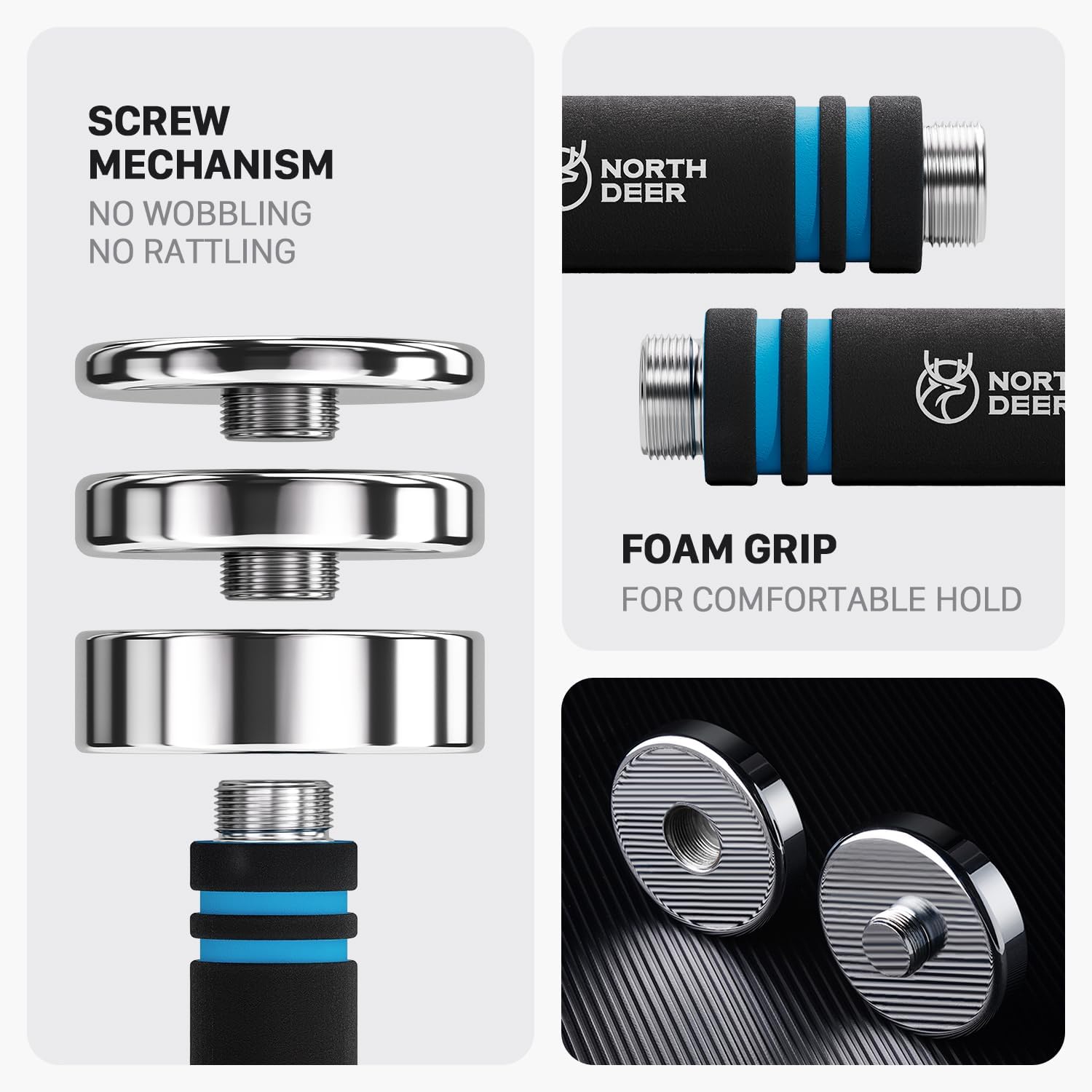
Compact chrome modular adjustable systems occupy a notch above standard plate-loadable sets in perceived quality and footprint efficiency. Owners consistently praise the compact design and the premium aesthetic of a chrome finish combined with a foam grip. The chrome-and-foam combination reads, by owner accounts, as a meaningful step up from the bare-metal-and-cement entry tier in both feel and appearance.
The most significant durability flag in this category is also the most direct: the mirror chrome finish will scratch. Not might scratch — will scratch, under normal use. Owners who have purchased these systems note this as an expected outcome rather than a defect, but it is a real operational fact for anyone buying for a client-facing studio, for resale value consideration, or simply because they prefer equipment that stays looking maintained over time.
The mid-session switching limitation is identical across all plate-loadable adjustable formats. Chrome modular systems do not solve the collar-tightening time constraint. The premium here is in aesthetics and grip feel, not operational speed.
Northdeer
$230.90
In stock on Amazon
Check price on AmazonFixed Rubber Hex Dumbbells: The Commercial-Equivalent Case
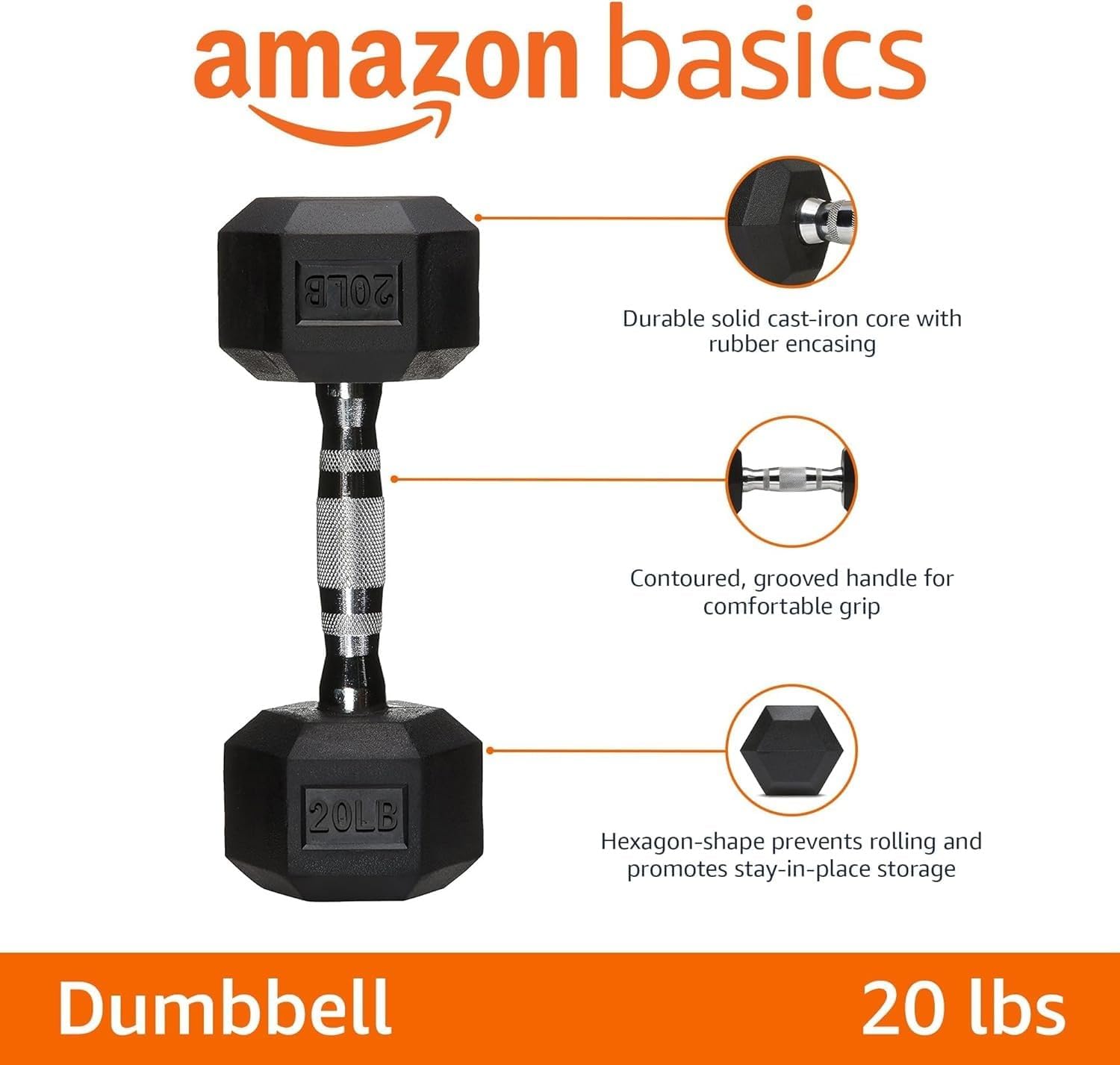
Fixed rubber hex dumbbells are the format you find racked on the floor of virtually every commercial gym. Each dumbbell is a single cast-iron or steel core, coated in vulcanized rubber, with hex-shaped ends that prevent rolling. There are no moving parts, no collars, no plates.
Why the Quality Convergence Matters
BarBend, in their Best Adjustable Dumbbells roundup (updated Q1 2026), documents a trend that reviewers across the buyer-guide space have corroborated: rubber hex dumbbells at the one to two dollar per pound price point have converged in quality over the past several years, and the gap between mid-market and commercial-grade product has narrowed significantly for loads under 50 lb. Mid-market rubber hex options are benchmarked by experienced owners against commercial gym equipment and rated as functionally comparable in knurl depth and rubber integrity.
Cross-ownership assessments from users with direct comparison experience across multiple rubber hex brands over several years consistently rate them as functionally comparable in rubber integrity and handle knurl depth, with primarily cosmetic differences between brands. That kind of comparison — from users with real longitudinal experience rather than first-purchase impressions — is the most useful benchmark in this category.
Amazon
$28.99
In stock on Amazon
Check price on AmazonThe Operational Advantage Is Absolute for Circuit Training
For programs involving supersets, drop sets, circuits, or any training style where you move between exercises at different weights without a full rest interval, fixed rubber hex dumbbells have no meaningful competition from plate-loadable systems. Weight changes take two to five seconds. The hex shape means the dumbbell stays exactly where you set it on the floor. There is no collar to drop, no plate to misplace, no configuration error possible.
ACE Fitness’s Resistance Training for Beginners programming guide points to a working range of 5 to 30 lb as covering most foundational movements for new trainees, with a 50 lb upper ceiling providing meaningful room to progress before a set becomes limiting. A fixed hex starter set covering that range requires more floor space than an adjustable system — realistically 12 to 20 square feet for a full rack versus roughly two square feet for a plate stack — but delivers a training experience that matches how most beginner programs are actually structured, including the fluid movement between exercises that characterizes circuit-based and superset-based programming.
CAP
$36.99
In stock on Amazon
Check price on AmazonThe Used Market Is Legitimate
Wirecutter, in their Best Dumbbells guide (2025), notes that used commercial-grade hex dumbbells are a well-established secondary market with low risk of functional defect when the hex ends are intact and the handle knurl remains sharp. Because rubber hex dumbbells have no moving parts, they degrade primarily through cosmetic wear — surface cracking on the rubber, logo fade, surface scuffs — rather than structural failure. If budget is a constraint, the used market for rubber hex is a credible option worth checking before buying new.
When buying used, inspect for: cracked or chipped hex ends (a functional concern — sharp edges and instability at the floor contact point), rubber that has hardened or separated from the iron core (a grip and longevity concern), and handle knurl that has been worn smooth (a grip concern under load). Surface scuffs and logo fade are cosmetic only and do not affect performance.
Northdeer
$230.90
In stock on Amazon
Check price on AmazonFrequently Asked Questions
Can I use an adjustable cement dumbbell set for all the same exercises as fixed rubber hex dumbbells?
Mostly, but not entirely. For foundational movements — presses, rows, curls, goblet squats, lunges — yes. For exercises that involve dropping the weight or floor contact under load, no. Cement-fill reviewers consistently flag cracking as a real risk on hard drops. Fixed rubber hex dumbbells are built to absorb floor contact; cement-fill systems are not.
How quickly can I change the weight on a plate-loadable adjustable dumbbell system?
Realistically, 60 to 120 seconds for a spin-lock or collar system. For programs with rest intervals of 60 seconds or less, that timeline is impractical. Plan sessions around fixed-weight blocks if you are using any plate-loadable format.
Do rubber hex dumbbells smell when new, and does it go away?
Yes and yes. The vulcanized rubber coating on new hex dumbbells has a characteristic odor that most owners describe as noticeable for the first one to three weeks. Verywell Fit, in their Best Dumbbells for Home Gyms overview (2025), notes this as a known characteristic of new rubber coatings, not a defect. Leaving new dumbbells in a ventilated space accelerates off-gassing. The smell dissipates with use and air exposure.
Is a foam or neoprene handle meaningfully more comfortable than a knurled metal handle?
At low to moderate effort, yes. For compound movements under meaningful load and higher rep counts, the pattern reverses: knurled metal provides more tactile control and does not compress under grip pressure the way foam does. If your primary use is light conditioning, the foam-handle adjustable wins on comfort. If you’re doing heavy rows, deadlifts, or pressing work, the knurled handle is the better functional tool. Verywell Fit’s Best Dumbbells for Home Gyms overview (2025) supports this distinction explicitly.
The Decision Rule
If your program is linear progression — same exercises, increasing weight over weeks, no need to switch loads mid-session — and floor space is limited, an adjustable cement or steel plate system is the right starting point. It gives you a wide weight range in minimal space at the lowest cost per pound. Garage Gym Reviews’ Best Dumbbells buyer guide (2025 edition) consistently positions plate-loadable systems as the correct entry point for space-constrained lifters running structured, week-over-week progressive programs.
If your program involves circuits, supersets, drop sets, or any ballistic movement, or if you’re training others in a small space where session flow matters, fixed rubber hex dumbbells are the correct tool. The operational friction of mid-set weight changes on any plate-loadable system will cost you more in training quality than the space and cost savings are worth. The used market for rubber hex, documented by Wirecutter in their Best Dumbbells guide (2025) as a well-established low-risk option, is worth checking before committing to new product at full retail.
Neither format is wrong. The mismatch between format and training style is the only mistake worth avoiding.