August 13, 2026 • Renata Solís • 10 min reading time • Specs verified June 5, 2026
Adjustable Compact Dumbbells With Foam or Soft Grips: The Space-Saver Cross-Shop
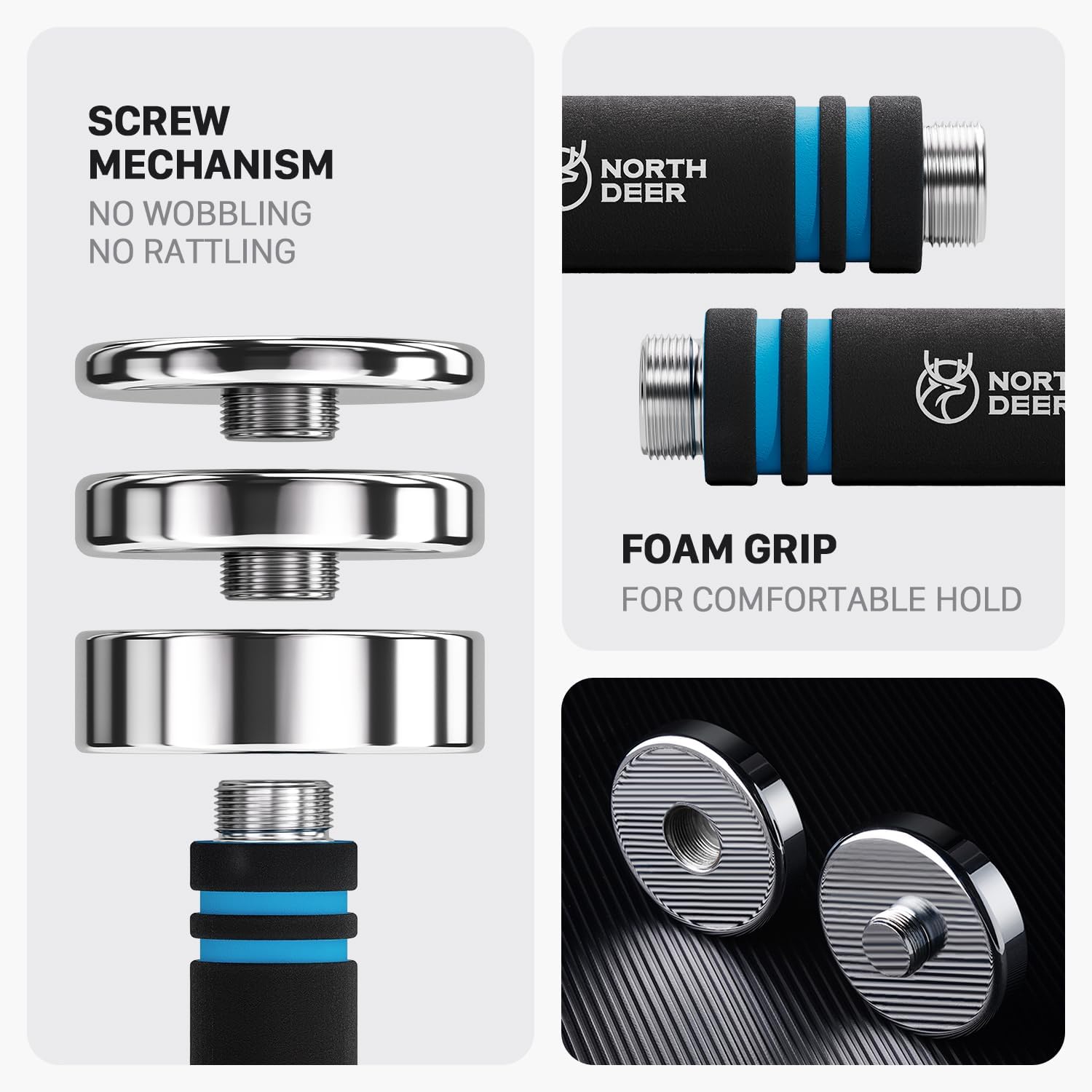
If you’ve ever looked at a rack of fixed-weight dumbbells — the kind you see lined up in a commercial gym from 5 pounds all the way to 50 — and thought, I want that range but I live in a studio apartment, adjustable compact dumbbells are the category built for that exact tension. The core idea is simple: one pair of handles, a dial or selector mechanism, and a set of plates or weighted modules that let you change the resistance without buying five separate pairs. “Compact” in this context means the handle assembly is notably shorter and lighter than traditional adjustable sets, making them easier to store under a bench, in a closet, or beside a couch. This guide focuses specifically on sets where the handles are wrapped in foam or soft neoprene — materials chosen for grip comfort and quiet operation — rather than hard chrome or knurled steel. If you’re deciding right now whether this format makes sense for your space, your training, and your budget, here’s what the buyer record actually shows.
| EDITOR'S PICKNorthdeer Steel Dumbbells Ultra… | Mid-tierNice C Adjustable Dumbbells Wei… | Budget pickZELUS Adjustable Weighted Vest… | |
|---|---|---|---|
| Total Weight | 60 lb (pair) | 11 lb (pair) | — |
| Handle Material | Foam | Neoprene | — |
| Sold As | Pair | Pair | Single vest |
| Weight Increments | 5,10,15,20,30,50 lb | — | 6 sand bags |
| Price | $230.90 | $55.99 | $24.99 |
| See on Amazon → | See on Amazon → | See on Amazon → |
Why This Category Exists (And Who It’s Really For)
The fixed-weight-versus-adjustable question has a clean answer at the extremes. If you train in one narrow weight range and never change, fixed pairs are simpler. If you need a 15-to-50-pound spread and have unlimited floor space, a traditional rack works. But three specific buyer profiles keep landing in the compact adjustable segment, and they show up repeatedly across aggregated owner reviews:
The space-constrained home trainer. An apartment, a shared living room, a nursery that doubles as a workout room. Aesthetics and footprint matter here — not as vanity, but as practical constraints that determine whether the equipment actually gets used. Reviewers in this group consistently mention storing the set in a corner or under furniture as a deciding factor.
The postpartum or return-to-fitness buyer. Verywell Fit’s guidance on progressive overload for returning exercisers emphasizes starting at the low end of a range and adding weight gradually — exactly what an adjustable set with small increments enables. Multiple owner reviews for sets like the YOTTOY compact adjustable dumbbells describe this use case explicitly, with one buyer noting it was “exactly what I was looking for” to cover multiple workout types without purchasing separate equipment at each weight.
The newer lifter who wants versatility without commitment. ACE Fitness’s resistance training resources note that beginners benefit from having access to a range of loads as they learn which exercises challenge them at which weights. Buying a 10-pound pair and a 20-pound pair and realizing you needed a 15 sounds minor; multiplying that across six exercises isn’t.
The Noise Problem Nobody Talks About Enough
Here’s an underreported pain point: plate rattle. Traditional adjustable dumbbells — the kind where you slide weight plates onto a bar and lock them with a collar or spin-lock mechanism — can produce a distracting clinking sound as the plates shift during movement. For early-morning workouts in an apartment, lateral raises with a rattling dumbbell is genuinely a quality-of-life problem.
Foam-handle compact sets address this differently depending on their design. The Northdeer adjustable compact dumbbell set has drawn specific owner callouts for quiet operation, with reviewers describing the absence of plate-rattling noise as a problem solved compared to previous sets they’d owned. That’s a meaningful data point because it’s comparative — these aren’t buyers who have never noticed rattle; they’re buyers who switched specifically to get rid of it.
The mechanism matters. Sets that use a dial or sliding selector to lock a weight module into place tend to be quieter than traditional plate-and-collar designs because the weight is captured rather than stacked loosely. If noise is a real constraint — nap schedules, shared walls, early training windows — prioritize selector-style mechanisms over spin-lock plate systems, even if the selector adds a few dollars to the price.
The Weight Accuracy Question: Don’t Skip This
This is the transparency issue that the buyer record raises most directly, and it deserves a straight answer rather than a deflection.
Across aggregated reviews for the Nice C adjustable dumbbell set, a recurring theme emerges: the labeled weights don’t always match what owners measure when they put the handle assembly on a scale. One reviewer explicitly flagged that “the math on the labeled weights doesn’t add up” and promised an update after further testing. That review pattern — consistent comfort and grip praise alongside labeled-weight skepticism — suggests the product excels at feel but has calibration questions that remain publicly unresolved.
This matters more than it might seem. For recreational use, a pound or two of variance is usually inconsequential. But for progressive overload — the practice of incrementally increasing resistance over time to drive continued adaptation — labeled-weight accuracy is the foundation. If you can’t trust that today’s “12 pounds” is the same resistance as last week’s “12 pounds,” you’re losing the systematic element that makes progressive loading work.
The practitioner decision rule here: if you’re using this set casually, for circuit work or light cardio-adjacent training, minor weight variance is a non-issue. If you’re tracking progressive overload with any rigor — logging sets, reps, and loads to drive measurable strength gains — verify labeled weights against a kitchen or postal scale before you trust the numbers. Garage Gym Reviews’ adjustable dumbbell coverage consistently notes that budget-tier adjustables vary more on this dimension than the label implies, and that verification step is cheap insurance.
Grip Comfort and Durability: What Foam and Neoprene Actually Deliver
Soft-grip handles have two selling points: they feel better in hand than bare steel, and they don’t require gloves. The durability question is where the record gets more nuanced.
Foam handles (typically EVA foam) compress slightly under grip pressure, which some owners find comfortable and others find imprecise. Long-term, foam is more vulnerable to surface degradation with repeated sweat exposure — the surface can develop a tacky or flaking texture over time. The Northdeer foam-handle set earns consistent owner praise on grip feel in early use, and the brand’s customer service responsiveness — flagged specifically in owner reviews — suggests a company that handles post-purchase concerns, which matters if you’re a nervous first-time buyer uncertain about returns.
Neoprene handles (used on sets like Nice C and YOTTOY compact adjustables) tend to be more moisture-resistant than bare foam, though they’re not fully sweat-proof. Neoprene also holds its shape under grip pressure more reliably than softer foam over months of use. Barbend’s adjustable dumbbell coverage notes that neoprene coatings on lower-weight compact sets generally hold up well for home-gym use, with degradation becoming a concern primarily in commercial or studio environments where the same equipment is used multiple times per day by multiple users.
The durability math by use case:
| Use pattern | Foam handles | Neoprene handles |
|---|---|---|
| 3–4x/week, single user | Holds well 12–18 months | Holds well 18–24+ months |
| Daily use, single user | Surface wear at ~12 months | Surface wear at 18+ months |
| Multi-user / studio setting | Not recommended | Marginal — consider commercial-grade |
For home use by a single person training four or five days per week, either material should last through your first two seasons without meaningful degradation. Studio or instructor-grade use is a different calculation — if you’re sourcing these for client use, the compact adjustable format isn’t designed for that load, and the per-unit economics don’t favor it over fixed-weight pairs at commercial grade.
Compact Adjustable vs. Buying Two or Three Fixed-Weight Pairs
This is the real cross-shop, and the math is worth running explicitly.
Three fixed-weight pairs — say, 8, 12, and 20 pounds — will typically run you $40–$90 depending on brand and coating, require a rack or floor space for all three, and give you exactly three weight options. A compact adjustable set in a similar overall range runs $50–$120 and gives you four to six weight increments in a single footprint.
Where fixed-weight pairs win:
- Zero setup time between sets — no dial, no selector, no clip
- No moving parts to wear out or misalign
- Weight accuracy is what you see stamped on the plate
Where compact adjustables win:
- Single footprint, easier storage
- More weight increments without proportional cost increase
- Better for progressive overload across a wider range
The YOTTOY compact adjustable set draws repeated owner praise specifically from buyers who framed the purchase as “instead of buying separate equipment” for multiple workout types. The versatility argument is real — but it comes with the weight-change speed tradeoff. Selector-style adjustables typically take 5–15 seconds per weight change; that’s fine for rest periods between sets, but it breaks the flow of a circuit where you’re moving quickly between exercises at different loads.
Decision rule: If your training is primarily circuit-based or involves rapid alternation between weights, consider whether you can live with a 10-second pause. If yes, the adjustable wins. If your circuits run faster than that, two or three fixed pairs may serve the workflow better even at the cost of storage space.
Frequently Asked Questions
Are adjustable compact dumbbells actually accurate to their labeled weight? The buyer record is mixed. Well-reviewed selector-style sets from established brands tend to be within a pound or two of labeled weight. The Nice C set, specifically, has public owner reports questioning whether labeled weights match actual weight — a concern that hasn’t been definitively resolved in the available review record. If precision matters, verify your set on a kitchen scale before trusting the numbers for progressive overload tracking.
How quickly can you change the weight between sets? Most selector-dial compact adjustables take 5–15 seconds. Spin-lock plate systems can take 30–60 seconds. If you’re buying for fast-paced circuit work, confirm the mechanism type before purchasing.
Do foam or soft grip handles hold up with regular sweaty use? For single-user home gym training at 3–5 sessions per week, both foam and neoprene handles hold up well through at least 12–18 months based on owner-reported experience. Neoprene is more moisture-resistant and tends to show wear later than bare foam. Neither is designed for multi-user commercial use.
Is a compact adjustable dumbbell better than buying two or three fixed-weight pairs? For most home-gym buyers who need four or more weight options, the compact adjustable wins on cost-per-increment and storage footprint. For buyers who need only one or two weight options, fixed pairs are simpler and more durable.
Will plate-loaded adjustable dumbbells rattle or make noise during exercises? Traditional plate-and-collar designs can rattle as plates shift. Selector-style compact dumbbells, like the Northdeer set, are specifically praised by owners for quiet operation. If noise is a constraint, prioritize selector-style mechanisms.
What is the minimum and maximum weight these sets realistically cover? Most compact adjustable sets in this category start at 5–10 pounds and top out at 25–55 pounds depending on the set. The YOTTOY and Nice C sets cover the lower end of that range; Northdeer’s configuration extends further. Verify the specific weight range against your training needs before purchasing — sets that top out at 25 pounds will limit you if you’re currently working with heavier loads in compound movements.
The Bottom Line
The compact adjustable dumbbell with foam or soft grips occupies a genuine niche: more versatile than two or three fixed pairs, quieter and more home-friendly than traditional plate-loaded systems, and approachable enough for newer lifters returning to training after a break. The Northdeer set earns its reputation specifically on noise reduction and responsive customer service — two attributes that matter more than they look on a spec sheet. The Nice C set delivers on grip comfort but carries a documented weight-accuracy question that buyers tracking progressive overload should verify independently. The YOTTOY set consistently serves the postpartum and return-to-fitness buyer who wants one compact solution covering multiple workout types.
If you train in a space where noise and footprint are hard constraints, and you need four or more weight options: a selector-style compact adjustable is the right format. If weight-label accuracy is a priority: verify before you trust. If you’re sourcing for multi-user studio use: step up to fixed commercial-grade pairs; this category isn’t built for that load cycle.