August 1, 2026 • Renata Solís • 11 min reading time • Specs verified June 5, 2026
Adjustable Soft Hand Weights With Straps: Who They're Actually Built For
If you’ve ever tried to hold a traditional dumbbell — the hard metal or rubber cylinder kind — while walking on a treadmill or bouncing on a mini trampoline, you already know the problem: your grip fatigues before your arms do, the weight feels unstable, and one fumble could mean a bruised foot or a broken mirror. Adjustable soft hand weights with straps are a different design category entirely. Instead of asking you to grip a weight, they strap it to your hand — usually across the palm, the back of the hand, or both — so your fingers stay relaxed and the load travels through your wrist and forearm. They’re typically filled with sand or fine material that conforms to the shape of your hand, and the “adjustable” part refers either to removable weight inserts or to multiple strap-tension settings. They sound niche. In practice, they solve real problems for a specific buyer profile — and that profile is probably different from who you’re imagining.
This article maps that buyer profile honestly, then compares the standout products in the segment across three tiers so you can stop second-guessing and commit.
| EDITOR'S PICKSportneer Hand Weights for Women | Mid-tierGYMENIST Set of 2 Hand Shaped N… | Budget pickGaiam Hand Weights for Women &… | |
|---|---|---|---|
| Pieces in set | 6 | 2 | 1 |
| Weight options | 1lb, 2lb, 3lb | 3lb | — |
| Hand strap | ✓ | — | ✓ |
| Shape | — | Hand-shaped | — |
| Material | — | Neoprene | — |
| Color | — | Green | Purple |
| Price | $39.99 | $19.99 | $17.99 |
| See on Amazon → | See on Amazon → | See on Amazon → |
Who Actually Buys These (And Why the Pattern Is Revealing)
Spend an hour reading aggregated owner reviews across this product cluster and a pattern emerges fast: the dominant buyer is not a high-intensity athlete optimizing for progressive overload. The dominant buyer is someone whose hands, wrists, or joints are working against them.
Reviewers using strap-based soft weights consistently surface thumb and finger arthritis as the purchase trigger. The appeal is simple: they can perform arm exercises again without the sharp grip-pressure that traditional weights force — because they no longer have to grip anything. The Arthritis Foundation’s patient education materials on exercise and arthritis explicitly identify reduced grip requirement as a key accommodation criterion for people with hand joint conditions, which puts strap-based weights squarely in the clinical-adjacent category, not just the fitness category.
Sub-pound options fill an even more specific gap. Reviewers with fibromyalgia — a condition characterized by widespread musculoskeletal pain and fatigue — describe half-pound strap weights as the only option their health coaches recommended when starting weighted movements at near-zero load. As covered in Healthline’s fibromyalgia and exercise condition management series, entry loads this light are a legitimate starting prescription, not beginner timidity: the goal is neuromuscular patterning without inflammatory load spikes. Most brands skip this weight tier entirely because the margin is thin and the buyer pool looks small — so when a product fills it, that’s a genuine market distinction.
Back-of-hand cradle designs earn specific praise from rebounder users — people who train on mini trampolines — because the weight feels more secure mid-bounce and poses less ankle-strike risk than a dropped dumbbell. Hand-shaped ergonomic soft weights draw a different kind of praise: owners who keep them near a recliner or living-room chair for low-key arm exercises during TV time. That sounds casual, but it points at a real rehabilitation and re-activation use case — someone post-shoulder injury or post-surgery rebuilding range of motion and muscular activation without commuting to a gym. Verywell Fit’s roundup of hand weights for walking specifically calls out ergonomic soft weights as appropriate for users rebuilding upper-body motor patterns at low resistance.
Washable designs earn their own category of praise. The ability to remove and launder the outer cover matters more than it sounds: neoprene and fabric weights used daily by people with skin sensitivities, in warm climates, or during rehabilitation sessions accumulate bacteria and odor that standard wiping can’t fully address. Washability is a hygiene and durability feature, not a luxury.
The Fit Problem Nobody Talks About Loudly Enough
Here’s the tradeoff that shows up in reviews with enough frequency to treat it as a design-level issue: strap loops sized for average or larger hands feel loose on petite hands and on older female hands, which tend to be narrower at the palm and shorter through the fingers.
A loose strap defeats the core purpose. The whole value proposition of this product category is secure attachment without grip effort. If the strap slides toward the fingertips mid-movement, you’re back to gripping — or worse, compensating with wrist tension that creates exactly the joint stress these weights are supposed to eliminate.
ACE Fitness’s guidance on hand weights and walking (published on acefitness.org) flags fit as a primary consideration for wrist-strap designs, noting that improper fit can alter arm-swing mechanics and shift load to the wrong structures. Shape’s gear review coverage of soft hand weights echoes this: reviewers with smaller hands should prioritize adjustable strap systems with multiple closure points over single-loop designs.
If you’re buying for a studio or rehabilitation setting where multiple clients with varying hand sizes will share the equipment, this becomes a per-unit concern, not just a personal preference.
Sizing context by user profile:
| User profile | Strap fit risk | Mitigation |
|---|---|---|
| Average adult male hand (≥ 8.5 in. circumference) | Low | Most designs fit |
| Average adult female hand (7–8 in.) | Moderate | Check for adjustable closure |
| Petite / older female hand (< 7 in.) | High | Prioritize multi-point or velcro wrap designs |
| Pediatric / youth | Very high | Juvenile-specific sizing required |
Product Comparisons by Tier
Soft strap hand weights split cleanly into three tiers by feature set, weight range, and intended use context. Each tier solves for a different primary constraint.
Budget Tier: Basic Strap Weights for Entry-Level Use
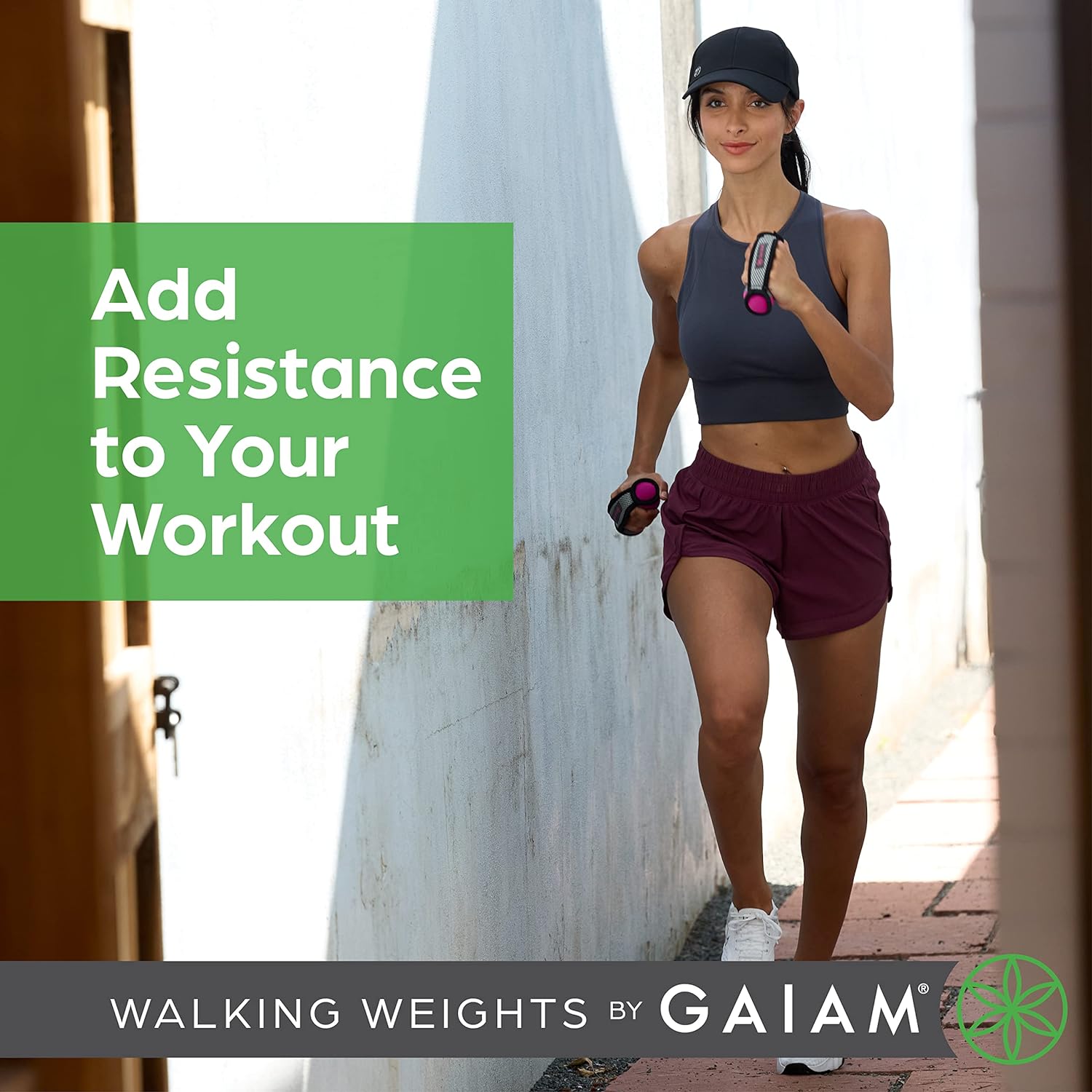
The entry tier covers single-piece strap designs in the 1–3 lb. range with fixed neoprene or fabric construction and velcro closure. These are the right choice if your only requirement is eliminating the grip demand of a standard dumbbell and your hands fall within average sizing.
The primary limitation is washability — most budget designs can only be surface-wiped. In low-sweat, occasional-use contexts that’s adequate. In daily use or warm-climate training it compounds over weeks into a hygiene issue. Strap adjustability is also limited: most budget designs offer one or two closure positions, which means petite-handed buyers risk the looseness problem described above.
Shape’s hand weight gear reviews consistently note that budget soft weights perform adequately for low-intensity walking programs but begin to show strap-migration problems above 2 lbs. when the fit is less than snug.
Gaiam
$17.99
In stock on Amazon
Check price on AmazonMid-Tier: Ergonomic and Specialty Designs
The mid tier is where most of the interesting design variation lives. This bracket includes hand-shaped ergonomic fills, back-of-hand cradle designs, and sub-pound options for clinical starting loads.
Back-of-hand cradle designs (AboveGenius is the most-reviewed example in this category) keep the weight anchored through the vertical bounce cycle in a way that palm-only straps sometimes don’t. The physics is intuitive: a bounce creates a brief moment of weightlessness at the top of the arc, then a force spike at landing. A strap that sits across the back of the hand resists the downward slide on the landing phase better than a strap across the palm alone. Rebounder users — people who train on mini trampolines — are the strongest validators of this design. Verywell Fit’s product roundup for walking hand weights specifically calls out back-of-hand designs as appropriate for dynamic low-impact movement contexts.
Sub-pound options are the most clinically significant entry in this tier. Most brands skip the half-pound weight entirely because the margin is thin. When a product fills this gap, it earns loyalty from a buyer pool that has nowhere else to go: people with fibromyalgia, acute injury recovery patients, or anyone on a protocol calling for near-zero resistance. Healthline’s fibromyalgia condition management series supports near-zero starting loads as a legitimate clinical approach, not a novelty tier.
Sand fill quality distinguishes better mid-tier products from worse ones. Well-constructed sand-fill weights use a fine, uniform fill encased in a conforming fabric layer that distributes load evenly across the palm. Owners describe this as “molding to the hand.” Cheaper or lower-density fill can shift and clump during movement, creating pressure points. If you’re buying for a rehabilitation client with sensory sensitivities, settled, uniform fill is a prerequisite, not a nice-to-have.
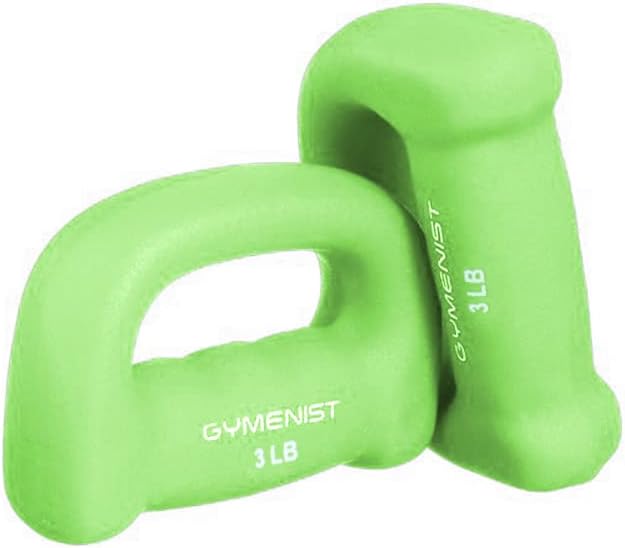
GYMENIST
$19.99
In stock on Amazon
Check price on AmazonPremium Tier: Washable, Adjustable, Multi-Feature Systems
The premium tier earns its price through two features that genuinely extend the product’s lifespan and usability: removable washable covers and multi-point strap adjustability.
Washable cover systems (Sportneer is the standout example) convert what is otherwise a consumable into a durable asset. Owners consistently describe washable covers as a differentiator from standard neoprene weights that can only be wiped down. For any use case involving high sweat output, skin sensitivity, or shared equipment in a studio or rehabilitation setting, washability should be treated as a functional specification, not a bonus feature. There’s also a fill-preservation argument: sand that absorbs sweat and compresses over time can change the weight’s feel and its distributed load. Washable covers keep the fill layer cleaner and more consistent across months of use.
Multi-point strap adjustability matters most for studio or clinic settings where multiple users with different hand sizes share the same equipment. A premium design with three or four velcro closure positions accommodates a much wider range of palm circumferences than a single-loop budget strap. ACE Fitness’s hand-weight walking guidance (acefitness.org) specifically flags strap security and fit as variables that affect whether wrist-load weights provide their intended benefit or create compensatory stress — making multi-point adjustability a safety specification in shared-use contexts, not just a comfort feature.
The honest limitation of this tier: you’re paying for durability and hygiene infrastructure, not for training performance. A premium washable strap weight at 2 lbs. does not train harder than a mid-tier sand-fill at 2 lbs. If you train alone, in a temperate environment, and replace equipment on a normal consumer cycle, mid-tier is likely sufficient.
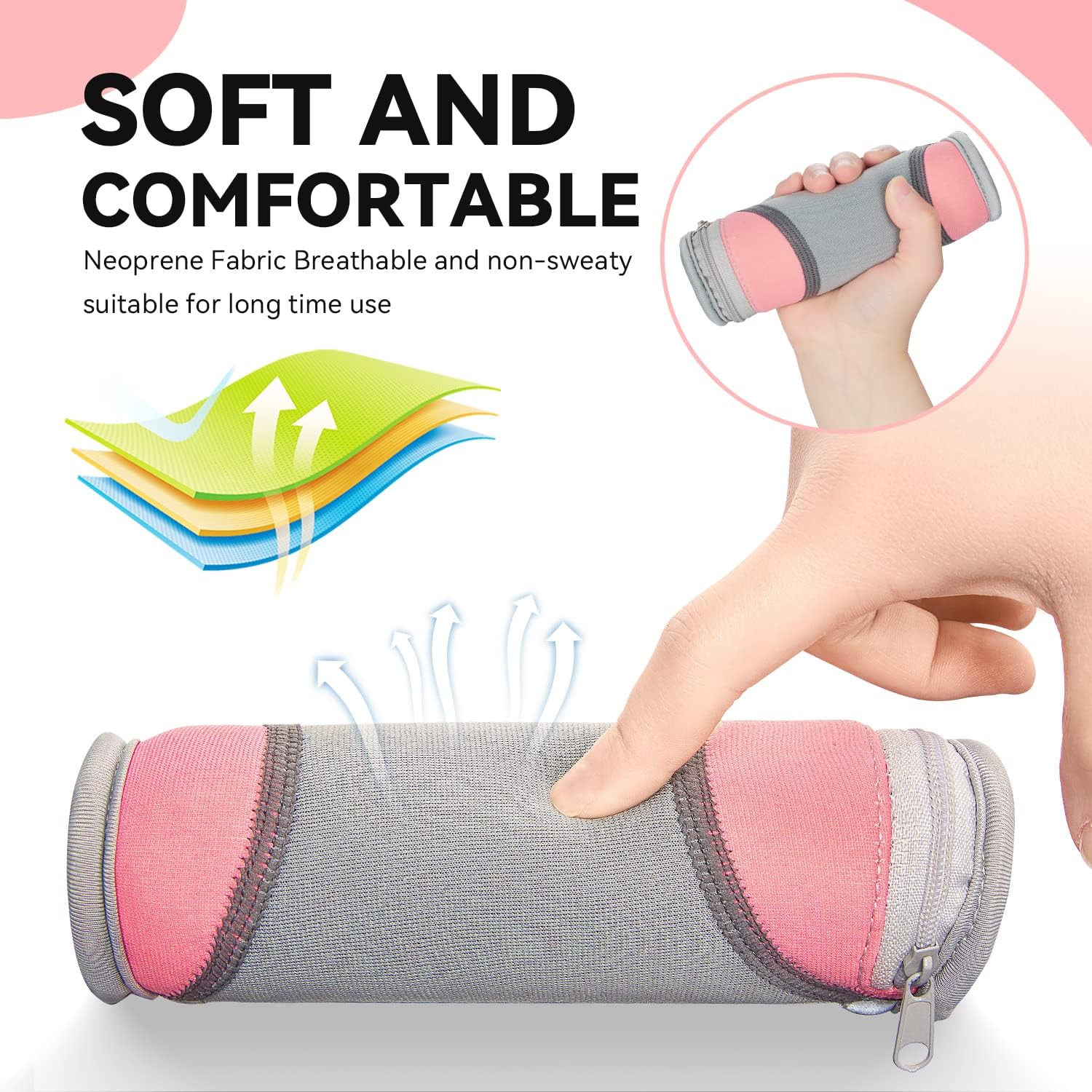
Sportneer
$39.99
In stock on Amazon
Check price on AmazonFrequently Asked Questions
What hand weights work best if you have arthritis or can’t grip tightly? The strap-based designs are the specific answer. Look for designs with wide velcro closures rather than single loops, which let you customize pressure without tightening to a fixed point. Back-of-hand cradle designs add a second anchor point that further reduces the grip demand on the fingers and thumb.
Are there hand weights lighter than 1 lb. available? Yes, and this is a genuine gap in most product lines. Sub-pound strap weights exist in the mid-tier but are stocked by only a few brands. Healthline’s fibromyalgia exercise management series supports half-pound starting loads as a legitimate clinical approach. If a product description doesn’t list a weight under 1 lb. explicitly, assume it doesn’t offer one.
Which soft hand weights are machine washable? Washable-cover designs are premium-tier products. The Sportneer set is the most-cited example. For shared studio use, skin-sensitive users, or high-sweat daily training, treat washability as a required specification before evaluating anything else.
Do back-of-hand straps actually hold during walking and rebounding? For moderate-intensity work with correct fit: yes. The back-of-hand cradle design has the most consistent positive reports from rebounder users. The risk point is loose fit on smaller hands — a strap that isn’t snug will migrate during movement and undermine the design’s core function. Always verify that the listed circumference range matches your hand before ordering.
Can these weights be used safely on a mini trampoline? Yes, with two conditions: the strap fits correctly (snug, not sliding), and you stay in the 1–3 lb. range appropriate for dynamic low-impact movement. The safety advantage over traditional dumbbells on a trampoline is real — a soft weight that slips from a secured strap poses dramatically less foot and floor risk than a dropped hard dumbbell.
The Decision Framework: If X, Then Y
If grip limitation is the core problem — arthritis, post-surgical weakness, neurological condition, or chronic hand fatigue — any strap-based design solves your primary constraint. Prioritize back-of-hand cradle designs if you also rebound; prioritize wide velcro closure designs if your hand is smaller than average.
If you need sub-1-lb. loading — fibromyalgia, acute injury recovery, or any protocol calling for near-zero resistance — verify explicitly that the product you’re considering lists a weight under 1 lb. Most do not. This is a mid-tier niche with very few qualified options.
If hygiene and durability matter most — shared studio use, hot-climate training, skin-sensitive users, or daily high-volume sessions — go premium and prioritize washable covers. Washability converts a consumable into a durable asset and is the single clearest argument for the premium tier.
If rebounding is the primary context — back-of-hand cradle design is the structural answer. Palm-only straps are less resistant to the force spike at trampoline landing. Don’t substitute and expect equivalent security.
If hand size is small — treat multi-point strap adjustability as a non-negotiable specification before evaluating weight, fill, or price. A loose strap inverts every benefit this product category offers.
The products in this segment are not trying to replace your dumbbell set. They’re solving for a buyer the standard fitness market underserves: someone whose limiting factor is grip or joint tolerance, not cardiovascular capacity or muscular strength. For that buyer, the right strap weight isn’t a compromise — it’s the correct tool.