August 14, 2026 • Renata Solís • 13 min reading time • Specs verified June 5, 2026
Ankle Weights That Stay Put: Velcro, Sandbag Pockets, and Slip Complaints Compared
Ankle weights are exactly what they sound like: small, weighted wraps that strap around your ankle to add resistance during walking, leg lifts, rehab exercises, or low-impact cardio. The core promise is simple — a little extra load, applied consistently, adds up over time. But there is a practical problem that rarely makes it into the marketing copy: ankle weights slide. They migrate down toward your heel, rotate so the weight sits on your shin instead of your calf, or develop a subtle wobble that makes every rep feel slightly wrong. That problem has nothing to do with the weight itself and everything to do with how the strap closes, how the weight is distributed inside the sleeve, and whether the sizing is accurate for your actual ankle. This article breaks down the closure systems and internal designs across five named ankle weight products — comparing Velcro, sandbag-pocket, and buckle designs side by side — so you can make a decision that accounts for your workout type and your body, not just the price tag.
| EDITOR'S PICKAPEXUP Adjustable Ankle Weights… | Mid-tierThe Cuff Original Adjustable An… | Budget pickHenkelion 1 Pair 2 3 5 10 Lbs A… | |
|---|---|---|---|
| Weight per unit | 5 lbs | 5 lbs | — |
| Units included | 2 | 1 | 2 |
| Modular design | ✓ | — | — |
| Weight options | — | — | 2, 3, 5, 10 lbs |
| Price | $29.95 | $29.80 | $25.99 |
| See on Amazon → | See on Amazon → | See on Amazon → |
Why Closure System Is the Decision That Actually Matters
Most buyers filter ankle weights by maximum weight capacity first. That is not wrong, but it is the second decision. The first decision is whether the product will stay where you put it for 45 minutes of donkey kicks, walking lunges, or cycling. If it does not, the weight capacity is irrelevant.
There are three closure architectures in this category, and they behave differently.
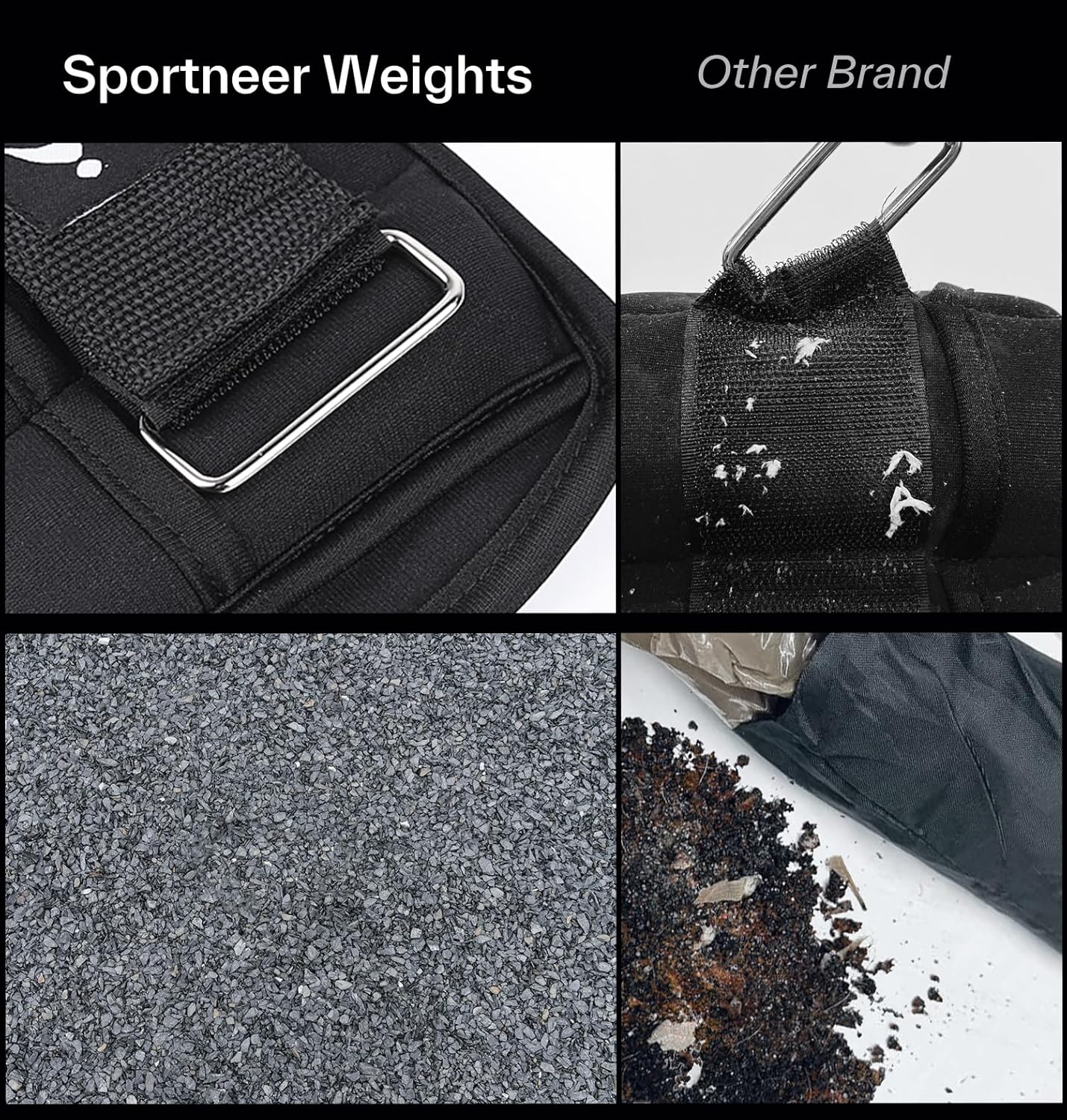
Hook-and-loop (Velcro): The standard. A wide neoprene or fabric cuff wraps around the ankle, and a Velcro flap secures it. Quality varies enormously — a wide, high-density hook-and-loop panel grips much more reliably than a narrow strip, especially as the weight increases. The failure mode is gradual: Velcro loses holding strength over time as lint and fabric fibers fill the hook layer. It is fixable with a stiff brush, but most users do not know to do this.
Metal buckle: Less common in the consumer tier but worth understanding. A buckle closure provides a more positive mechanical lock than fabric-on-fabric Velcro and does not degrade with washing or repeated adjustment the way hook-and-loop panels do. The trade-off is time: buckling and unbuckling is slower than Velcro, which matters for instructors cycling through multiple clients or studio settings where weights swap hands frequently.
Sandbag-insert pocket systems: These are adjustable-weight designs where individual sandbag pouches slot into pockets built into the sleeve. The weight flexibility is genuinely useful for progressive overload — adding or removing pouches rather than buying a new set. The documented risk, specific to this design, is that pouches can migrate within their pockets during movement, shifting the center of mass and introducing instability. Whether that migration is a problem depends heavily on your movement type, as discussed in the product sections below.
ACE Fitness, in their weighted training accessories overview, notes that load placement consistency matters especially in rehabilitation and low-impact contexts, where small positional shifts can alter muscle recruitment patterns enough to undercut the intended training effect.
Product-by-Product Retention Analysis
The five products below represent the main closure and construction approaches available in this category. Each section ends with a tier marker reflecting price-to-value positioning.
Henkelion Ankle Weights — Wide Velcro, Rehab-Credible
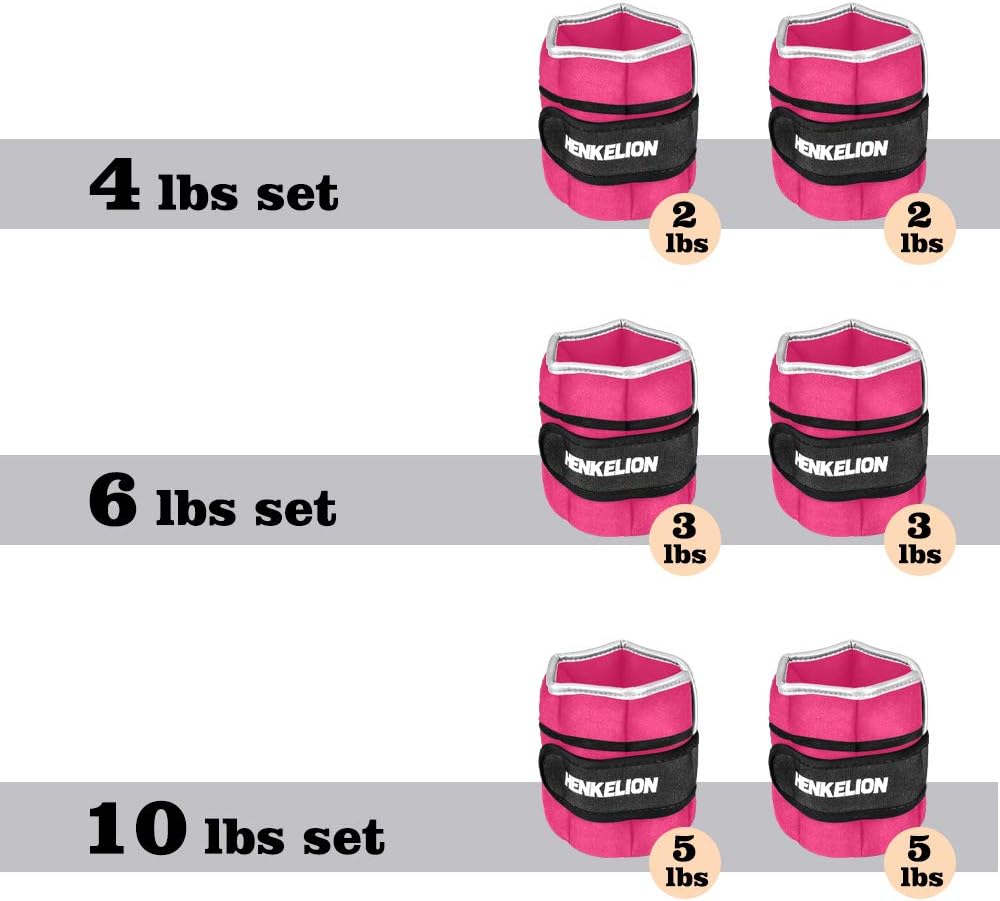
Owner reviews of the Henkelion consistently return to two themes: Velcro strength holds across repeated workouts without loosening mid-session, and the product has received explicit praise from users documenting post-surgical rehab under physical therapist guidance. That is a meaningful real-world signal — rehab contexts involve slow, controlled leg lifts and extensions where even small shifts in weight position are noticeable and potentially problematic.
The Henkelion design uses a wide neoprene sleeve, which distributes contact across more of the ankle surface and reduces the leverage that pulls a narrow strap downward. Verywell Fit, in their guide “How to Use Ankle Weights Safely,” specifically identifies wide contact area as a factor in staying power, particularly at heavier loads. For users whose primary context is walking or floor-based exercise and who want a straightforward Velcro closure that has earned its reputation in practical rehab use, the Henkelion is a well-supported starting point.
The main maintenance note: clean the hook layer with a stiff-bristled brush every few weeks to remove lint accumulation. This step extends grip life significantly and is the most common source of premature Velcro failure when skipped.
Henkelion
$25.99
In stock on Amazon
Check price on AmazonThe Cuff — Clinical-Setting Crossover
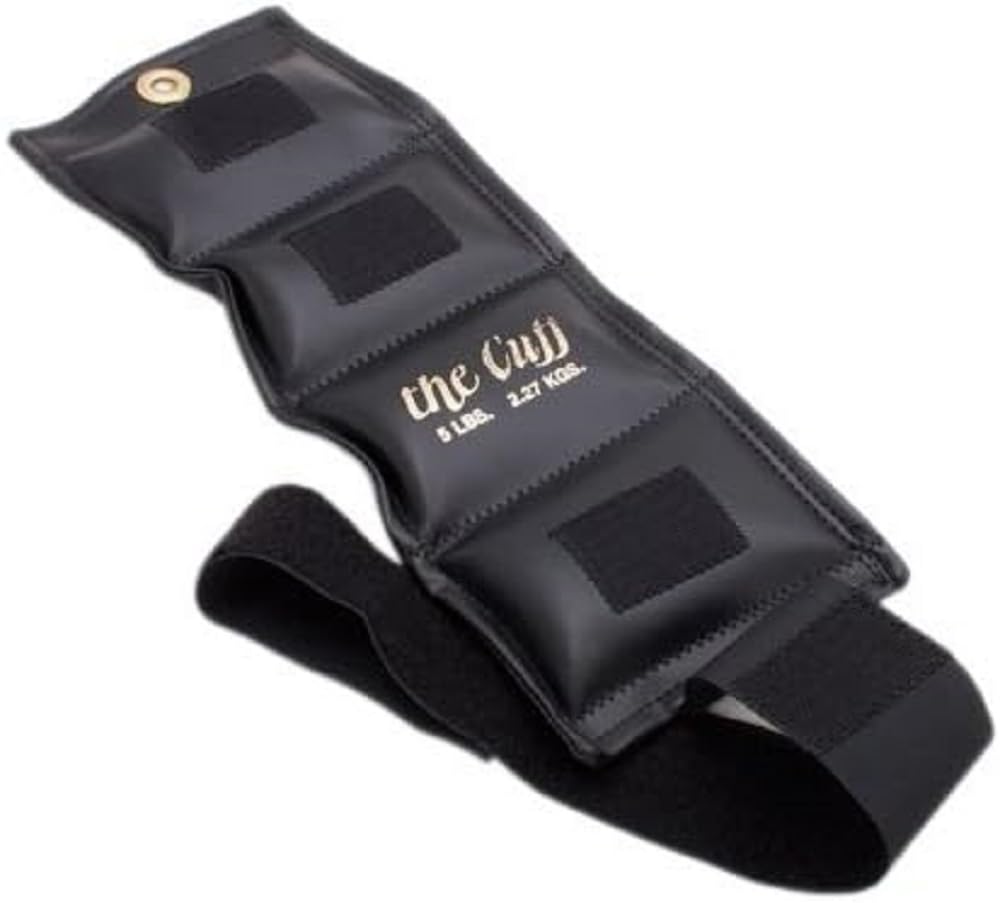
Multiple independent reviewers report that The Cuff ankle weight is identical to or indistinguishable from what they use at their physical therapist’s office — an unusual level of third-party credibility for a consumer product. That crossover happens for a reason: The Cuff’s design prioritizes uniform weight distribution around the ankle, reducing the torque that causes rotation and slippage.
Physical therapists use ankle weights in controlled movement patterns where positional accuracy is directly tied to treatment outcome. If a product earns consistent use in that environment, it is reasonable to conclude it performs reliably enough for studio-based fitness use. Shape, in their ankle weight roundup “The Best Ankle Weights for Every Workout,” has flagged The Cuff for its durable construction and clinical-adjacent positioning, reinforcing the aggregated owner narrative.
For users who are managing a specific movement limitation, returning from injury, or simply want the most stability-oriented design in the category regardless of price, The Cuff is the defensible choice on the evidence currently available.
The
$29.80
In stock on Amazon
Check price on AmazonTheraBand Comfort Fit — The Case for a Metal Buckle
The TheraBand Comfort Fit occupies a specific niche: it is the product in this comparison where a mechanical buckle closure replaces or supplements Velcro as the primary retention mechanism. Reviewers who note this design choice specifically contrast it against Velcro — observing that the buckle holds more definitively and does not degrade with washing or repeated adjustment. That kind of specific, comparative, failure-mode-aware observation is the most useful signal in the review record.
Velcro is not fragile, but it does require maintenance and has a finite useful lifespan. A metal buckle does not share those failure modes. For users who train daily, who are instructors managing weights across many sessions, or who simply wash their equipment frequently, the buckle closure may have a meaningful durability advantage over the multi-year life of the product. The trade is setup time per session — buckling takes longer than pressing a Velcro flap — which is worth factoring into high-volume or time-pressured training environments.
The
$29.80
In stock on Amazon
Check price on AmazonSportneer Ankle Weights — The Adjustable-Load Trade-off
The Sportneer’s adjustable sandbag system is its selling point and its documented vulnerability. The ability to change load without buying a new product is genuinely valuable for progressive training — this is the micro-loading principle applied to ankle weights, adding small increments as strength builds rather than jumping to a fixed higher weight. Runner’s World, in their coverage of ankle weight use and progressive load addition, notes that incremental load increases reduce injury risk compared to large load jumps, a principle directly applicable to the Sportneer’s design intent.
The sandbag migration issue, however, is real and specific enough to deserve plain statement. During movement — especially dynamic or multi-plane movement — individual sandbag pouches can shift within their pockets or partially exit the sleeve during use. Whether this happens depends on how vigorously you move and how tightly the cuff closes around the pouches. For slow, controlled rehab-style movements, the risk is lower. For dance fitness, step aerobics, or any workout with quick directional changes, the risk is meaningfully higher. That is not a disqualifying verdict; it is a conditional one. Buyers who want adjustability and are willing to limit Sportneer use to controlled movement patterns are getting a genuinely flexible tool. Buyers who want to take adjustable-weight ankle weights into dynamic classes should weigh that limitation explicitly.
The
$29.80
In stock on Amazon
Check price on AmazonAPEXUP Ankle Weights — Sand Containment as a Design Priority
The APEXUP draws a specific reviewer note about double-bagged sand construction and confirmed absence of leakage — which tells you two things. First, sand leakage is an established concern in the category, enough that buyers research it before purchasing. Second, APEXUP’s manufacturing answer is double-layer containment, which reviewed units found effective.
“No leaks reported by this reviewer” is not the same as “this design will never leak.” Sand containment is a seam-integrity question that plays out over time and wash cycles. For buyers in a studio or multi-client setting where weights are handled daily, longer-term durability data would be valuable — and the current review record does not yet provide it at scale. For home users training at moderate intensity who want an adjustable-load option with a specific engineering response to the leakage concern, APEXUP’s double-bag approach is the most explicit solution currently documented in the market.
Henkelion
$25.99
In stock on Amazon
Check price on AmazonBeatBoost — Fit and Sizing Caution
The BeatBoost carries a specific fit flag: at least one reviewer notes it runs large in sizing. In ankle weight design, “runs large” means the cuff closes without achieving full contact tension around the ankle, leaving slack that allows rotation and downward migration. This is a solvable problem — wearing the weight over compression leggings or a thicker sock can take up some of the gap — but it is worth knowing before purchase, especially for users with narrower ankles or those who prefer wearing weights directly against skin.
Verywell Fit, in their guide “How to Use Ankle Weights Safely,” notes that cuff fit directly affects whether load stays centered on the intended muscle group or drifts during movement. For users whose ankles fall at the narrower end of a size range, the BeatBoost’s sizing tendency warrants attention. Buyers who confirm their ankle circumference falls within the product’s stated range, or who plan to wear weights over a compression layer, will find this concern manageable.
Henkelion
$25.99
In stock on Amazon
Check price on AmazonClosure Type vs. Retention Risk: At a Glance
| Closure Type | Representative Product | Primary Risk | Best-Fit Use Case |
|---|---|---|---|
| Wide Velcro | Henkelion | Gradual lint degradation | PT rehab, low-impact cardio |
| Metal buckle | TheraBand Comfort Fit | Slower per-session setup | Instructor/daily-use durability |
| Velcro + clinical reputation | The Cuff | None documented at scale | PT-matched studio or home rehab |
| Sandbag pockets | Sportneer | Insert migration in dynamic movement | Progressive-load walking, controlled lifts |
| Double-bag sand + Velcro | APEXUP | Long-term seam durability unconfirmed | Home use, moderate intensity |
Frequently Asked Questions
How do I stop ankle weights from sliding down during a workout? The most common cause is a cuff that is not closed tightly enough, or a Velcro panel that has accumulated lint and lost grip. Start with a firm closure — you should feel light compression, not just contact. If Velcro is the issue, clean the hook layer with a stiff-bristled brush before the next session. Wearing the weight over a snug compression sleeve or thick sock can also increase friction and reduce downward drift.
Are Velcro closures strong enough for running or cycling, or do I need a buckle? For running, neither Velcro nor a buckle is a strong recommendation. Runner’s World, in their coverage of ankle weights and running, addresses the added distal load during running and notes that it increases joint stress at the knee and hip significantly; weighted running is generally advised against except in specific supervised rehabilitation protocols. For cycling, the pedaling motion creates repetitive tension that can work a Velcro closure loose over time; a buckle closure is more resistant to this cyclic load. For low-impact cardio, quality Velcro maintained with regular cleaning is generally sufficient.
Can I wear ankle weights over compression socks or leggings without them slipping? Yes — and for users with narrower ankles, or with products that run large like the BeatBoost, wearing weights over a compression layer can actually improve retention by filling the gap between the cuff and your leg. The friction coefficient of compression fabric against neoprene is high enough that slippage typically decreases rather than increases with the added layer.
What is the difference between a single-sleeve sandbag and individual pocket designs in terms of weight stability? A single-sleeve sandbag fills the entire interior of the cuff and conforms to ankle shape, creating even pressure around the circumference. Individual pocket designs — like the Sportneer — distribute discrete pouches in fixed positions, which allows for weight adjustment but introduces the possibility that any one pouch migrates during movement. Single-sleeve designs are generally more stable; pocket designs are more adjustable. Choose based on whether progressive load flexibility or absolute positional stability is your higher priority.
Will sandbag inserts eventually leak sand? Sand leakage is a documented category concern. The risk factors are seam quality, frequency of machine washing, and whether outer fabric abrades at fold points. The APEXUP’s double-bag construction is the most explicitly engineered response to this concern currently available in the consumer market. No ankle weight in this comparison has a long enough multi-year review record to claim complete immunity from sand leakage; the double-bag approach reduces but does not eliminate the risk.
How do I know what ankle circumference a given strap will actually fit? Published specs usually list a strap length range, not an ankle circumference range — those are not the same number because the strap overlaps itself at closure. Convert by subtracting the overlap zone (typically two to four inches for a standard Velcro panel) from the total strap length to get the approximate maximum ankle circumference the product can close around. When uncertain, size up and account for whatever layer you plan to wear underneath. The BeatBoost’s documented large-running tendency is a specific reminder that “fits most” claims vary considerably in accuracy.
The Decision Rule
If your primary concern is retention during controlled, rehab-style movement and you want a design with documented clinical credibility: The Cuff and the Henkelion are the defensible choices. The Henkelion draws explicit physical-therapy-use praise from owners; The Cuff draws clinical-setting comparisons from multiple independent reviewers. Both earn their positions through convergent real-world testimony rather than marketing claims.
If you train daily at instructor volume and need a closure that will not degrade after hundreds of sessions: the TheraBand Comfort Fit’s metal buckle is the correct answer, even if the setup time costs you extra seconds per session. Buckle closures do not collect lint, do not lose grip with washing, and do not rely on fabric-to-fabric friction that diminishes under repetitive load.
If progressive load adjustment matters more than absolute stability — you are building from two to five pounds over a training cycle and do not want to buy two separate products: the Sportneer’s adjustability is genuinely valuable, but limit dynamic or multi-plane movements until you have confirmed that pouch retention works with your specific patterns.
If sand containment is a specific concern and you are comparing adjustable designs: the APEXUP’s documented double-bag approach is the most explicit engineering response to that concern in the current market, with the caveat that long-run durability data at scale remains limited. ACE Fitness, in their weighted training accessories overview, reinforces that equipment integrity over time is a meaningful variable in any resistance accessory decision — a point that applies directly to seam durability in sandbag designs.