September 28, 2026 • Renata Solís • 10 min reading time • Specs verified June 5, 2026
Ankle Weights for Stroke Recovery and Neurological Rehab: Fit and Safety First
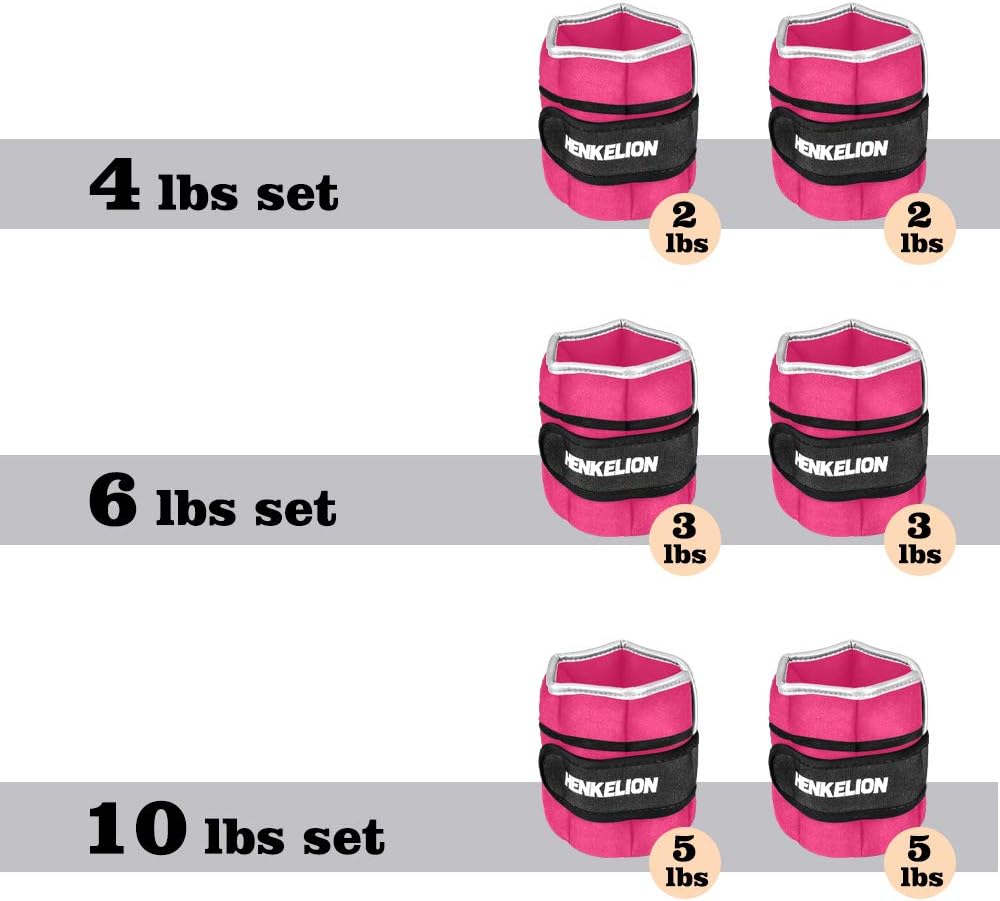
Ankle weights are exactly what they sound like: weighted cuffs — usually filled with sand, iron shot, or sewn-in steel bars — that strap around the ankle to add resistance to leg movement. In a standard fitness context, people use them to make walking, leg lifts, or dance-fitness classes more challenging. But ankle weights show up constantly in a very different setting: physical therapy clinics, home recovery programs, and neurological rehabilitation, where the goal isn’t athletic performance but something more fundamental — retraining the brain and nervous system to move a limb correctly again. If you or someone you care for is navigating recovery from a stroke, reconstructive knee surgery, or another neurological event, this guide is written for you. We’ll explain what the published record and the practitioner community say about fit, safety, weight selection, and the specific designs that earn trust in clinical settings — and we’ll be honest about what these products can and can’t do.
A note before we go further: nothing in this article substitutes for guidance from your physical therapist (PT) or physician. The recommendations here synthesize published product documentation, aggregated owner reviews from verified purchasers, and publicly available rehabilitation literature — not clinical trials we conducted ourselves. Use this as a research starting point, then confirm the details with your care team.
| EDITOR'S PICKAPEXUP Adjustable Ankle Weights… | Mid-tierThe Cuff Original Adjustable An… | Budget pickTHERABAND Ankle Weights | |
|---|---|---|---|
| Set weight | 5 lbs x2 | 5 lb (single) | 1 lb each |
| Sold as | Pair | Single | Set (pair) |
| Color | Black | — | Red |
| Price | $29.95 | $29.80 | $18.99 |
| See on Amazon → | See on Amazon → | See on Amazon → |
Why Ankle Weights Are Used in Neurological and Post-Surgical Rehab
The logic is straightforward once you understand what rehab is trying to accomplish. After a stroke, the brain’s signals to affected muscles are disrupted — sometimes producing weakness, sometimes producing spasticity (abnormal muscle tightness), and sometimes causing a gait problem called foot drop, where the front of the foot drags along the ground rather than clearing it cleanly during each step. The American Stroke Association’s life-after-stroke rehabilitation resource describes progressive resistance training as a core component of regaining motor function, noting that the key word is progressive — meaning load increases gradually as function improves.
Ankle weights enter the picture in two distinct therapeutic roles:
1. Resistance training. A standard PT-guided program may use ankle weights during leg raises, standing hip extensions, or seated knee extensions to strengthen the muscles around a weakened or post-surgical joint. Here, the weight is added and removed in a controlled session.
2. Proprioceptive cueing during gait. This is the more distinctive application in neurological rehab. A small amount of added weight at the ankle — often as little as half a pound — gives the nervous system additional sensory feedback (called proprioception, your body’s sense of where its limbs are in space) about where the foot is landing. Some reviewers in the Henkelion ankle weight category describe wearing the product throughout the day following a minor stroke specifically to address a dragging left leg, reporting subjective gait improvement over weeks. Verywell Health’s rehabilitation overview notes that this kind of low-load, sustained-wear approach is used clinically but emphasizes that it should always be supervised, because the wrong weight or poor fit can worsen compensatory movement patterns.
The ACE Fitness continuing education resource on resistance training for special populations reinforces that load prescription in neurological rehab is highly individual — what’s appropriate for one patient at one week post-event may be entirely wrong for another.
What the Rehab Community Actually Uses: Products That Earn Clinical Trust
The most consistent signal across aggregated verified-buyer reviews in this category is simple: the Cuff Weight earns repeated, specific praise from buyers who state it is “exactly the same unit used at my physical therapist’s office.” That’s not a marketing claim — it shows up organically across multiple independent reviews. The reasons cited are consistent: a metal buckle closure (rather than Velcro) that allows precise, repeatable fit adjustments, a soft cuff that doesn’t dig into the ankle even during extended wear, and a weight increment system that lets PTs dial in load carefully.
Why does a metal buckle matter in a clinical context? Because Velcro degrades. Multiple reviewers across competing products flag the same problem: after weeks of daily use — especially the repeated on/off cycles that characterize a home rehab program — Velcro hook-and-loop closures lose grip, the cuff shifts during movement, and precise fit (which matters enormously for both safety and accurate progressive loading) is lost. A metal buckle holds its calibration session after session.
TheraBand ankle weights earn their own subset of favorable rehab-community reviews, with buyers citing the buckle design and a snug, secure fit as primary reasons for trust. The important caveat, noted consistently by reviewers and confirmed in TheraBand’s own product documentation: TheraBand ankle weights are fixed-weight units. The weight you buy is the weight you get — there’s no internal pocket system to add or remove increments. For early-stage rehab where you may need to step down weight during a harder session or progress upward quickly across weeks, that limitation matters. The ACSM’s position stand on exercise for older adults emphasizes that progression flexibility is particularly important in deconditioned or neurologically compromised populations, where the appropriate load can shift meaningfully week to week.
For buyers managing a budget or working in a home setting where clinical-grade hardware isn’t the priority, the Henkelion ankle weight series draws a notable volume of rehabilitation-context reviews — including the reconstructive knee surgery recovery account mentioned above. Reviewers in that context praise the adjustable weight pocket system (most Henkelion models allow you to add or remove individual sand pouches to change the total load) and note a secure Velcro closure that performs well in short-to-medium wear durations. The Velcro durability concern does surface in long-term reviews, which is worth monitoring if daily all-day wear is the intended use pattern.
APEXUP ankle weights appear in reviews primarily in the context of their double-bagged sandbag fill design — a construction detail that directly addresses a real anxiety in this category. Sand or iron-shot fill can leak if a seam fails, and in a home rehab context (hardwood floors, carpet, around elderly or mobility-limited users), leaked fill is a safety hazard as well as a product failure. Reviewers in the APEXUP category specifically cite the double-bag construction as a confidence factor for daily, extended use.
The Numbers That Matter at the Point of Decision
| Weight starting point | Clinical context | Source |
|---|---|---|
| 0.5–1 lb | Early post-stroke gait cueing, foot drop | Verywell Health rehabilitation overview |
| 1–2 lbs | Post-surgical strengthening, early PT protocol | ACE Fitness special populations resource |
| 2–5 lbs | Later-stage strengthening, supervised progressive loading | ACSM Position Stand |
| >5 lbs | Fitness/performance contexts — rarely appropriate for acute rehab | ACE Fitness |
The rule of thumb across the published rehabilitation literature: if you cannot complete a full, controlled set of the prescribed movement without compensating (leaning, shortening range of motion, gripping furniture), the weight is too heavy.
Fit, Dexterity, and the All-Day Wear Question
Several of the most practical questions in this category come directly from buyers navigating limited hand strength, post-stroke dexterity changes, or simply the challenge of putting on an ankle cuff without assistance.
For limited dexterity: Pilates-style wrist/ankle combo weights — flat, weighted bands with wide, simple closures — draw repeated praise from post-surgical reviewers specifically because they require minimal fine-motor manipulation to put on. The tradeoff is that they offer less precise fit adjustment than a buckle or pocket system. For all-day wear with minimal on/off cycling, that tradeoff is often acceptable.
On wearing ankle weights all day: The clinical picture here is nuanced. The American Stroke Association’s rehab resource does not endorse all-day unsupervised ankle weight wear as a standard protocol, and ACE Fitness’s special populations guidance notes that continuous resistance application to a weakened limb can produce fatigue that worsens rather than improves gait pattern over the course of a day. Reviewers who report positive all-day wear outcomes consistently describe starting at very low weights (under one pound), wearing the weight during intentional walking rather than passive sitting, and working under PT oversight. If all-day wear is part of your program, confirm the duration and weight with your care provider.
Bulkiness and visibility: Multiple reviewer threads flag that most ankle weights — even slim designs — are visible under trousers or standard pants. For users who care about discretion in public settings, this is a real limitation of the category, not a fixable product defect.
Can Ankle Weights Be Used on the Wrist for Upper-Body Rehab?
Yes — with caveats. Several products in this category, including the Pilates wrist/ankle weight designs, are explicitly rated for wrist use. The same proprioceptive cueing logic that applies to the ankle applies to the wrist: added weight gives the nervous system more feedback about limb position, which can support upper-extremity motor retraining after stroke or injury.
The fit concern is more acute at the wrist. The wrist circumference is smaller and more variable than the ankle, and a cuff designed primarily for ankle dimensions may not secure snugly enough to stay in place during arm movement. Reviewers who report successful wrist use consistently mention confirming the fit circumference against the product’s stated range before purchasing.
Frequently Asked Questions
Are any of these ankle weights the same ones used in physical therapy clinics? Yes. The Cuff Weight is specifically and repeatedly identified by verified buyers as the product they recognize from their PT clinic — the metal buckle design and weight increment system are consistent with clinical-grade requirements. TheraBand equipment is also widely present in clinical settings.
How do I know what starting weight to use after surgery or a stroke? Start with your physical therapist’s prescription. If you don’t yet have one, the published rehabilitation literature consistently points to 0.5–1 lb as a conservative starting point for neurological gait applications, and 1–2 lbs for early post-surgical strengthening. The right weight is one that lets you complete the full movement without any compensatory motion.
Can ankle weights be worn all day for gait correction without causing problems? Potentially, but this is a clinical decision, not a consumer one. Extended wear at incorrect weights or without supervision can create fatigue patterns that worsen gait. Work with your PT to establish duration and weight before attempting all-day protocols.
Which designs are easiest to put on with limited hand strength or dexterity? Wide, flat Pilates-style weights with minimal closure complexity draw the most positive reviews from buyers managing dexterity limitations. Metal buckle designs (Cuff Weight, TheraBand) require slightly more hand coordination but offer better fit precision once closed.
Will the sandbags leak with daily use? Standard single-bag construction carries leakage risk over time, particularly if the cuff is bent repeatedly. APEXUP’s double-bagged construction is the most frequently cited design response to this concern in owner reviews. For daily rehab use, construction quality of the fill bags is worth verifying before purchase.
Can these be used on the wrist as well as the ankle for upper-body rehab? Many designs are dual-rated. Confirm that the wrist circumference of the product matches your measurement, and favor designs with adjustable closures for wrist applications where a precise, stable fit matters most.
The decision rule: If you are working under active PT supervision and need clinical-grade consistency and buckle security, the Cuff Weight is the product the practitioner community keeps pointing toward. If you need adjustable weight increments in a home-use context and can tolerate Velcro closure, Henkelion’s pocket system offers genuine progression flexibility. If leakage is a primary concern for daily use, APEXUP’s double-bag construction is the most direct engineering answer the category currently offers. Fixed-weight options like TheraBand are appropriate where a specific, stable load has been prescribed and progression timing is PT-managed rather than self-directed.