May 8, 2026 • Renata Solís • 8 min reading time • Specs verified June 5, 2026
Budget Weighted Vests Under $30: Honest Cross-Shop Before You Buy
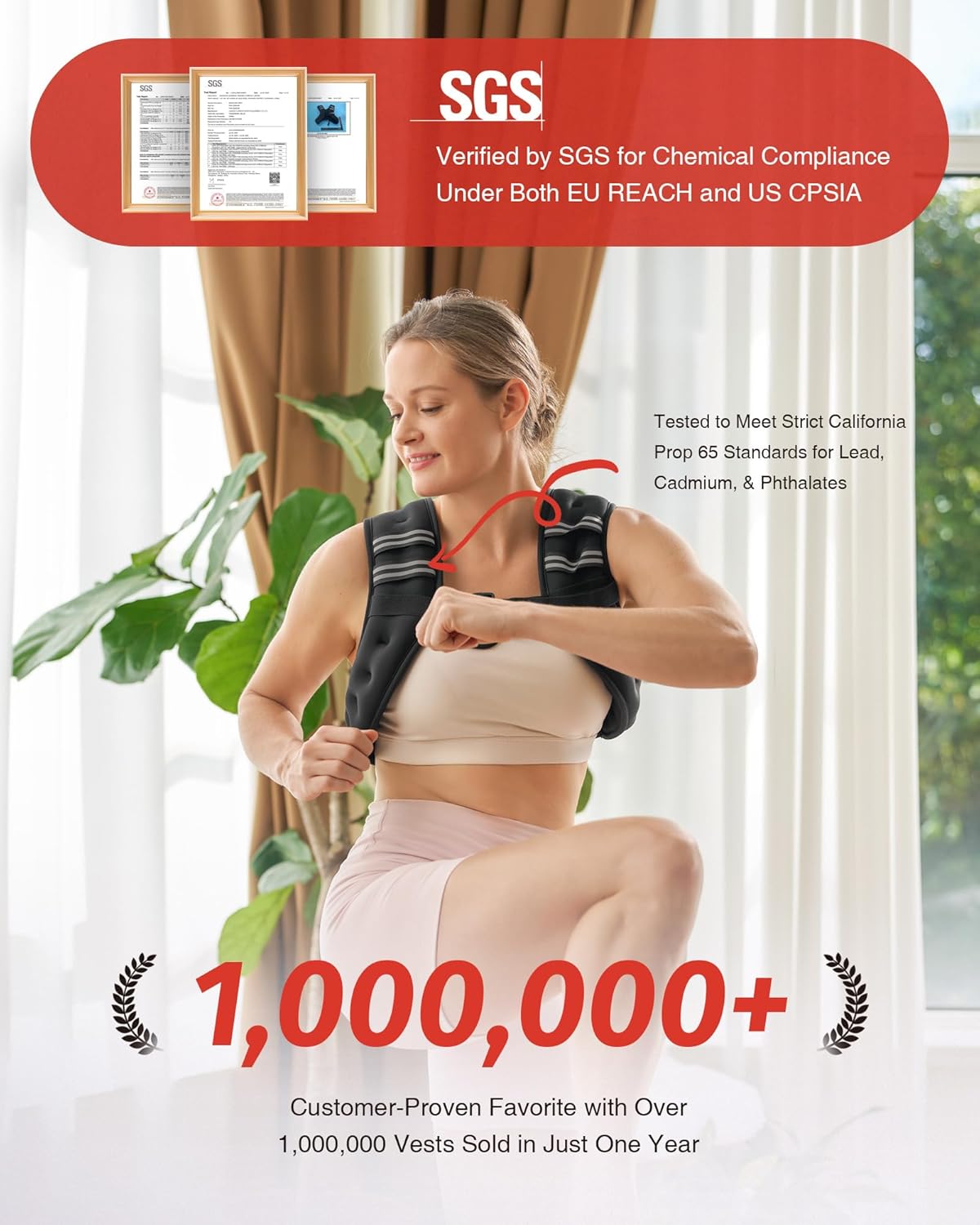
A weighted vest is exactly what it sounds like: a snug-fitting garment — usually resembling a sleeveless jacket — that holds small weight plates or sandbag inserts against your torso while you move. The idea is to add external load to bodyweight exercises like walking, squats, push-ups, or step aerobics, so your muscles and cardiovascular system work harder than they would unloaded. That extra work, sustained over time, is what drives fitness gains — a concept trainers call progressive overload, meaning you incrementally increase the challenge to keep your body adapting. Weighted vests are one of the cleanest tools for doing that without changing the exercise itself.
The under-$30 tier is where most first-time buyers look first, and reasonably so. But if you’ve been training for a year or more, you’ve probably noticed that budget vests show up in two very different conversations: as a legit entry point, and as a frustrating waste of money. Both things are true, depending on what you’re using them for. This guide exists to help you figure out which scenario applies to you — before you click buy.
| EDITOR'S PICK[ZELUS Weighted Vest](https://www.amazon.com/dp/B07RPSJT7Q?tag=greenflower20-20) | Mid-tier[Zikopomi Weighted Vest Woman Man](https://www.amazon.com/dp/B0DPFVZY21?tag=greenflower20-20) | Budget pick[Henkelion Weighted Vest Weight…](https://www.amazon.com/dp/B07Q2Q5D8Q?tag=greenflower20-20) | |
|---|---|---|---|
| Weight options | 6lb/8lb/12lb/16lb/20lb/25lb/30lb | 6lb/8lb/12lb/16lb/20lb/25lb/30lb | 12 lbs |
| Reflective | ✓ | ✓ | — |
| Gender | — | Woman Man | Men Women Kids |
| Adjustable | — | — | ✓ |
| Price | $28.98 | $19.99 | $14.99 |
| See on Amazon → | See on Amazon → | See on Amazon → |
What You Actually Get in the Sub-$30 Category
Let’s be honest about the segment. The under-$30 weighted vest market as of mid-2026 is dominated by vest styles from lesser-known import brands — the kind that rotate listings frequently on Amazon and carry names like Adurance, Zelus, or ZFOSports. A handful of recognizable budget fitness brands have entries here too, though most have migrated their better products upmarket.
Here’s what the published specs and owner-review patterns actually show across this tier:
Typical construction: Single-layer neoprene or thin polyester shell, velcro closure (no buckle), and fixed-weight iron sand or steel shot inserts. Stitching quality varies widely by unit, not just by brand.
Weight range: Most ship at 12 lbs or 20 lbs fixed. A small number offer add-in pockets, but reviewers at Garage Gym Reviews consistently note those pockets often lack the structure to hold added plates securely during dynamic movement.
Fit: Sizing is almost universally one-size-fits-most, with a single velcro adjustment band across the chest. For users outside a roughly 34–44-inch chest range, fit tends to be problematic — the vest rides up during jumping movements or gaps at the sides.
By the numbers — what sub-$30 typically buys you:
| Feature | Sub-$30 Tier | $60–$100 Tier |
|---|---|---|
| Weight adjustability | Fixed (or 2-increment) | 4–10 lb increments |
| Closure system | Velcro only | Buckle + Velcro |
| Weight distribution | Front-heavy or symmetric | Balanced, dual-panel |
| Owner-reported lifespan | 6–18 months moderate use | 2–4+ years |
The lifespan figure above is drawn from aggregated owner reviews across multiple Verywell Fit roundups and Barbend’s weighted vest buyer’s guides, both of which track long-run reviewer feedback. The 6–18-month window isn’t a condemnation — it’s the expected performance envelope for the price.
The Three Tradeoffs You Need to Name Before You Decide
If you’re comparing a sub-$30 vest against waiting and spending more, the honest tradeoffs are these:
1. Increment Precision vs. Fixed Load
This is the one that stings most for practitioners at the intermediate level. Progressive overload — adding small, controlled amounts of resistance over time — is most effective when you can make micro-adjustments, meaning weight increases of 2–5 lbs at a time rather than jumping 10 or 20 lbs at once. ACE Fitness’s weighted vest training overview notes that large load jumps increase injury risk in aerobic training contexts because form breakdown accelerates faster than adaptation.
Budget vests almost never give you this. You buy a 12 lb vest and it stays 12 lbs. When 12 lbs stops being a real challenge — and for a trained practitioner, that may happen faster than you expect — you either buy again or plateau.
If your training has a clear progression plan (periodized programming, instructor-led curriculum), a fixed-weight vest is a tool without a gear shift. You’ll outgrow it.
If X, then Y: If you’re using the vest for a single block of training at a fixed intensity — say, weighted walking for 8 weeks or a specific Zumba conditioning cycle — a fixed-weight budget vest can serve that purpose cleanly. If you’re building a long-arc progressive program, it will cap your ceiling fast.
2. Durability vs. Per-Session Cost
Budget vests feel cheap per purchase. But run the per-session math over 12–18 months of consistent use.
A $25 vest used 4 days per week breaks down to roughly 200 sessions at $0.12 per session — assuming it holds up the full 18 months. Owner reports across multiple Shape magazine and Barbend roundup reviews suggest meaningful quality degradation (velcro losing grip, seams separating, insert bags developing holes) occurs around the 6–10-month mark with heavy use. If that vest effectively stops working at 6 months, you’re at 100 sessions and $0.25/session — then buying again.
A $75 vest with documented multi-year durability (the next price band above budget) amortizes to roughly $0.10–0.15/session over 2 years of comparable use. That’s not a landslide difference at the individual level, but for a studio owner buying 8–12 units, the fleet math shifts decisively toward the mid-tier.
If X, then Y: If you’re buying one vest for light-to-moderate personal use and aren’t tied to a long training cycle, the budget tier is defensible. If you’re sourcing multiple units for any kind of group context or client use, don’t buy here — the replacement cycle will cost more than a mid-tier purchase would have.
3. Comfort and Fit vs. Convenience
Shape’s weighted vest guide and Barbend’s buyer’s guide both flag fit consistency as the primary complaint category across the budget vest segment, ahead of durability. Specifically: lateral shifting during lateral movement, shoulder bounce during jumping, and heat buildup from non-breathable materials are the most recurring owner complaints in the sub-$30 tier.
For low-impact use — weighted walks, slow step circuits, stationary exercises — these issues are manageable. For anything involving lateral movement, jumping, or sustained aerobic work (cardio kickboxing, dance fitness, stair intervals), reviewers consistently rate budget vests as significantly less functional than mid-tier options. The vest moving around on your body isn’t just annoying — it shifts the load off-axis and changes the exercise mechanics, which partially defeats the purpose.
Who the Sub-$30 Vest Actually Serves Well
Naming the downside cases clearly doesn’t mean the category is wrong for everyone. Based on the aggregated review record, budget weighted vests earn positive outcomes in these specific scenarios:
The proof-of-concept buyer. You’ve never used a weighted vest and genuinely don’t know if you’ll stick with the training modality. A $25 test makes rational sense. If you log 60+ sessions and want more, you’ve validated the investment case for a real upgrade. Verywell Fit’s buyer’s guide explicitly recommends this approach for first-timers who are uncertain about fit preference.
The single-variable low-impact user. If you walk 4 miles a day and want to add load to those walks without changing anything else, a fixed-weight budget vest is legitimately fit for purpose. Walking is forgiving on fit — there’s no lateral movement or bounce to amplify vest instability.
The short-cycle program user. If you’re following a structured 6–8-week program at a specific prescribed weight and you know you won’t extend it (a timed race prep block, a surgeon’s rehab protocol, a single training phase before a reassessment), a fixed-weight cheap vest is a reasonable rental-equivalent.
What You’re Passing On When You Skip the $60–$100 Range
This isn’t a piece to sell you on an upgrade you don’t need. But if you’re genuinely on the fence, it’s worth naming what the next price band actually unlocks, based on what Barbend, Garage Gym Reviews, and Verywell Fit all report as the functional difference markers:
- Buckle closures that stay put during dynamic movement (not just velcro, which fatigues)
- Adjustable weight in 2–4 lb increments via removable steel bars or weight pouches — this is what enables progressive overload to actually function
- Dual-panel weight distribution that splits load front and back instead of front-heavy designs that compress your chest and pull your posture forward
- Breathable mesh panels that meaningfully reduce heat buildup during aerobic work
- Wider sizing range with more adjustment points — critical for women buying in this category, where one-size-fit issues are most acute
None of those are luxury features at the $60–$100 level. They’re baseline functional requirements for anything beyond casual walking use.
The Clear Decision Frame
You’ve read the tradeoffs. Here’s how to turn them into a call:
Buy under $30 if: You’re brand new to weighted vests, uncertain about fit preference, using it for low-impact walking or light stationary work, and you’re running a single short training block with no progressive-overload plan. Treat it as a trial, not a foundation.
Skip the budget tier if: You’re an intermediate or advanced practitioner with a defined progression plan, you train with lateral or dynamic movement, you’re buying more than one unit, or you’ve already been through one budget vest and outgrown it. The $60–$100 range isn’t an indulgence — it’s the actual fit for your use case.
Don’t buy any fixed-weight vest if: Your programming requires regular weight adjustments. No amount of budget-tier value offsets the ceiling of a vest that can’t grow with you. Save the money and get an adjustable option.
The sub-$30 weighted vest isn’t a scam — it’s a product designed for a specific and genuinely valid use case. The mistake isn’t buying one if that’s your situation. The mistake is buying one when your situation is something else, assuming that similar-looking gear performs similarly across price bands. It doesn’t. Named tradeoffs, honest math, your call.