June 22, 2026 • Renata Solís • 12 min reading time • Specs verified June 5, 2026
Compact Adjustable Dumbbells for Small Spaces: All-in-One vs. Modular Systems
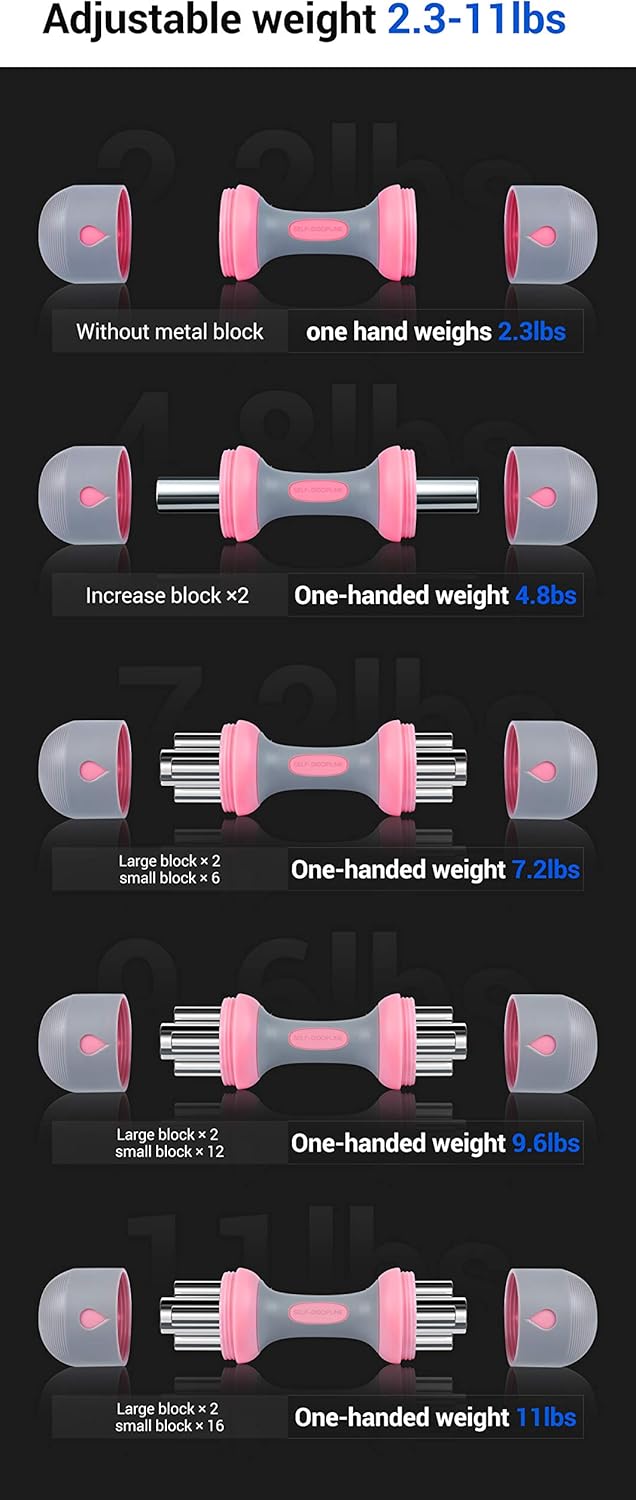
If you’ve ever looked at a corner of your bedroom and thought, there has to be a smarter way to store a bunch of different weights, you’re already thinking like an adjustable dumbbell buyer. An adjustable dumbbell is a single handle — or a matched pair — that can be set to different weights by adding, removing, or dialing in weight plates, so one compact unit replaces what would otherwise be four, six, or even ten separate fixed-weight dumbbells. The appeal for small-space training is obvious: one footprint instead of many. But not all adjustable systems are the same, and the choice between an all-in-one design (weight selected by turning a dial or sliding a selector) and a modular design (weight changed by manually adding or removing plates) has real consequences for how your workouts actually flow. This article walks through both categories, names the tradeoffs clearly, and ends with a decision rule you can use right now.
The Core Tradeoff: Convenience vs. Control
Before diving into specific products, it helps to frame what you’re actually trading between these two system types.
All-in-one / selector-style systems use an integrated mechanism — a dial, a pin, or a sliding selector — to engage only the weight plates you want. The plates you’re not using stay in the tray or base. Weight change takes 5–10 seconds. The cost is that you’re trusting a mechanical selector to hold weight safely under dynamic load, and the internal mechanisms add bulk to the handle.
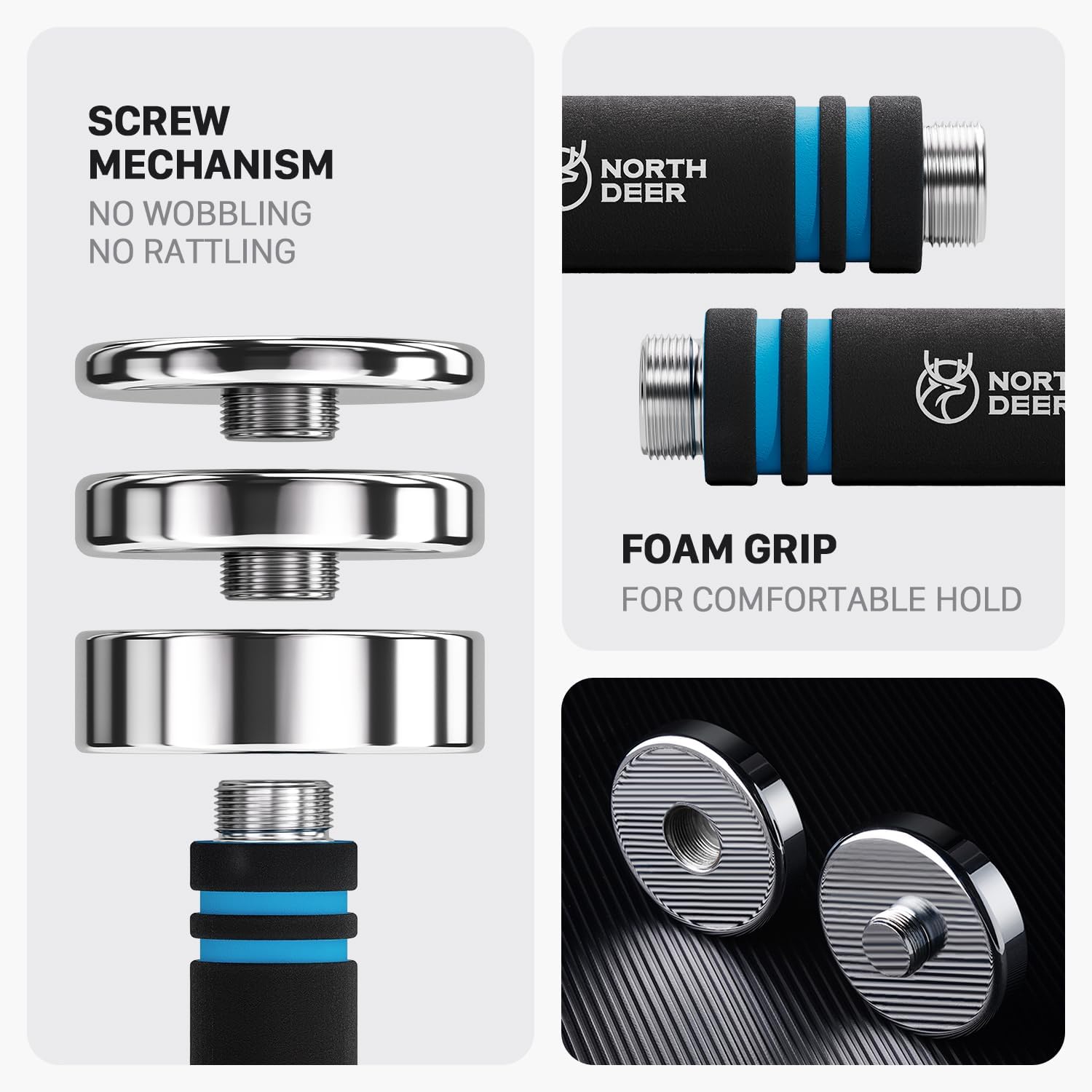
Modular / plate-load systems use standard or proprietary small plates that you physically thread onto a bar and secure with a collar or end cap. They’re mechanically simple — less to break — and they give you granular control over increments because you can mix plates. The cost is weight-change time: it takes 30–90 seconds to swap plates, which matters a great deal during a high-rep, superset-style workout.
Neither is objectively better. They’re optimized for different training patterns and different buyer personalities. The rest of this piece is about matching system type to your actual use case.
What the Owner Record Says About In-Workout Weight Changes
Here’s the honest note that tends to get buried in marketing copy: changing weight between sets during a single workout is meaningfully slower with plate-load systems than with selector systems — and even selector systems aren’t always fast enough for circuit training.
Owner reports on compact plate-load systems are candid about this. Buyers who put these sets through multiple full workouts report that alternating weight amounts during a single session effectively doubles workout time when using slower plate-change designs. That’s a practitioner-grade observation worth taking seriously. If your program calls for drop sets, supersets with different weights, or pyramid loading — training methods that require you to change weight every 1–3 minutes — a slower-change system becomes a structural constraint on your training, not just a mild inconvenience.
A related issue that surfaces in owner reviews across budget-to-midrange systems is weight labeling accuracy. As noted in the Garage Gym Reviews Adjustable Dumbbell Buyer’s Guide, 2025 edition, manufacturing tolerance on weight accuracy in this product category can run ±3–5%, meaning a labeled 20 lb dumbbell may be closer to 19 or 21 lbs. For general fitness this is immaterial. For anyone doing precise progressive overload — adding weight in small, planned increments — it’s worth knowing before you buy.
The practical takeaway: if your training style involves circuit work or frequent in-set weight changes, prioritize selector-style systems over plate-load systems, and check owner reviews for weight accuracy reports on any specific model you’re considering.
Three System Tiers: Which One Fits Your Training
The compact adjustable dumbbell market breaks into three recognizable tiers — budget plate-load, mid-range fast-change, and selector-style premium — each with distinct strengths and limitations. Understanding where each tier sits helps you avoid the most common mismatch: buying for the price point rather than for the training style.
Budget Plate-Load Systems
Budget plate-load systems are the mechanically simplest option in this category. A short bar, a set of small plates, and a threaded collar or quick-lock end cap — that’s the entire system. There’s very little to break, and the price per pound of range covered is typically the lowest of any adjustable option.
The tradeoff is time. Threaded-collar systems in particular can take 60–120 seconds per weight change, which is a genuine workflow disruption during circuit or HIIT-style training. The Barbend Best Adjustable Dumbbells guide, updated 2025, identifies this as the primary complaint across budget plate-load reviews: the system works as described, but the pace of weight adjustment doesn’t suit everyone’s training style.
One additional limitation worth naming: plate labeling quality at this tier varies significantly. Owners who train in dimly lit spaces — a basement, a bedroom with a single lamp — frequently report difficulty reading plate weight markings at a glance. If your training space has limited overhead lighting, this is worth factoring into your decision.
Best for: beginners doing traditional sets-and-reps programming with 90-second rest periods, where a 60-second weight change costs nothing meaningful; buyers whose primary priority is lowest possible entry price.
Not ideal for: circuit training, HIIT, drop sets, or any programming that requires weight changes faster than once per minute.
 product image](/images/external/536ff91814bf.jpg)
Yes4All
$23.16
In stock on Amazon
Check price on AmazonMid-Range Fast-Change Plate-Load Systems
A step up from threaded-collar designs, fast-change plate-load systems use a redesigned collar or locking mechanism that reduces plate swap time to the 30–45 second range. Owners consistently identify speed of weight change as the clearest differentiator compared to budget plate-load competitors — the mechanism is engineered for faster plate engagement without sacrificing the mechanical simplicity that makes plate-load systems durable.
The recurring criticism in owner reviews across mid-range fast-change systems — faint weight labeling on the plates — is the same issue that surfaces at the budget tier, just with a different severity level. In bright training environments, owners report no problem. In dimmer spaces, squinting at plates mid-workout becomes a genuine annoyance rather than a minor one. This is a consistent enough pattern across owner reports that it’s worth treating as a known product characteristic rather than an isolated complaint.
Systems with an integrated tray or base address a separate but related small-space concern: loose plate storage. In an apartment living room or a bedroom where dumbbells coexist with furniture, a system that contains all its plates within a single footprint is meaningfully different from one where plates accumulate on the floor. Wirecutter’s The Best Adjustable Dumbbells, 2025, identifies this containment feature as a practical quality-of-life differentiator, not merely an aesthetic one. A loose plate is a trip hazard and a clutter source. A system that keeps everything in one place reduces both risks, and the built-in base provides an instant visual inventory of whether all plates are accounted for.
Best for: buyers who want the mechanical simplicity and durability of a plate-load system but whose training includes occasional supersets or moderate-paced circuit work; buyers in shared household spaces where floor clutter is a real concern.
Not ideal for: true HIIT or back-to-back drop sets where every second of rest counts.
Nice
$55.99
In stock on Amazon
Check price on AmazonSelector-Style All-in-One Systems
Selector-style systems — dial, pin, or sliding selector — are the fastest-change option in the compact dumbbell category. Weight changes in 5–15 seconds are consistent across owner reports for well-maintained systems. Bowflex SelectTech is the category anchor at this tier; the full-size 552 model covers 5–52.5 lbs in 2.5 lb increments and is consistently recommended by both Wirecutter’s The Best Adjustable Dumbbells, 2025, and the Barbend Best Adjustable Dumbbells guide as the benchmark for selector-style reliability.
The mechanical tradeoff is real: selector systems contain more moving parts than any plate-load design, and those parts are load-bearing. The Garage Gym Reviews Adjustable Dumbbell Buyer’s Guide, 2025 edition, identifies selector mechanism durability as the primary long-term concern for this category — not an immediate failure risk under normal home use, but a relevant consideration for anyone planning to use a single system for five or more years. Dropping a selector-style dumbbell from height is also more consequential than dropping a plate-load dumbbell; the internal mechanism can be damaged by impact in a way that a simple bar-and-collar system cannot.
For training styles that require fast weight transitions, however, the selector system’s speed advantage is decisive. The Barbend Best Adjustable Dumbbells guide notes that the 10-second weight change isn’t a luxury for circuit and HIIT programming — it’s what keeps rest periods honest and heart rate where it needs to be. For this training style specifically, the mechanical complexity is the right tradeoff.
Best for: circuit training, HIIT, drop sets, supersets, and any programming that requires weight changes faster than once per minute; buyers who want the widest weight range in the smallest selector-tray footprint.
Not ideal for: buyers who prioritize mechanical simplicity and long-term repairability over speed; buyers whose working weights are already near a compact system’s maximum, at which point a full commercial-grade system is a more honest recommendation.
Northdeer
$230.90
In stock on Amazon
Check price on AmazonThe Beginner-to-Intermediate Progression Arc
One pattern that emerges consistently across owner reviews — and that Verywell Fit’s How to Progress with Dumbbells: A Beginner’s Guide reinforces — is that compact adjustable systems are described as “starter systems with enough range to grow into.” That framing points to something real about how these products deliver value over time.
ACE Fitness’s Resistance Training for Beginners guidelines note that beginners typically start in the 5–15 lb range for upper-body work and progress to 15–30 lbs over 6–12 months of consistent training. A compact adjustable set that tops out at 25–32 lbs will serve most beginners through their entire first year and well into an intermediate phase. The value isn’t just the day-one price; it’s avoiding two or three separate dumbbell purchases as strength increases.
Wirecutter’s The Best Adjustable Dumbbells, 2025, consistently emphasizes this multi-year utility as a core part of the value calculation — the compact adjustable set that feels “slightly too light” at the beginning is often the right choice precisely because it will feel appropriately challenging within three to four months.
The caveat: if you’re already training consistently and your working weights are above 30 lbs for most exercises, compact systems in the budget-to-mid tier will ceiling out faster than you’d like. At that point, a full-size selector system or a higher-max plate-load system is the more honest recommendation.
All-in-One vs. Modular: The Decision Rule
If your workouts involve frequent weight changes within a session (circuits, drop sets, supersets, HIIT with weighted intervals), choose a selector-style all-in-one system. The mechanical complexity is a real tradeoff, but for this training style it’s the right one.
If your workouts are more traditional (sets and reps with 90-second rest periods, where a 45-second weight change costs you nothing), a quality plate-load modular system is the better long-term buy. Fewer moving parts means less to break. A fast-change design narrows the time gap considerably.
If small-footprint tidiness is non-negotiable — you’re in an apartment, the dumbbells live in visible space, or loose plates are a real hazard — weight a system with an integrated base or tray seriously in your decision. It’s a practical feature, not a premium one.
For beginners specifically: per ACE Fitness’s Resistance Training for Beginners guidelines, a system topping out at 25–30 lbs will serve you well for 12–18 months of consistent training. Buy for where you’ll be in six months, not where you are today.
Frequently Asked Questions
Can I actually change the weight on an adjustable dumbbell between sets during a workout? Yes, but speed varies significantly by system type. Selector-style systems typically allow weight changes in 5–15 seconds. Plate-load systems take 30–120 seconds depending on design. For circuit or HIIT training, that gap is a meaningful structural constraint on how your workout flows — not just a minor inconvenience.
How accurate are the weight labels on compact adjustable dumbbell systems? As the Garage Gym Reviews Adjustable Dumbbell Buyer’s Guide, 2025 edition, notes, manufacturing tolerance in budget-to-midrange systems can vary ±3–5% from labeled weight. For general fitness this is inconsequential. For precise progressive overload, it’s worth checking owner reviews for accuracy reports on any specific model you’re considering.
What is the smallest footprint I can expect from a compact dumbbell system? Most compact adjustable pairs, when stored in their tray or base, occupy roughly the footprint of a standard shoebox per dumbbell — approximately 14–16 inches long by 8–10 inches wide. Systems with integrated bases contain all plates within that same footprint. Loose plate-load systems require separate plate storage.
Are compact adjustable dumbbells durable enough for daily use? For home use at normal training intensity, yes — owners across multiple systems report multi-year durability with no degradation. For instructor-grade or multi-user environments, compact consumer systems are not rated for commercial use. Consider commercial-grade adjustable systems for that context.
What weight range should a beginner look for in an adjustable dumbbell? ACE Fitness’s Resistance Training for Beginners guidelines and Verywell Fit’s How to Progress with Dumbbells: A Beginner’s Guide both recommend beginners start in the 5–15 lb range for upper-body movements. A system ranging from 5 to 25–30 lbs covers the full beginner phase and most of intermediate progression. Avoid over-buying maximum weight capacity if your current working weights are below 20 lbs.
Is it worth buying adjustable dumbbells over just getting a neoprene set with a rack? The math generally favors adjustable for anyone who plans to use more than three or four different weight increments. A neoprene set covering 5, 8, 10, 12, and 15 lbs takes up roughly five times the floor space and costs more in aggregate than most compact adjustable sets covering the same range. The adjustable system wins on space and cost-per-weight-increment. The neoprene rack wins on zero mechanical complexity and instant grab-and-go access. Both are valid; the question is how you actually train.