June 2, 2026 • Renata Solís • 10 min reading time • Specs verified June 5, 2026
Heavy Weighted Vests for Rucking and Calisthenics: 20 lb to 150 lb Options
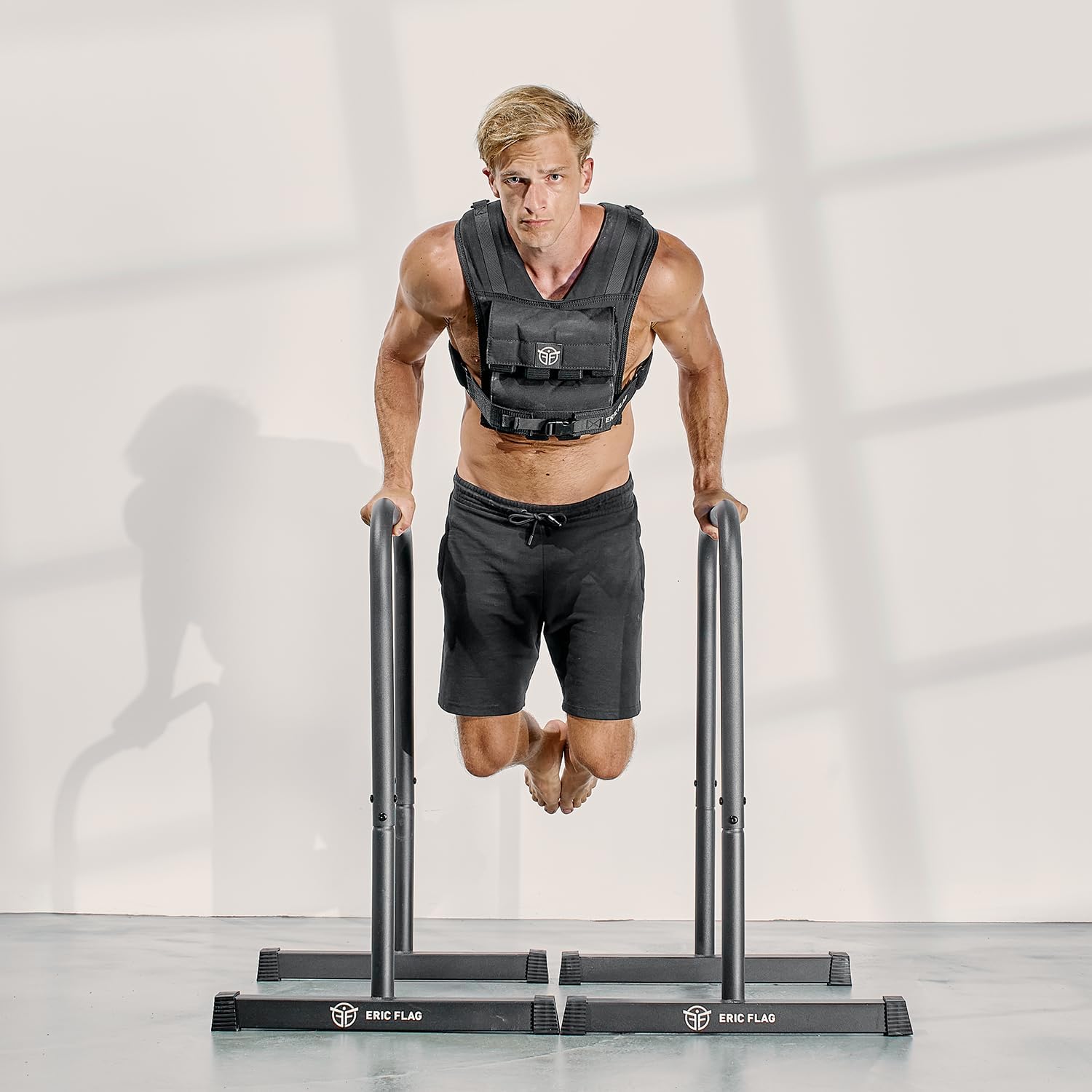
A weighted vest is exactly what it sounds like: a vest you wear during exercise that adds extra load to your body. Instead of carrying a dumbbell or a backpack, the weight wraps around your torso, leaving your hands free and distributing the resistance more evenly than holding something in your grip. People use them for walking under load (called rucking — a term borrowed from military training, where soldiers carry heavy packs over distance), bodyweight-only strength movements like pull-ups and push-ups (collectively called calisthenics), and cardio workouts where added resistance accelerates adaptation. If you’re reading this, you’ve probably already decided a vest is the tool you want — this guide is about choosing the right vest for loads above 20 lb, where the decisions get genuinely consequential and the wrong call costs real money and real training time.
The range we’re covering — 20 lb all the way to 150 lb — spans four meaningfully different product categories. Buying a 20 lb general-fitness vest and buying a 100 lb plate-stacking system are not the same decision wearing the same label. This article breaks that range into honest tiers, names the tradeoffs explicitly, and ends with clear if/then decision rules so you can stop researching and start training.
| EDITOR'S PICK[ERIC FLAG 40 lb Weighted Vest](https://www.amazon.com/dp/B09WB1BF81?tag=greenflower20-20) f… | Mid-tier[RUNmax 20LBS - 150LBS Adjustabl…](https://www.amazon.com/dp/B01AJ12ML4?tag=greenflower20-20) | Budget pick[RUNFast 40lbs Pro Weighted Vest](https://www.amazon.com/dp/B015G7KS9Y?tag=greenflower20-20) | |
|---|---|---|---|
| Weight range | 0-40 lb | 20-150 lb | — |
| Material | 1000D Oxford | — | — |
| Weight type | 16 Iron | — | — |
| Shoulder pads | — | Without | — |
| Price | $169.99 | $56.56 | $51.10 |
| See on Amazon → | See on Amazon → | See on Amazon → |
Why the Load Range You’re Targeting Changes Everything
Most vest reviews treat “heavier” as a simple upgrade. It isn’t. The jump from 20 lb to 60 lb to 150 lb involves fundamentally different engineering, different use cases, and different bodies of owner feedback.
By the numbers:
| Load tier | Primary use case | Weight format | Typical price range (2026) |
|---|---|---|---|
| 20–40 lb | Calisthenics, HIIT, rucking | Fixed or adjustable sand/iron slugs | $80–$180 |
| 40–80 lb | Rucking, weighted pull-ups, loaded carries | Removable iron or steel shot bags | $150–$280 |
| 80–150 lb | Strength-focused calisthenics, GoRuck-style events, advanced rucking | Plate-carrier systems + iron slugs | $180–$450+ |
That price range reflects retail conditions as of mid-2026. The upper end of the 80–150 lb tier is dominated by plate-carrier-style vests that accept standard steel or iron weight plates — the same format used in barbell training — rather than purpose-made vest weights.
The 20–40 lb Tier: Where Fit and Distribution Matter Most
At this load, the vest lives closest to its aerobic roots. Owners using vests in this range for weighted calisthenics — particularly pull-ups, dips, and push-up variations — consistently report that distribution beats total load as the deciding factor. A vest that piles weight on the front panel makes push-ups awkward and pull-ups mechanically inefficient. A vest that distributes evenly front-to-back, and sits high on the torso rather than sagging onto the hip flexors, is what the practitioner community consistently rewards in long-run reviews.
Garage Gym Reviews’ aggregated owner feedback on vests in this tier repeatedly surfaces two complaints: (1) vests that shift during dynamic movement, and (2) vests that run too warm during sustained cardio. Both are solvable at the design level. Look for:
- Compression fit with side adjustment straps — not just a front buckle
- Breathable mesh panels or at minimum a mesh liner layer
- Weight pockets positioned between shoulder and mid-chest, not low on the abdomen
The Hyperwear SoftVest Pro lands squarely in this tier. Hyperwear’s published spec sheet puts the SoftVest Pro’s max load at 40 lb in the standard configuration, with weight distributed via individual steel shot-filled soft pouches. Owners consistently report it as one of the most comfortable options for sustained movement precisely because the soft shot conforms slightly to body contour rather than shifting as a rigid block. The tradeoff named in reviews: at or near max capacity, the vest becomes noticeably bulky at the shoulder, which can restrict range of motion on overhead movements.
The 40–80 lb Tier: Rucking’s Natural Home
This is where rucking — sustained loaded walking over varied terrain — becomes the primary frame. Outside Online’s rucking training primer notes that military-derived protocols typically prescribe loads in the 30–50 lb range for conditioning work and 60–80 lb for strength-focused carries, making this the tier where serious ruckers live most of their training time.
At these loads, the vest’s carry system becomes the load-bearing conversation. The difference between a vest that distributes 60 lb well and one that distributes it poorly is the difference between functional training and a lower-back injury accumulating over weeks. Three design elements matter here:
-
Shoulder strap padding and geometry — at 60+ lb, thin straps cut into the trapezius and clavicle region with sustained use. Owners in long-run reviews at Garage Gym Reviews consistently flag strap padding as the first thing that fails or proves insufficient on budget-tier vests in this range.
-
Sternum and waist stabilization — a vest that transfers load partially to the hip (similar to a proper backpacking harness) dramatically reduces shoulder fatigue on longer rucks. Vests designed only for short gym sessions typically lack this.
-
Weight increment modularity — the ability to add weight in small steps (5 lb or less) matters for progressive overload. ACE Fitness’s resistance training guidelines identify progressive overload — the practice of incrementally increasing load to drive continued adaptation — as the foundational principle behind strength gains. A vest that forces you to jump from 45 lb to 60 lb in one step removes your ability to manage that progression precisely.
The 5.11 Tactical TacTec Plate Carrier is the most-discussed option at this tier in the practitioner community. 5.11’s published specifications show it accepts standard 10”×12” soft or hard armor plates — meaning you can load it with commercially available steel weight plates in that format — up to approximately 60–70 lb depending on plate selection. BarBend’s weighted vest buying guide notes that the TacTec’s carry system, designed for extended tactical wear, transfers meaningfully well to rucking loads in a way that most purpose-built fitness vests at this price point don’t match. The tradeoff: it’s a plate carrier first, so the fit and adjustment system is built around a specific plate format. Owners report that getting the fit dialed in takes more initial effort than a traditional fitness vest, and the system is less suited to calisthenics where you want a tighter, closer-fitting profile.
The 80–150 lb Tier: Serious Iron, Serious Decisions
Above 80 lb, you are no longer in the “fitness vest with extra weight” category. You are in the territory of purpose-built systems designed for goruck-style events (multi-hour or multi-day team challenges that originated in military selection programs), advanced loaded calisthenics, and strength-sport-adjacent training.
The Hyperwear HyperVest Elite is the highest-profile purpose-built fitness vest designed to push into this range. Hyperwear’s spec sheet rates the Elite for up to 36 lb in its standard iron weight loadout, but the system is designed around a premium contoured fit — not raw maximum load. It is not the right tool if 80–150 lb is your actual training target. It belongs in the high-precision, mid-load category where fit and ergonomics are the deciding variables, not ceiling weight.
For genuine 80–150 lb capability, the practitioner community consistently converges on two approaches:
Approach A: Plate-carrier vest + steel plates. Products like the Rogue Dog Sled Vest, the Condor Sentry Plate Carrier, and military-surplus MOLLE-compatible carriers (MOLLE — Modular Lightweight Load-carrying Equipment — refers to a webbing attachment system that allows external pouches and accessories to be added) all accept standard plates. At 80–150 lb, you are stacking multiple plates front and back plus additional weight pouches. This works, but the center-of-mass implications are serious: that much weight forward and back on the torso changes gait mechanics, increases compressive load on the spine, and demands that you’ve already built a substantial base of loaded movement before working up to it.
Approach B: Incremental loading system with a purpose-built shell. A smaller category of vests — including the Henkelion Weighted Vest at its higher-capacity configurations — use dense iron weight bars or rods rather than plates, allowing more weight in a lower-profile package. Owners report these wear more like a traditional vest and less like tactical gear, which matters for calisthenics where you want the vest tight against the body.
Outside Online and BarBend both note that above 80 lb, the rucking and calisthenics use cases diverge significantly in what they ask of the vest. Rucking at 100 lb is a slow, grinding endurance stimulus where load transfer to the hips is critical. Weighted pull-ups or dips at 100 lb added to bodyweight require a vest that stays absolutely fixed during dynamic vertical movement — hip transfer actually works against you there because it means the vest can shift.
If you’re in this tier, name your primary use case before you buy. There is no single vest that is optimal for both 120 lb rucking and 120 lb weighted pull-ups.
The Fit Problem at High Loads — Especially for Women
Every extra pound amplifies fit errors. A vest that sits 1 inch too low on the torso is annoying at 20 lb and actively harmful at 80 lb. This is where the sizing transparency problem is most acute for women buying vests designed around a male torso template.
The standard fitness vest is built for a straight-sided, shorter-torso male profile. Women — particularly those with a higher hip-to-shoulder ratio or a longer torso — consistently report in aggregated reviews that unisex vests at high loads migrate downward, stacking weight onto the iliac crest (the top ridge of the hip bone) rather than the thoracic cavity where it’s meant to sit. At 20 lb, this is uncomfortable. At 60 lb, it creates real injury risk over repeated sessions.
Practical guidance from the owner community: measure your torso length from the C7 vertebra (the prominent bone at the base of your neck) to the top of your hip crest, and compare it against the vest manufacturer’s torso length specification. Hyperwear publishes this data explicitly for the HyperVest Elite. Most plate carriers do not, which means you’re relying on owner reviews from people with similar builds.
Decision Framework: If X, Then Y
If your primary use is rucking at 20–50 lb and you want a vest that moves with you: Look at the SoftVest Pro or HyperVest Elite based on your torso fit. The soft-shot weight format earns its premium for sustained cardio movement.
If your primary use is rucking at 50–80 lb and durability over daily multi-session use is the priority: The TacTec Plate Carrier’s carry system and build quality justify its price against purpose-built fitness vests at this load. Budget extra time for fit adjustment on first use.
If your primary use is weighted calisthenics (pull-ups, dips, push-ups) at 20–60 lb: Prioritize chest-high weight placement and compression fit over maximum load capacity. The vest you can actually keep stationary during a pull-up set is worth more than the vest rated for the most weight.
If you need genuine 80–150 lb capacity: Decide rucking vs. calisthenics first. Rucking at these loads wants a plate carrier with hip transfer. Calisthenics at these loads wants a tight, dense iron-weight shell. No current vest does both well at this load range — the physics don’t allow it.
If you’re a studio operator or instructor buying multiple units: The load range your clients will realistically use in a session matters more than ceiling capacity. Most group fitness or coached calisthenics contexts max out at 40 lb, and paying for 80 lb capability you won’t use is wasted per-unit cost. Direct your budget toward durability — stitching, buckle quality, weight pocket retention — rather than maximum rated load.
The right vest is the one that fits the training block you’re actually running, at the load you’re actually using, on the body you actually have. Spec sheets set the floor; owner feedback in the practitioner community sets the ceiling.