September 22, 2026 • Renata Solís • 11 min reading time • Specs verified June 5, 2026
Heavy Adjustable Weighted Vests 40 lbs and Up: Sizing Up Without Getting Wrecked
A weighted vest is exactly what it sounds like: a close-fitting garment — typically nylon or mesh, sometimes neoprene — that you load with small weight plates or steel shot bags to add resistance to bodyweight exercises or cardio. At 20 pounds and under, most people manage fine by pulling the vest over their head the way they’d put on a hoodie. At 40 pounds and above, everything changes: getting into the vest safely, managing cumulative stress on your spine and shoulders, and choosing the right starting weight all become real decisions with real consequences. If you’re reading this, you’ve probably already logged time in a lighter vest and you’re now eyeing the jump to serious load — or you have a client making that jump and you want to guide them well. Either way, this article is the briefing you need before you commit.
The practitioner community has logged a lot of hours at heavy load, and the pattern across aggregated verified purchaser reviews is consistent enough to draw clear decision rules. Here’s what the published record says.
| EDITOR'S PICKERIC FLAG 40 lb Weighted Vest f… | Mid-tierRUNFast 40lbs Pro Weighted Vest | Budget pickCAP Adjustable Weighted Vest 20… | |
|---|---|---|---|
| Max weight | 40 lb | 40 lb | 150 lb |
| Adjustable | ✓ | — | ✓ |
| Included weights | 16 iron weights | — | — |
| Material | 1000D Oxford | — | — |
| Min weight | 0 lb | — | 20 lb |
| Use case stated | Calisthenics, run | — | Strength, running |
| Price | $169.99 | $51.10 | $19.89 |
| See on Amazon → | See on Amazon → | See on Amazon → |
The Donning Problem Nobody Warns You About
Before you can train in a 40-pound vest, you have to get it on — and that sentence is less trivial than it sounds.
One CAP Barbell vest reviewer describes their donning routine in memorable detail: they use a wheeled side table to hoist the fully loaded vest onto a kitchen counter, then step into the opening from below rather than lifting it overhead. That isn’t a workaround for a bad product — it’s a sensible adaptation to physics. A 40-pound lift from floor to shoulders is a loaded movement in its own right, and doing it with your arms in an awkward overhead position before your warm-up is an injury waiting to happen. Verywell Fit, in their overview piece “How to Use a Weighted Vest for Training,” flags exactly this concern, recommending that athletes develop a consistent, low-stress donning routine before beginning any heavy-vest training block.
The three donning strategies practitioners report using:
- Counter-load method — Set the loaded vest on a table or counter at hip height. Step underneath, shrug your shoulders up into the openings, then fasten. Zero overhead lift.
- Partner-assist — Common in studio settings. One person holds the vest open while the other steps in and shrugs it on. Fast, safe, repeatable.
- Floor-seat method — Sit on the floor, lay the vest flat across your lap, slide your arms through, then use a wall or bench to stand. Useful for solo home training with no counter at the right height.
The counter-load method is the one CAP Barbell and RUNmax users mention most often. If you’re a studio operator sourcing vests for client use, building a simple vest rack at approximately hip height will meaningfully reduce the liability profile of your heavy vest sessions — and your clients will thank you.
Load Distribution at 40 Pounds: Why Your Legs Go First
Here’s the finding that surprises most people moving up from lighter vests: at heavy load, the limiting factor often isn’t your back — it’s your legs.
Multiple RUNmax reviewers note explicitly that once the vest is on and balanced, the weight distribution makes the load “surprisingly bearable,” with leg fatigue accumulating faster than back fatigue during sustained cardio. This aligns with ACE Fitness’s guidance in their article “Progressive Overload: What It Is and Why It Matters,” which explains that well-distributed axial load — weight aligned along the spine’s natural axis — transfers stress to the lower body musculature rather than concentrating it in the lumbar region.
The implication for programming: if you’re moving from a 20-pound vest to a 40-pound vest, your cardio volume may need to drop by more than you expect — not because your cardiovascular system can’t handle it, but because your quads and hip flexors will hit their limit first. Plan for a 15–20% volume reduction in your first two weeks at the new weight, then rebuild from there.
Barbend’s roundup “Best Weighted Vests” makes a related point: vest fit quality has an outsized effect on how load distributes across the body. A vest that rides forward or sits unevenly doesn’t just feel bad — it changes where the stress lands, typically moving it toward the lumbar and away from the legs and hips where you want it.
By the numbers — what the progression typically looks like:
| Stage | Load | Typical Timeline |
|---|---|---|
| Comfortable at light vest | 10–20 lbs | Baseline |
| Ready to trial heavy vest | 25–35 lbs | 4–8 weeks at prior load |
| Productive at 40 lbs | 40 lbs | 6–12 weeks after heavy vest intro |
| Sustaining 40 lbs for long sessions | 40 lbs max | 3–5 months cumulative |
These are practitioner-community norms drawn from aggregated purchaser review threads, not controlled study data. Individual response varies widely.
Which Vests Actually Handle 40+ Pounds Well
Not every vest marketed at heavy weights earns the designation. Here’s how the most-reviewed options in this tier compare on the dimensions that matter once you’ve passed the 30-pound mark. Each H3 below is paired with a tier marker reflecting its best-fit buyer profile.
RUNmax Adjustable Weighted Vest
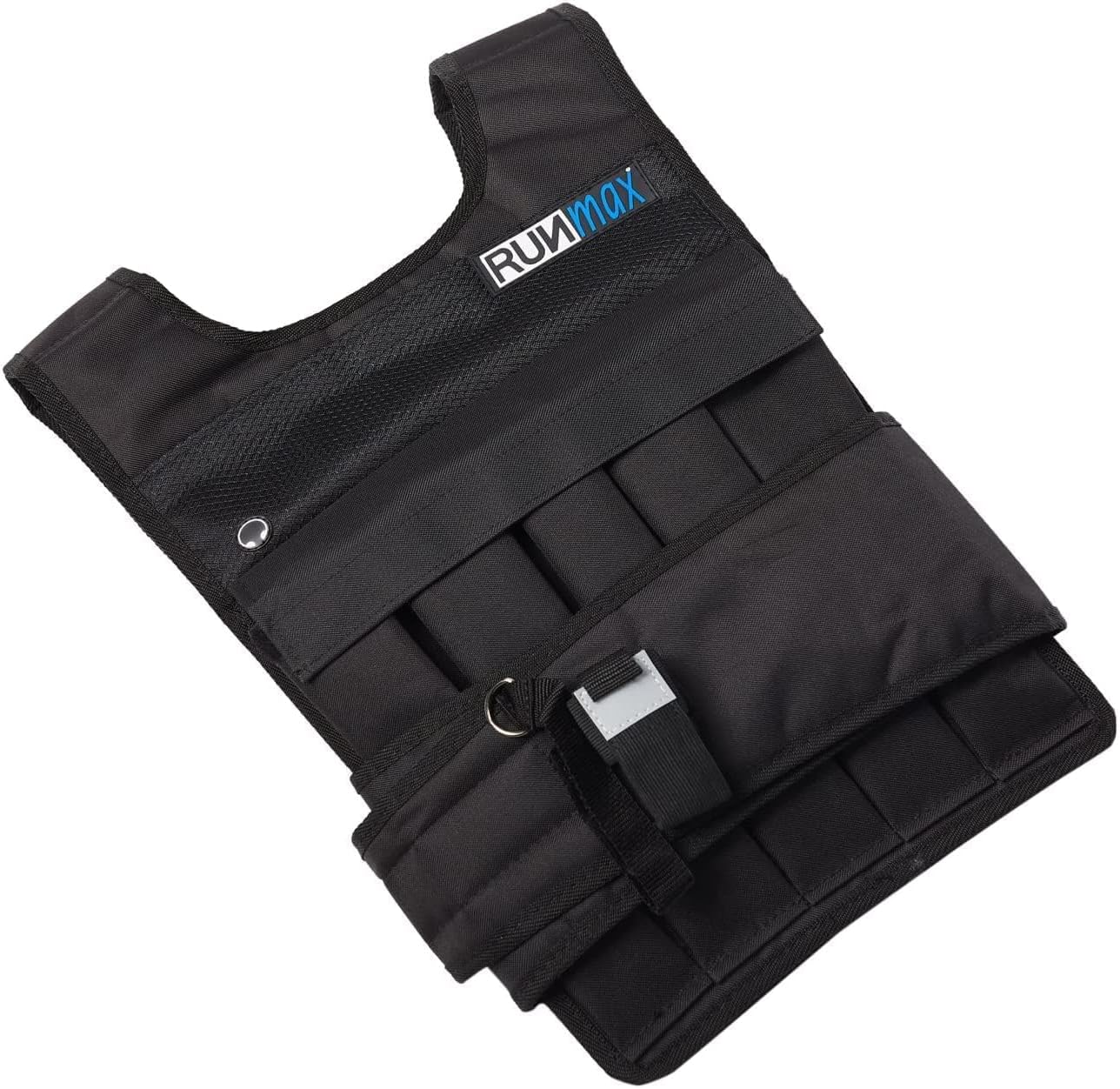
The RUNmax is the volume leader in this category by review count, and the pattern across those reviews is clear: it’s genuinely functional at 40 pounds, but the shoulder interface becomes a pressure point for users logging multiple hours per week at max load. One reviewer who escalated quickly — buying the 20-pound version, maxing it out in early sessions, and exchanging it for the 40-pound model within weeks — describes the experience as a “no-brainer upgrade” on load capacity but notes that the shoulder straps needed padding attention after extended wear. The vest’s weight distribution earns consistent praise; back complaints are rare relative to shoulder-contact complaints.
Best for: Buyers who want volume-tested, widely reviewed heavy-vest performance and are willing to add shoulder pads as a secondary purchase.
RUNFast
$51.10
In stock on Amazon
Check price on AmazonCAP Barbell Adjustable Weighted Vest
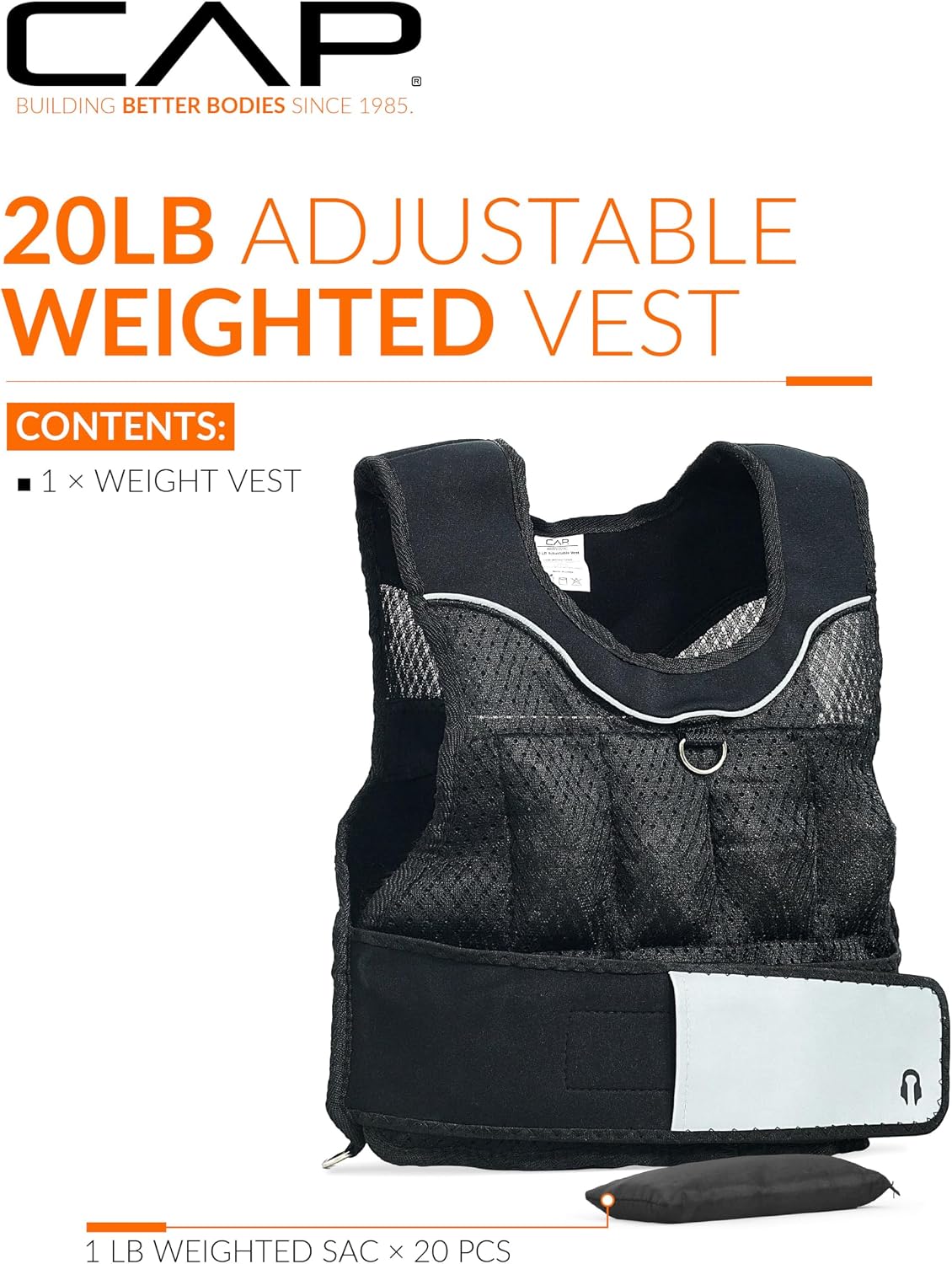
The CAP vest surfaces most often in the context of the donning challenge described above — reviewers are candid that at full weight, getting the vest on requires a strategy. Once on, load distribution reviews are positive. Construction robustness at max load is consistently praised. This is a solid choice for home-gym athletes who have a stable counter or rack setup for donning; less convenient for studio use where clients may need to don and doff quickly between sets.
Best for: Home-gym athletes with a fixed donning setup who prioritize construction robustness over convenience.
CAP
$19.89
In stock on Amazon
Check price on AmazonERIC FLAG Weighted Vest
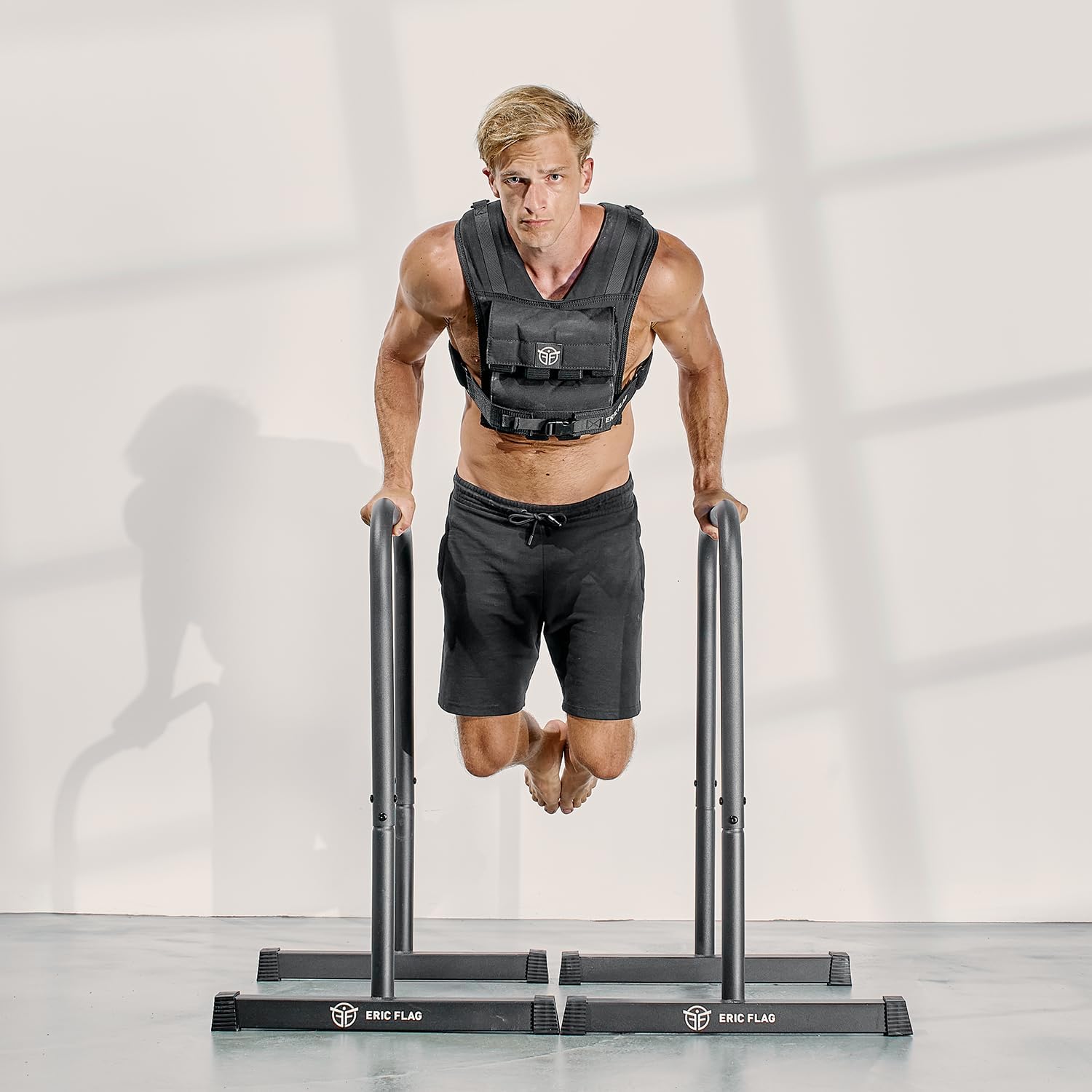
The ERIC FLAG stands out in reviews for two things that matter at heavy load and aren’t always packaged together: compactness and torso breathability. It sits closer to the body than most competitors, which reduces the pendulum effect during dynamic movement — a real performance consideration at 40 pounds during ruck-style walking or weighted step-ups. Crucially, one reviewer explicitly confirms a fit at 6 feet tall with a nearly 60-inch chest at 322 pounds bodyweight — which is rare, specific, and valuable fit confirmation for larger buyers who consistently report that most weighted vest sizing assumes a narrower torso. That single data point is worth more than any manufacturer size chart for buyers in that range.
Best for: Larger-framed buyers needing fit confirmation at high bodyweight; users doing dynamic movement who need a low-profile vest that won’t swing.
ERIC
$169.99
In stock on Amazon
Check price on AmazonSportneer Adjustable Weighted Vest
The Sportneer earns its distinct niche through one operational feature: weight change speed between sessions without removing the vest. In a studio context where multiple clients are cycling through different load levels, or for a coach who programs varied intervals at different loads in a single session, that fast-access design is a meaningful time saver. Aggregated reviews credit the Sportneer specifically for this convenience; it isn’t uniformly the top performer on every other dimension, but on in-session adjustability it leads the field in this weight class.
Best for: Studio operators and coaches running multi-client sessions or interval protocols with variable load targets.
RUNFast
$51.10
In stock on Amazon
Check price on AmazonRUNFast/Max Vest with Shoulder Pads: A Note on Shoulder Protection
Multiple review threads across the RUNFast/Max lineup document the same arc: users train at heavy load without shoulder pads, find the direct contact manageable at first, then eventually purchase pads after sustained high-volume use makes the shoulder interface uncomfortable. One RUNFast reviewer explicitly notes buying pads only after “many hours at max weight” — framing them as a deferred-but-inevitable upgrade rather than an optional accessory.
The practitioner-community pattern suggests: if you’re training 3+ sessions per week at 35 pounds or above, budget for shoulder pads from day one. If you’re doing 1–2 sessions weekly at moderate intensity, you may genuinely not need them for months. This isn’t a binary — it’s a usage-threshold question.
RUNFast
$51.10
In stock on Amazon
Check price on AmazonFrequently Asked Questions
How do you put on a 40 lb or heavier weighted vest by yourself?
The most widely reported solo method is the counter-load approach: rest the fully loaded vest on a surface at approximately hip or lower-chest height, then step or crouch underneath it and shrug your shoulders up into the openings before fastening the closures. Verywell Fit’s “How to Use a Weighted Vest for Training” recommends developing this kind of consistent low-stress donning habit before beginning any serious heavy-vest training block. Lifting a 40-pound vest overhead from floor level before a workout is an unnecessary stress on the shoulder girdle — skip it.
Should I buy a vest at my target weight or start lower and upgrade?
Buy at your target weight if the vest is adjustable — and most in this tier are. The RUNmax review record includes multiple cases of buyers purchasing the 20-pound model, maxing it out in the first few sessions, and exchanging for the 40-pound version — absorbing return friction and shipping costs that an upfront decision would have avoided. If you’re already comfortable at 20–25 pounds and your programming is progressive, buy the 40-pound adjustable and start with lower plate configurations.
Do I need shoulder pads, or are they optional?
Optional in the short term, likely necessary in the long term at high-volume training. The RUNFast community documents this as an acquired need rather than a day-one requirement. If you know you’re planning sustained high-volume use, treat pads as standard equipment from the start.
Which heavy vests fit larger or plus-size bodies?
The ERIC FLAG has the most specific large-frame fit confirmation in the review record: one owner documents a 6-foot frame with a nearly 60-inch chest at 322 pounds bodyweight. Most other vests in this tier lack equivalent documented fit confirmation for larger torsos. If you’re shopping outside the median sizing range, that single verified reviewer account is currently the best fit signal the community has published.
How quickly do experienced users progress from 20 lb to 40 lb?
The aggregated review pattern suggests 6–12 weeks is a realistic progressive timeline for users who arrive at the 20-pound level already conditioned. Some users — particularly those with a strength-training base — progress faster. Verywell Fit’s “How to Use a Weighted Vest for Training” recommends treating each significant load increment as a new training stimulus requiring adaptation time, regardless of prior fitness level. The buyer who exchanged their 20-pound RUNmax for the 40-pound version within weeks is the fast-end example, not the median.
Will a heavy vest hurt my lower back or shoulders during long sessions?
Back complaints are less common than shoulder-contact complaints in the heavy-vest review record, particularly when the vest is well-fitted and load is distributed front-to-back. The shoulder interface is the more common pain point, which is why shoulder pad adoption follows a usage-volume pattern. Lumbar stress risk increases if the vest fits poorly — sagging forward or riding high — rather than as a function of weight alone. As Barbend’s “Best Weighted Vests” roundup notes, fit quality at the shoulders and torso is the single largest variable in how load distributes, and a poor fit at 40 pounds amplifies that problem significantly. Fit verification before committing to a heavy training block is not optional at this weight class.
The Decision Rule
If you’re already training comfortably at 20–25 pounds and your sessions are leaving you with capacity to spare: buy the 40-pound adjustable, start at 65–70% of max plates, and plan your donning setup before the vest arrives.
If you’re still finding 20 pounds genuinely challenging for your primary modality: stay at current load for 4–6 more weeks before sizing up. The review community is consistent — the jump to 40 pounds rewards people who’ve genuinely exhausted lower weights, and it punishes people who rush it with stalled progress and accumulated joint stress.
If you’re fitting a larger frame or need in-session adjustability for studio use: the ERIC FLAG and Sportneer solve different problems in that bracket, and knowing which problem is yours makes the choice simple.
The vest that wrecks you isn’t the heavy one — it’s the one you put on before you were ready for it.