September 6, 2026 • Renata Solís • 10 min reading time • Specs verified June 5, 2026
Neoprene Dumbbell Sets With Racks: Do the Included Stands Actually Hold Up?
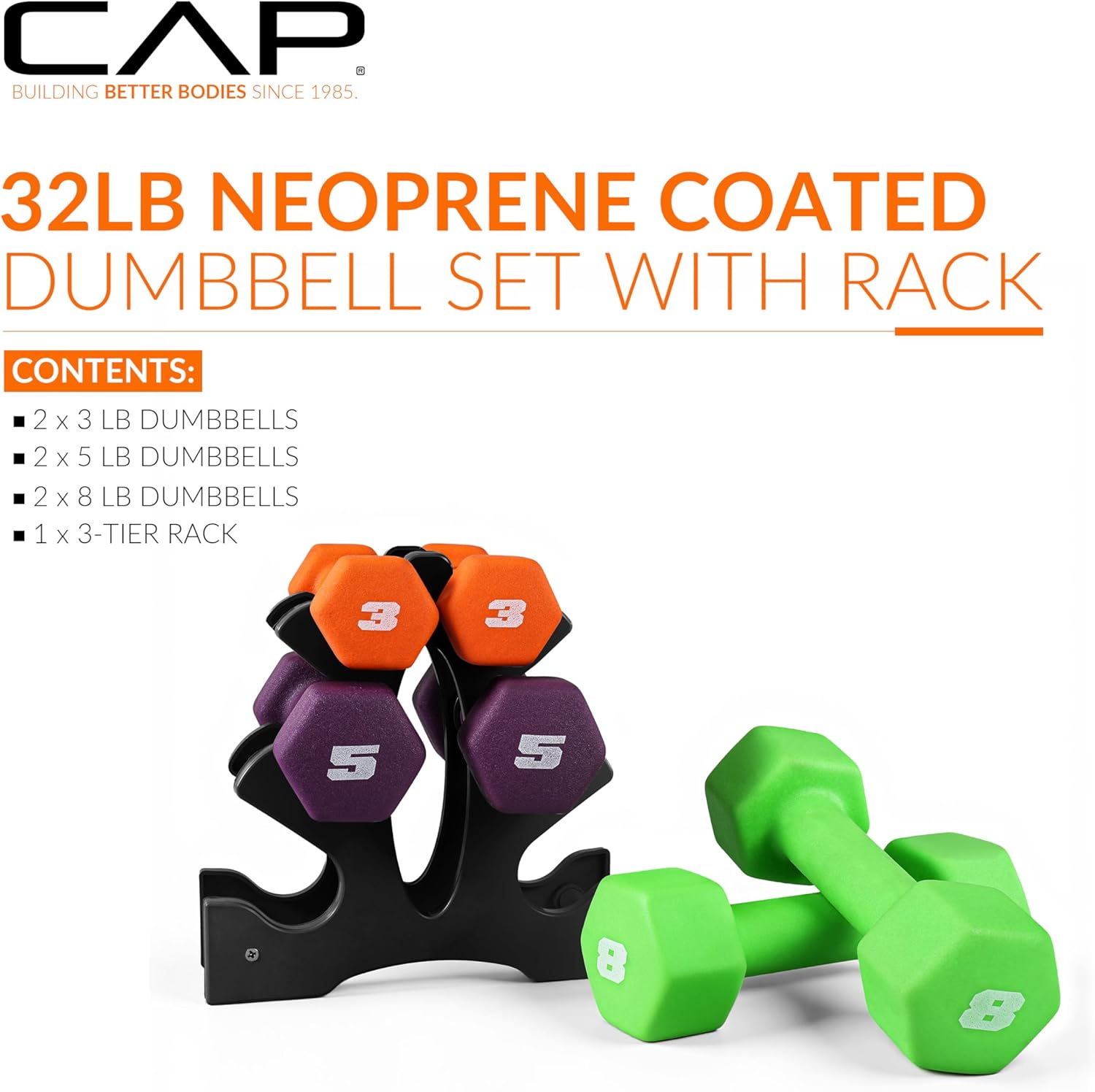
If you’ve ever shopped for a set of small hand weights — the kind used in aerobics classes, physical therapy, or light strength circuits — you’ve almost certainly seen the “set with rack” listing. You get six to ten pairs of dumbbells, ranging from 1 lb up to maybe 10 or 15 lb, and a stand to hold all of them off the floor. The dumbbells in these sets are coated in neoprene, the same soft, slightly rubbery material used in wetsuits, which makes them comfortable to grip and quiet when set down. The rack — usually a compact A-frame or horizontal tier of slots — is supposed to keep your workout space organized. It’s a tidy concept. The question this article investigates is whether that rack is actually worth having, or whether it’s the weakest link in a package that otherwise performs well. We’ll look at what verified owner reviews consistently report, where the engineering improves at higher price points, and how to decide whether the bundle is right for your specific setup.
The short answer is: the dumbbells hold up better than the rack in most reviews. But the full picture is more useful than a headline, so let’s work through it.
| EDITOR'S PICKCAP Barbell 150 LB Coated Hex D… | Mid-tierSQUATZ Dumbbell Weights Set wit… | Budget pickCAP Barbell Neoprene Dumbbell W… | |
|---|---|---|---|
| Set weight | 150 lb | 32 lb | 32 lb |
| Rack included | ✓ | ✓ | — |
| Rack type | Vertical | Stand | — |
| Coating | Coated | Neoprene | Neoprene |
| Shape | Hex | Hex | — |
| Price | $189.99 | $49.90 | $39.99 |
| See on Amazon → | See on Amazon → | See on Amazon → |
What Owners Actually Say About the Dumbbells Themselves
Before dissecting the rack situation, it’s worth establishing why these sets sell so consistently. Across aggregated reviews of neoprene coated sets, the coating itself earns unusually uniform praise — specifically on two dimensions that buyers care about enough to mention unprompted: grip texture and smell.
On grip, owners with a range of hand sizes report that neoprene’s diameter is friendlier than bare steel or cast iron for lighter weights. One reviewer of a popular mid-range set noted explicitly that the grip worked well for their larger hands — a fit consideration that tends to be underreported in category roundups. ACE Fitness’s guidance on dumbbell selection notes that grip diameter affects fatigue and control during high-rep aerobic work, which is exactly the use case these sets are built for.
On smell: neoprene sets are consistently described as odor-free at unboxing. This matters because the rubber hex dumbbells that dominate higher-weight tiers carry a well-documented first-impression problem — the rubber-and-sulfur smell that reviewers repeatedly compare to a tire shop. Garage Gym Reviews’ coverage of neoprene versus rubber dumbbells confirms this distinction; neoprene simply doesn’t off-gas the same way. For a home gym, a studio waiting room, or a physical therapy setting, that difference is real.
Longevity data is thinner — most purchases don’t generate 18-month follow-up reviews — but one HolaHatha set owner specifically returned to report that the dumbbells looked “like new” after two years of regular use. That’s a meaningful data point, not a guarantee, but it suggests the coating is durable when the set stays in a temperature-stable environment away from UV exposure.
The Rack Problem: What the Reviews Are Actually Telling You
Here’s where the picture splits. The rack that ships with most budget-to-mid neoprene sets — typically a plastic-and-light-steel A-frame or a horizontal cradle — draws a different class of comment than the dumbbells do. Common descriptors across owner reviews include “thin plastic,” “a little flimsy,” and, memorably, one reviewer who said the stand “could blow over in a strong wind.” One buyer of a Fitvids set noted they simply recycled the stand and stored the dumbbells another way — treating the rack as genuinely optional.
This isn’t a quality-control failure unique to one brand. It’s a structural consequence of price architecture. When a set is priced to be accessible — say, in the $40–$80 range for a full 10-pair neoprene set — the bill of materials is heavily weighted toward the dumbbells themselves. The rack is engineered to a budget, and at light-to-moderate weights it usually functions adequately. The problem is that “adequately” in this context means: holds the weights, doesn’t collapse, but flexes noticeably when loaded and isn’t a piece of furniture you’d trust in a commercial setting or anywhere a toddler or client might bump into it.
Verywell Fit’s roundup of home dumbbell sets notes that buyers consistently prioritize the dumbbell quality over accessory inclusions — which tracks with the review pattern. The rack is a convenience feature, not the value proposition.
By the numbers:
| Price tier | Typical rack material | Owner rack rating pattern |
|---|---|---|
| $40–$80 (light sets, ≤15 lb top) | Plastic / light-gauge steel | ”Functional but flimsy” |
| $90–$140 (mid sets, ≤25 lb top) | Steel cradle, some plastic joints | Mixed — better stability |
| $150+ (heavier sets, ≤50 lb top) | Steel vertical rack | Consistently praised for footprint and load capacity |
The CAP Barbell 150 lb hex set with vertical rack is illustrative here. Reviewers praise its compact footprint despite a substantial total weight capacity — evidence that rack engineering improves meaningfully at higher price tiers where the structural demands force better materials. Barbend’s dumbbell set coverage notes that vertical racks (where dumbbells stand upright in slots rather than resting in horizontal cradles) tend to have a smaller floor footprint and better lateral stability, which is consistent with what CAP buyers report.
The Decision Frame: Bundle, Skip, or Upgrade the Rack Separately
If you’re evaluating a neoprene set with a bundled rack, the practical question is: what are you actually buying, and what tradeoff are you accepting?
If your top weight is 10 lb or under: The bundled rack is probably fine. The total loaded weight is light enough that even a thin plastic cradle won’t be under meaningful stress. The wobble that reviewers describe becomes a real concern only when the set’s total load approaches 50–100 lb.
If your top weight is 15–25 lb: This is where the tradeoff becomes decision-relevant. Owners in this range report functional but noticeably flexible racks. If the set is for personal home use in a stable location — not a high-traffic studio, not near kids or pets — you’ll probably live with it. If you’re sourcing for a client space or a group fitness setting, the bundled rack at this tier isn’t the right answer.
If your top weight is 25 lb or above, or you’re buying for studio or multi-user use: The Fitvids reviewer’s approach — ditch the stand, source storage separately — is worth serious consideration. A purpose-built dumbbell rack (vertical A-frame or tiered horizontal) from a fitness-equipment supplier is engineered for the purpose in a way that a bundled plastic cradle isn’t. The per-unit economics on the dumbbells are still valid; you’re just decoupling the storage question from the dumbbell question.
Per ACE Fitness’s guidance on commercial fitness environments, equipment used in multi-session daily settings should meet higher stability and durability thresholds than the specs on most bundled light-dumbbell racks satisfy.
Grip, Fit, and the Underreported Sizing Question
One consideration that doesn’t get enough column inches in category coverage: grip diameter scales with dumbbell weight, and neoprene coating adds a small amount of circumference on top of the cast iron or steel core. For most users this is neutral or positive — the softer, slightly larger grip is more comfortable during high-rep aerobic work. But for users with smaller hands, a 5 lb neoprene dumbbell can feel bulkier than a bare-steel equivalent, and for users with larger hands, the neoprene diameter at lighter weights often works better than it does with hexagonal rubber dumbbells of the same weight.
If you’re sourcing sets for a group fitness or rehab environment where participants have a wide range of hand sizes, it’s worth noting this explicitly in your purchasing rationale. The coating isn’t just cosmetic — it changes the feel of the grip, and that affects exercise execution at light weights where control matters more than raw load.
Frequently Asked Questions
Is the rack that comes with neoprene dumbbell sets strong enough to hold the full weight load?
For light sets (top weight 10 lb or under), bundled racks generally hold the load without structural failure, though owners frequently note flexing and light instability. For sets where the total loaded weight approaches 100 lb or more, owner reviews consistently describe bundled racks as undersized for the job. The rack’s rated capacity and the actual loaded weight of a full set are often different numbers — confirm both before assuming the stand is adequate.
Can I buy just the dumbbells and skip the bundled rack?
Yes, and some buyers deliberately do. Several manufacturers sell their neoprene dumbbell pairs individually or as sets without a storage solution included. If your existing storage works — a shelf, a floor corner, a separate rack you already own — buying the dumbbells standalone and sourcing storage independently often makes more sense than accepting a marginal bundled stand.
How long does the neoprene coating last before it starts peeling or cracking?
Owner longevity reports are thin because most reviews are written shortly after purchase, but the available long-term data is generally positive. One HolaHatha set owner reported the coating looking “like new” after two years of regular home use. Coating durability is most at risk from UV exposure, extreme heat or cold (garage storage in climates with wide temperature swings), and abrasive contact with rough surfaces. Indoor, temperature-stable environments produce the best longevity outcomes based on what owners report.
Do neoprene dumbbells smell bad when they arrive?
No — this is one of the category’s clearest advantages over rubber hex dumbbells. Neoprene sets are consistently described as odor-free at unboxing. The sulfur-adjacent “tire shop” smell that rubber hex dumbbell buyers frequently flag does not appear in neoprene set reviews. If smell at unboxing is a concern (for a client-facing studio, for example), neoprene is the safer choice.
What is the smallest floor footprint I can expect from a dumbbell rack set?
Footprint varies significantly by rack style. Horizontal cradle racks tend to be wider and shallower; vertical slot racks (where dumbbells stand upright) are narrower and taller. Reviewers of the CAP 150 lb hex set with vertical rack specifically praise its compact footprint despite heavy total capacity, suggesting vertical designs are the right architecture when floor space is constrained. Budget roughly 18–24 inches of width for a full 5-pair set on a well-engineered vertical rack, more for horizontal designs.
Are these sets appropriate for physical therapy or post-surgery rehab?
Neoprene sets are a common recommendation in rehab contexts for several reasons: the light weight increments (typically 1, 2, 3, 5, 8, 10 lb) match the progressive loading protocols used in early-stage rehab; the soft coating is comfortable for hands with reduced grip strength or sensitivity; and the odor-free surface is appropriate for clinical environments. Verywell Fit’s coverage of dumbbell selection for rehab use confirms that neoprene coated sets are among the most cited options for this application. That said, the rack question is especially relevant here — a stand in a rehab or clinical setting needs to be stable enough that patients with compromised balance or mobility can retrieve dumbbells safely. Bundled racks at the light-weight tier should be evaluated against that specific stability standard, and a purpose-built rack may be the right call regardless of which dumbbells you source.
The honest summary: neoprene dumbbells consistently earn their good reviews. The coating performs, the grip works, and the odor issue that plagues rubber alternatives simply doesn’t appear. The rack is a different story — adequate at light loads in personal use settings, but a genuine weak link at heavier capacities and in commercial or multi-user environments. If the stand matters to your application, treat it as a separate purchasing decision rather than a bundled given.