May 7, 2026 • Renata Solís • 8 min reading time • Specs verified June 5, 2026
Neoprene Hand Weights That Actually Survive Studio Use
Neoprene Hand Weights That Actually Survive Studio Use
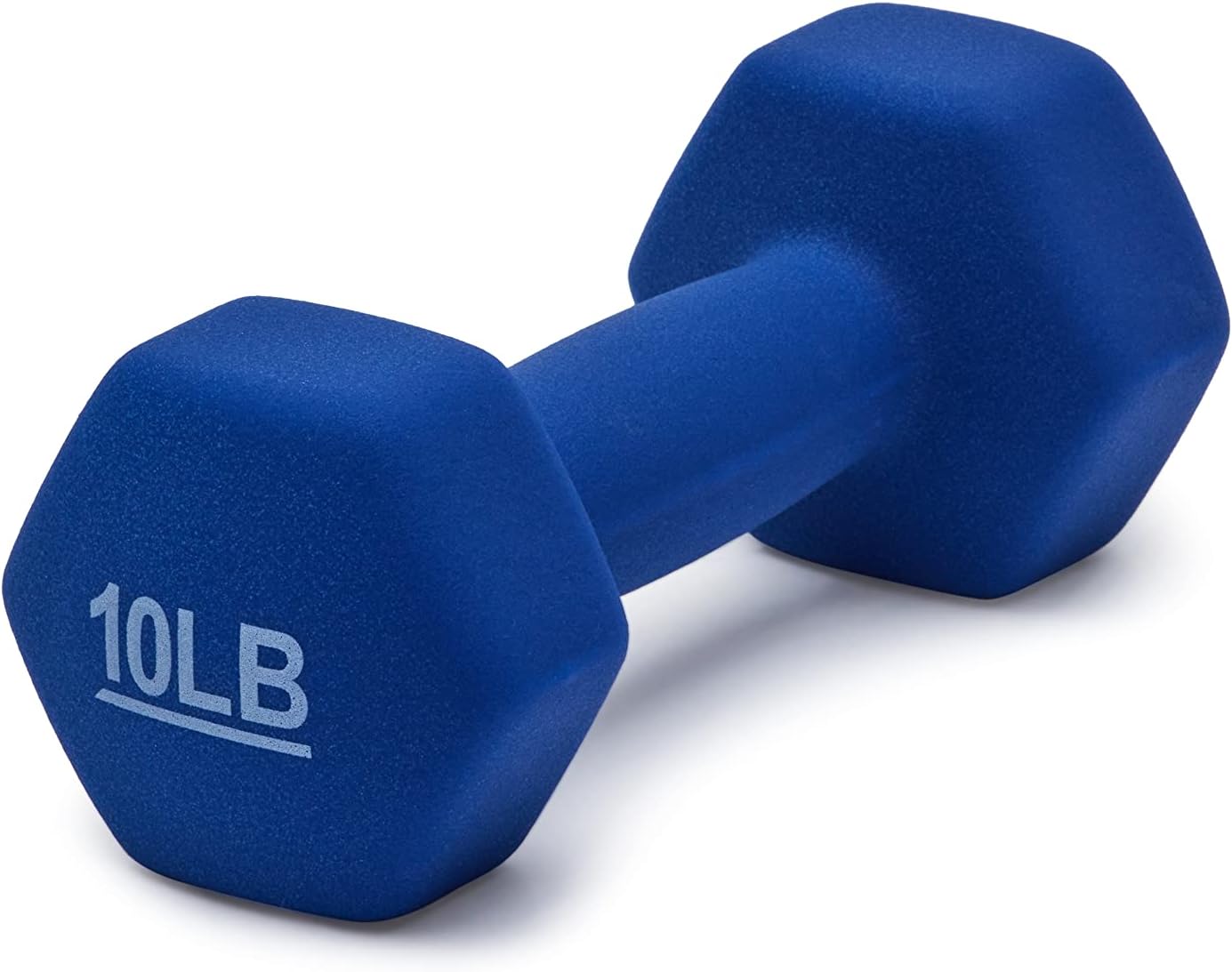
Walk into any group-fitness studio and you’ll almost certainly find a rack of neoprene hand weights — those smooth, rubber-coated dumbbells that come in a rainbow of colors and typically weigh between one and fifteen pounds. The coating is called neoprene (the same synthetic rubber used in wetsuits), and it serves two purposes: it cushions the grip and protects floors when weights get set down between exercises. For a casual home user picking up a pair once or twice a week, almost any neoprene dumbbell will do the job. But if you’re outfitting a studio where two or three classes run back-to-back every day — or if you’re a group-fitness instructor who depends on the same five-pound pair through a hundred classes a year — the difference between a durable set and a cheap one shows up fast. Coating peels, seams split, and the iron core beneath can start to rust. This guide breaks down exactly what to look for, what the owner and operator community consistently reports, and how to make a buy decision you won’t regret six months in.
| EDITOR'S PICK[Fitvids Set of 6 Neoprene Dumbb…](https://www.amazon.com/dp/B0CCK4HHMX?tag=greenflower20-20) | Mid-tier[Yes4All Neoprene Coated Dumbbel…](https://www.amazon.com/dp/B00A6MKU70?tag=greenflower20-20) | Budget pick[Fitvids Neoprene Dumbbell Hand…](https://www.amazon.com/dp/B075M5STJS?tag=greenflower20-20) | |
|---|---|---|---|
| Weight options | 3/5/8 Pairs | Multiple Options | 2-Pound Pair |
| Rack included | ✓ | — | — |
| Shape | — | Hexagon | Hex |
| Anti-roll | — | ✓ | ✓ |
| Anti-slip | — | ✓ | ✓ |
| Color options | — | 15 Colors | Colorful |
| Price | $60.28 | $35.03 | $10.73 |
| See on Amazon → | See on Amazon → | See on Amazon → |
Why Neoprene Fails (and What “Studio-Grade” Actually Means)
The failure mode is almost always the coating, not the iron. Neoprene is bonded to a cast-iron or solid-steel core through a combination of heat, adhesive, and compression molding. The bond quality varies enormously between price tiers, and it’s invisible at point of purchase — you can’t feel it by squeezing the weight in a store.
Across aggregated owner reviews on fitness retail platforms and community feedback documented by Garage Gym Reviews in their neoprene dumbbell roundup, the pattern is consistent: weights priced under roughly $1.00 per pound (so a five-pound dumbbell under $5.00) show coating separation within three to six months of daily multi-user use. The seam where two halves of the neoprene sleeve join — typically running the length of the handle — is the first place to go. Once the seam lifts, moisture from sweaty hands gets underneath, accelerating delamination and eventually exposing the core to rust.
Studio-grade isn’t a regulated term, but in practice it describes three verifiable characteristics:
- Solid-pour construction — the neoprene is molded as a single sleeve rather than two halves seamed together. Some manufacturers advertise this; others don’t disclose it at all, which is itself a signal.
- Virgin neoprene compound — recycled-rubber coatings (common at the entry price tier) are softer but less adhesion-stable under repeated thermal cycling (warm hands, cool storage racks, warm hands again).
- Core material and finish — cast iron is standard and perfectly durable when fully encapsulated; solid steel is marginally more corrosion-resistant but rarely necessary. What matters is that the encapsulation is complete at the ends of the dumbbell, where cheaper products leave the core partially exposed.
ACE Fitness, in their resistance-training equipment overview for fitness professionals, notes that commercial-use hand weights should meet a minimum of 2,000 repetitive-drop cycles without coating failure — a threshold that rules out most consumer-tier products sold through mass-market retail channels.
The Numbers That Matter Before You Buy
A quick decision framework for studio purchasing:
| Metric | Consumer tier | Studio/commercial tier |
|---|---|---|
| Typical price per pound | $0.60–$1.20 | $1.50–$3.00 |
| Coating bond method | Seamed sleeve, adhesive | Molded single-pour |
| Expected lifespan (daily use) | 6–18 months | 3–7 years |
| Warranty coverage | 30–90 days | 1–3 years (varies by brand) |
| Core exposure at ends | Common | Rare in quality builds |
By the numbers: A studio buying 20 pairs at the consumer tier at $1.00/lb replaces them roughly every 12–18 months. The same studio buying commercial-grade at $2.00/lb and getting four years of use pays about half the per-use cost — and eliminates the mid-cycle disruption of a replacement order during a busy programming season.
Verywell Fit’s guide on choosing hand weights flags this math directly, pointing out that frequency of use is the single variable that most dramatically changes the cost calculus between tiers.
What the Owner and Operator Community Reports
Instructors running high-volume classes — Zumba, HIIT, barre hybrid formats — are the most useful data source on real-world durability because their weights see conditions that no consumer product review captures: repeated sets of high-repetition movements, frequent floor contact, shared use across body types and grip strengths, and storage in humid group-fitness rooms.
The pattern that surfaces consistently across practitioner-community reviews and studio-operator sourcing discussions:
Brands that hold up: Products manufactured to commercial specifications — often sourced through distributors like Perform Better, Power Systems, or CAP Barbell’s commercial line — accumulate years of multi-session use without coating failure when operators report on them. Shape’s roundup of best dumbbells for studio use names several of these, noting that the weights most frequently recommended by instructors share single-pour neoprene construction and end-cap protection for the core. Barbend’s dumbbell buying guide echoes this, specifically calling out that the “hex dumbbell with neoprene coating” category spans a huge quality range that isn’t apparent from product photography alone.
Where cheap sets fail in practice: The failure modes instructors describe most often are (a) coating peeling from the handle section first, where grip pressure and sweat concentration are highest; (b) color fading within months, which matters for rack organization and weight identification in a class setting; and (c) a slight dimensional inconsistency in stated vs. actual weight at the sub-five-pound range, which is relevant for progressive overload — the practice of gradually increasing resistance to continue challenging your body over time — in choreography-based formats where weight choices are cued specifically.
A note on hex vs. round: Most neoprene dumbbells are round (smooth cylinder or slightly contoured). Round weights are comfortable to hold and easy to coat uniformly, but they roll if set on a floor or non-racked surface. Hex (six-sided) neoprene weights stay put, which reduces floor contact wear on the coating ends. For studio use, the hex geometry is worth prioritizing if your format involves setting weights down during floor work.
Decision Rules for Different Buyer Profiles
The studio-durability question isn’t one-size-fits-all. Here’s how the tradeoffs break down by use context:
If you’re a solo instructor buying personal-use weights for your own classes: You’re using one or two pairs, and you control how they’re handled. Consumer-tier quality at $1.00–$1.50/lb is probably fine for two to four years if you store them dry and off the floor. The upgrade to commercial construction isn’t worth a significant price premium for one person’s gear. Focus on fit (contoured handle vs. straight), weight accuracy, and whether the color coding matches your existing rack system.
If you’re a boutique studio outfitting 20–40 participants: This is where the math unambiguously favors commercial construction. At shared-use volume, consumer neoprene is a replacement cycle, not a purchase. Budget $2.00–$2.50 per pound for your core weight range (typically three, five, and eight pounds for mixed formats), verify the manufacturer’s warranty covers commercial use (many consumer warranties explicitly void under “commercial or institutional use”), and source through a fitness-supply distributor rather than a retail chain — the same product often has a better warranty through commercial channels.
If you’re a fitness coach sourcing small sets for client training sessions (one-on-one or small group): You’re in the middle: higher use than a solo instructor, lower than a full studio. Here the per-unit cost matters less than longevity and the ability to replace individual pairs rather than full sets. Brands that sell by the pair rather than only by the set give you flexibility. Look for weights with clearly stated weight accuracy tolerances — a good commercial product will be within ±2–3% of stated weight, which matters if you’re programming specific loading.
If you’re running a Zumba or high-choreography format specifically: Light weights (one, two, and three pounds) get the most punishment in dance-fitness formats because participants hold them for long continuous intervals and the range of motion is wider than in traditional strength work. Coating wear at the handle is accelerated. Consider whether a structured soft-grip overmold (sometimes marketed as “cushioned grip”) or a firm neoprene surface serves your participants better — softer feels better in short demos but shows wear faster under long continuous use, per practitioner reports documented in Shape’s studio-gear coverage.
What to Actually Ask a Supplier Before You Order
Given that durability is largely invisible pre-purchase, the right questions to a commercial fitness supplier shift the information asymmetry in your favor:
- “Is the coating single-pour molded or seamed sleeve?” — A supplier who can’t answer this probably doesn’t carry commercial-grade stock.
- “Does the warranty cover commercial or institutional use?” — If the answer is no or unclear, the price is being quoted without the full cost factored in.
- “What’s the core material and is the encapsulation complete at the end caps?” — Partial end-cap exposure is the rust vector; complete encapsulation is the standard to insist on.
- “What’s the stated weight tolerance?” — ±3% or better is reasonable; anything vaguer than that suggests consumer-tier manufacturing.
Perform Better and Power Systems both publish commercial product specs that include some of this information in their catalog documentation — worth cross-referencing when evaluating alternatives.
The Bottom Line
Neoprene hand weights are a commodity category with a genuine quality split inside it. For occasional home use, the gap between consumer and commercial construction barely shows. For studio use — any environment where multiple people are handling the same weights across multiple sessions per week — that gap determines whether you’re buying once or buying repeatedly.
The decision rule is straightforward: if the weights will see more than four users per week in any combination, buy to commercial spec, verify the warranty covers institutional use, and source through a fitness-supply distributor who can answer basic construction questions. If that’s not your use case, a quality consumer-tier pair at honest pricing does the job without overpaying.
The coating color will fade before the weight fails, if you buy right. That’s the benchmark.