August 9, 2026 • Renata Solís • 10 min reading time • Specs verified June 5, 2026
Neoprene vs. Rubber Hex Dumbbells: The Real Differences for Home Gym Buyers
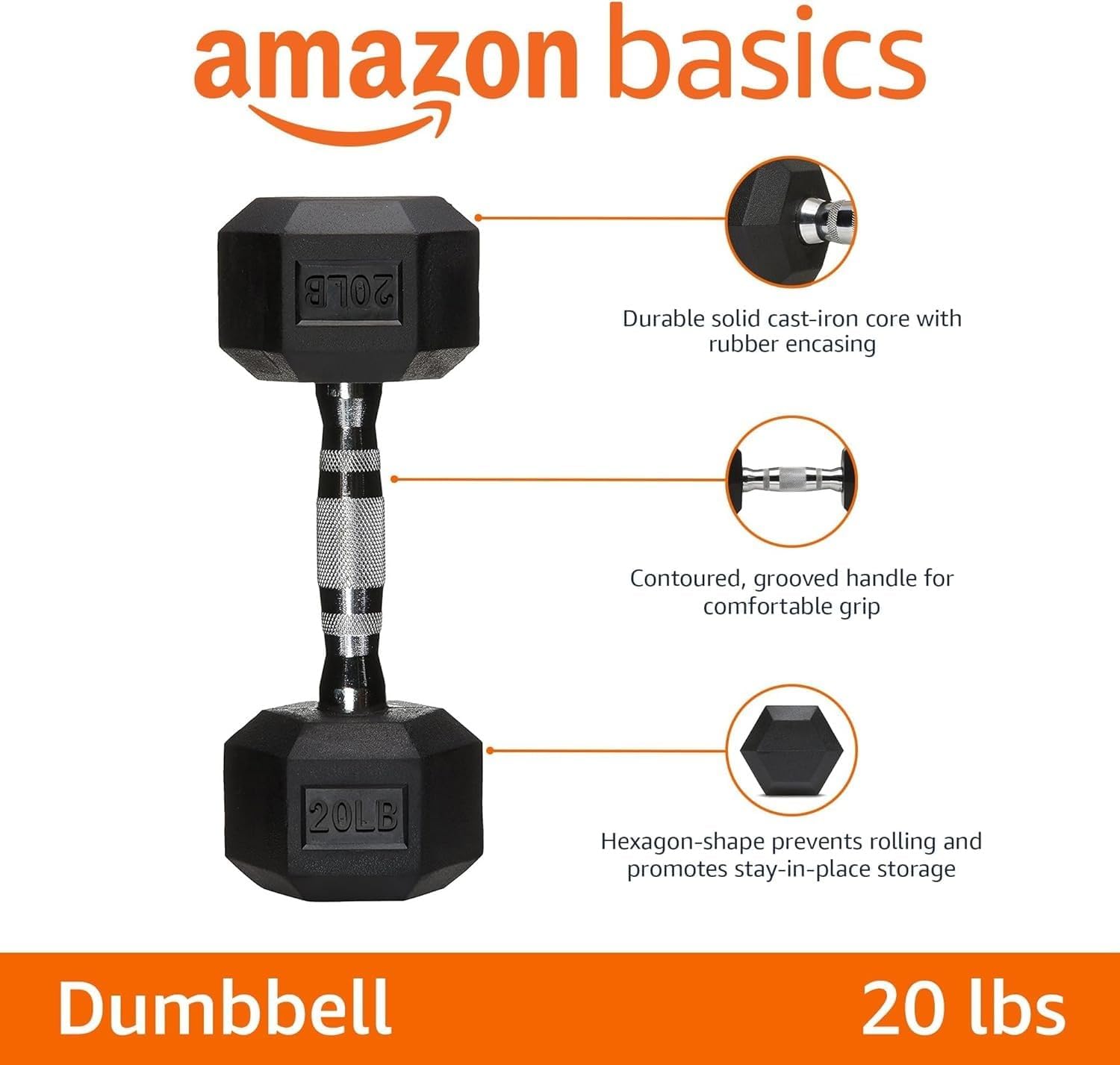
If you’ve ever stood in front of a wall of dumbbells — those short, hand-held weights you lift to build strength and get your heart rate up — and wondered why some have a smooth, colorful coating while others look like dark, industrial rubber, you’re not alone. The two most common coatings on fixed-weight dumbbells (meaning they don’t adjust; each one is a set poundage) are neoprene and rubber. Neoprene is the same flexible, slightly soft material used in wetsuits. Rubber hex dumbbells — “hex” refers to the six-sided, flat-edged head shape that keeps them from rolling — use a denser, harder vulcanized rubber. Both protect the iron core and your floors, but they behave differently in your hand, on your hardwood, and after six months of daily use. This article walks through every meaningful difference so you can make the call without second-guessing it.
The Smell Problem: What’s Real, What’s Overblown, and How Long It Lasts
This is the issue that generates the most emotionally charged first-week reviews online, so let’s address it first.
Rubber hex dumbbells — particularly at the budget end of the market — off-gas a manufacturing oil applied during the vulcanization (heat-curing) process. It’s real, it’s documented across hundreds of owner reviews, and it’s worth factoring in if you’re setting up in a small bedroom or a finished basement with limited airflow. Aggregated Amazon Basics rubber hex reviews show a consistent pattern: the smell is present out of the box, described variously as “tire shop,” “industrial rubber,” or simply “strong gym smell.” The reaction in reviews ranges from mildly annoyed to genuinely bothered, but a recurring counterpoint among long-term owners is that a day or two of outdoor airing resolves the issue entirely. That’s a useful calibration: the smell is real; it is not a sign of a defective product.
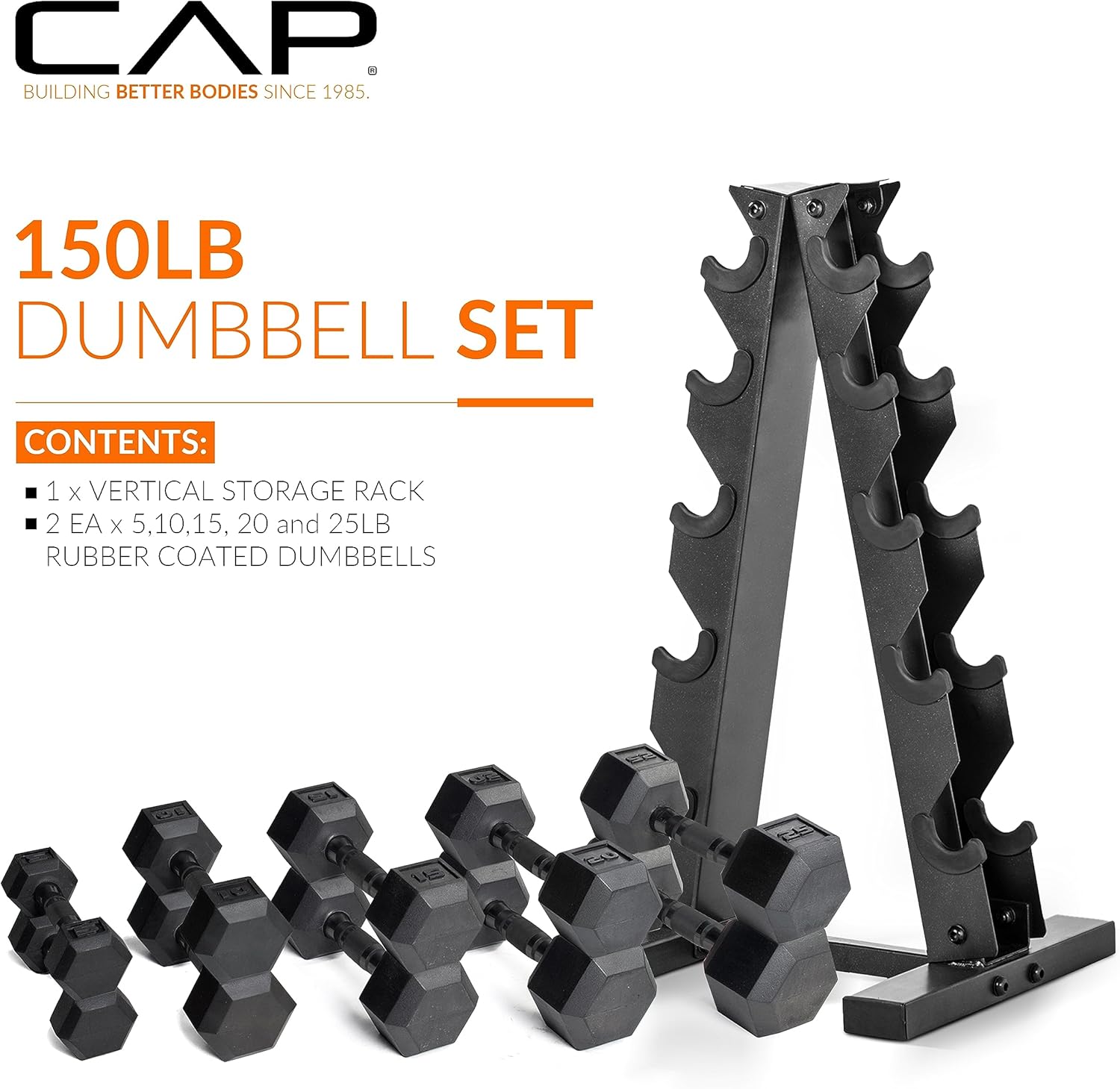
BarBend’s rubber vs. neoprene dumbbell surface comparison notes that manufacturing oil residue is standard for vulcanized rubber products and is not a quality defect — the off-gassing is a byproduct of how the material is cured, not an indicator of inferior materials or construction. CAP Barbell coated hex rack-set owners describe the out-of-box odor as “mild and oily, similar to what you’d expect from new gym equipment” and report that it dissipated within a few days of airing.
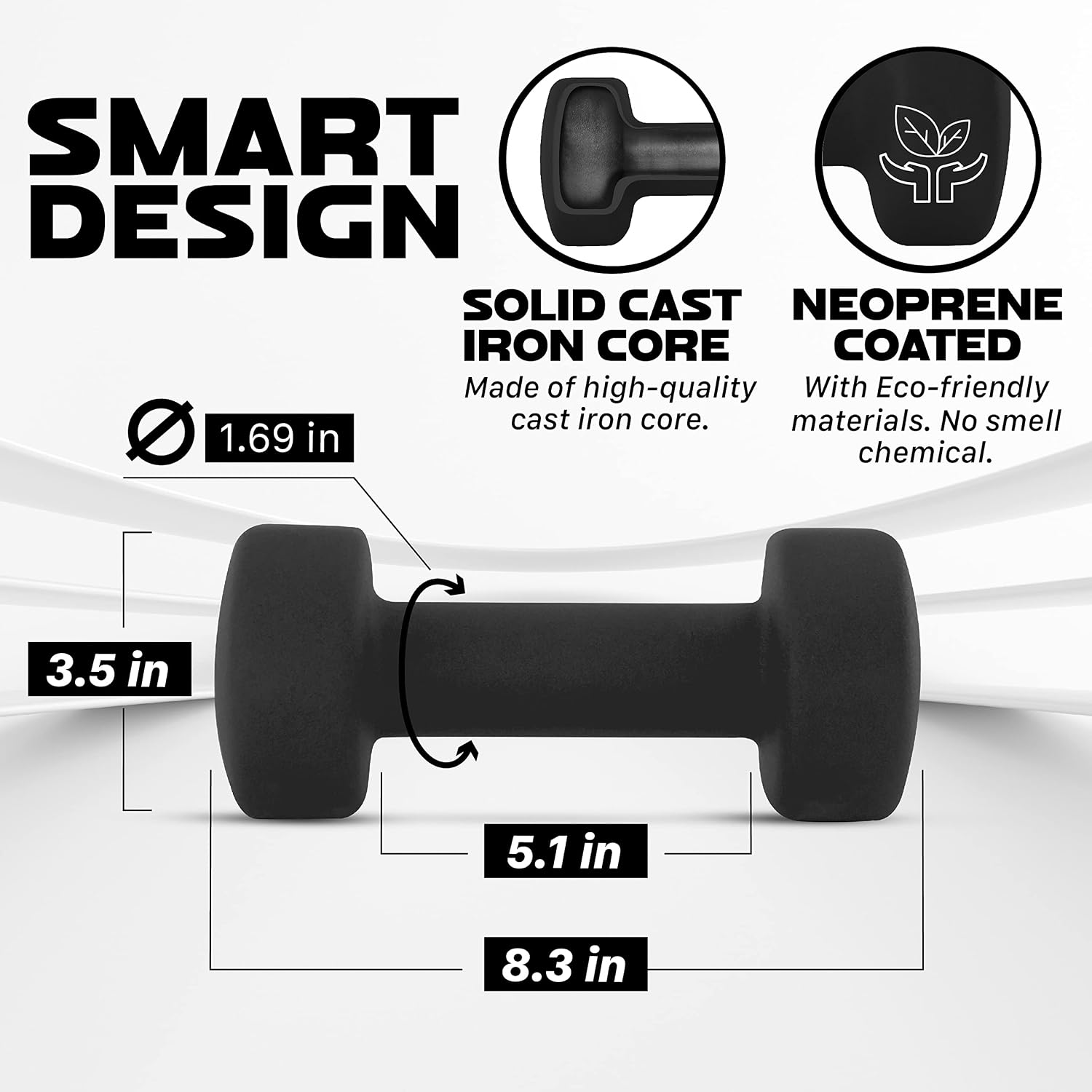
Neoprene is a meaningfully different story. Portzon neoprene reviewers — a brand that comes up repeatedly in the 3–25 lb range — specifically flag the contrast: multiple reviewers note no detectable odor upon unpackaging. That’s not a universal guarantee across all neoprene brands, but it’s a consistent pattern. If first-day smell is a hard constraint for your setup, neoprene is the safer bet.
The practical rule: Plan for a 24–48 hour airing period with any rubber hex purchase. If you’re buying online and can’t do that before your first session, factor in the timeline.
Weight Range, Cost, and Where Each Type Stops Making Sense
This is where the comparison becomes a decision framework rather than a preference conversation.
By the numbers:
- Neoprene dumbbells are typically cost-effective from 2–25 lbs, with pricing generally under $1.50 per pound in 2026 for pairs in that range.
- Rubber hex dumbbells become the dominant value play above 20 lbs, with CAP Barbell reviewers confirming sub-$1-per-pound pricing on individual units in the 25–50 lb range.
- Above 25 lbs, neoprene options become scarce, the coating gets thick and unwieldy, and per-pound cost climbs steeply.
Verywell Fit’s home gym equipment buying guidance notes that neoprene-coated weights are engineered for light-to-moderate loads and that buyers seeking heavier fixed weights should expect to transition to rubber or urethane products. The coating thickness that makes neoprene comfortable and grip-friendly at low weights becomes a liability at higher ones — handle diameter increases in ways that create grip and balance awkwardness above 25 lbs.
If you’re building a home gym that will eventually reach 30, 40, or 50 lb dumbbells, plan for a mixed-material set: neoprene in the lower range, rubber hex from 20 lbs up. The CAP Barbell 150 lb rack set, covering 5–50 lbs in 5 lb increments, is the benchmark option for buyers who want to skip the piecemeal purchasing process entirely.
Amazon
$28.99
In stock on Amazon
Check price on AmazonSide-by-Side: How Neoprene and Rubber Hex Compare Across Key Factors
Smell and First-Use Experience
Neoprene dumbbells arrive essentially odor-free in nearly all owner accounts across reputable brands. Rubber hex dumbbells consistently off-gas a vulcanization oil smell that is real and noticeable but temporary. BarBend’s rubber vs. neoprene dumbbell surface comparison confirms this distinction is inherent to the manufacturing process, not a brand-specific quality issue.
Winner for low-odor first use: Neoprene. Winner for buyers willing to air out: Rubber hex performs identically after 24–72 hours outdoors.
Amazon
$28.99
In stock on Amazon
Check price on AmazonFloor Safety and Grip Feel
Neoprene reviewers across multiple brands consistently raise two comfort points: small-hand ergonomics and floor friendliness. The softer, slightly tacky surface provides grip without the aggressive texture of rubber, and the lighter weight range means drops are lower-energy events. On hardwood and tile, neoprene’s softer landing matters — the material compresses slightly on impact, reducing both surface damage and noise.
Rubber hex dumbbells are harder on floors — that’s simply physics. The flat hex faces do prevent rolling (a real advantage over round-head dumbbells), but a dropped 35 lb rubber hex dumbbell is going to make its presence known. Garage Gym Reviews’ dumbbell material comparison overview notes that rubber matting is essentially non-negotiable for any home gym setup with free weights above 15–20 lbs, and on a proper rubber gym mat the floor-impact difference between neoprene and rubber hex is largely neutralized.
For instructors running group fitness sessions on hardwood studio floors without full rubber matting, neoprene in the working weight range (5–20 lbs) is genuinely the lower-risk option. For home gym setups with rubber flooring or foam tiles, rubber hex is fine.
Grip feel is subjective but worth naming: neoprene handles feel warmer and softer in hand, which many users — especially those with smaller hands or sensitivity to hard edges — report as a meaningful comfort difference. Rubber hex handles are firmer and slightly textured, which translates to better grip at heavier loads but more hand fatigue in high-rep, lighter-weight cardio contexts like aerobics formats.
Yes4All
$35.03
In stock on Amazon
Check price on AmazonLong-Term Durability and Investment Value
This is the question that separates a good first-week experience from a good investment.
The most substantive long-term durability data in the rubber hex category comes from detailed Amazon Basics reviews covering near-daily use across full 5–50 lb sets over approximately 1.5 years. Owners confirm no visible wear on the rubber coating, no cracking, and no loosening of the head-to-handle connection across that period. BarBend’s rubber vs. neoprene dumbbell surface comparison aligns with this: vulcanized rubber is inherently abrasion-resistant and handles the repeated impact and floor contact inherent to daily lifting.
Neoprene’s durability story is more conditional. The coating holds up well under normal use — lifting, setting down, occasional light drops — but it is more vulnerable to sharp impacts, pet chewing (a surprisingly common complaint in owner reviews), and UV exposure if stored near windows. At the light-weight range where neoprene dominates, the durability difference is largely academic for most users. At 10 lbs, a set is inexpensive enough to replace. The durability calculus matters more at higher weights and higher total investment.
For near-daily home gym use in the 5–25 lb range, both materials are credible multi-year products under normal conditions. Above 25 lbs, rubber hex is the only practical option, and the long-run owner data supports it as a strong performer.
CAP
$189.99
In stock on Amazon
Check price on AmazonFrequently Asked Questions
Do rubber hex dumbbells always smell bad out of the box, and how long does it last?
The smell is consistent across rubber hex products, particularly at budget price points, but it’s not permanent. Aggregated owner reviews suggest the manufacturing oil odor dissipates within 24–72 hours of airing in a ventilated space. CAP Barbell rack-set owners describe it as mild and gym-like — noticeable but not alarming. Outdoor airing before first use is the standard recommendation, and it works.
Are neoprene dumbbells accurate to their labeled weight?
Across multiple neoprene brands reviewed, weight accuracy is generally within acceptable tolerance for home gym use. This is a more common concern with budget foam-coated dumbbells than with reputable neoprene products. If micro-precision matters — for example, you’re tracking progressive overload carefully — verifying with a kitchen scale on first purchase is a reasonable step. For cardio and fitness formats where the difference between 8.0 and 8.3 lbs is immaterial, labeled weight is a reliable enough guide.
Which type is safer on hardwood or tile floors?
Neoprene is the softer landing at light weights. Rubber hex is harder on surfaces at higher weights, though the flat hex faces prevent rolling. For both types, a rubber gym mat or foam tile flooring is the right solution — it’s not primarily a question of which dumbbell to buy to protect floors; it’s a question of flooring investment. Garage Gym Reviews’ dumbbell material comparison overview treats matting as essentially non-optional for any weight above 15–20 lbs.
At what weight do neoprene dumbbells stop being cost-effective?
The practical ceiling is around 20–25 lbs. Above that, neoprene options become scarce, cost-per-pound climbs, and handle diameter becomes ergonomically awkward. Buyers planning to lift above 25 lbs should default to rubber hex for that range, even if they prefer neoprene at lower weights. Verywell Fit’s home gym equipment buying guidance explicitly notes the transition point from neoprene to rubber or urethane for buyers progressing to heavier loads.
Can rubber hex dumbbells be used for the same exercises as neoprene?
Yes, functionally. The exercise range is identical — curls, presses, rows, lateral raises, aerobics formats, everything. The practical differences are grip feel (rubber is firmer), floor impact (rubber is harder), and weight availability (rubber goes higher). There is no exercise category where neoprene is mechanically required over rubber hex.
Which type holds up longer with near-daily home gym use?
For the weight ranges where both compete (roughly 5–25 lbs), both materials are credible long-run performers under normal use. The Amazon Basics rubber hex near-daily-use owner data — covering approximately 1.5 years across a full set — is the strongest single durability data point available in this category and favors rubber for heavy-use scenarios. Neoprene holds up well under lighter use but is more vulnerable to sharp impacts and environmental exposure.
The Decision Rule
If your working weight range is under 20 lbs, you care about small-hand comfort, you’re working on hardwood without matting, or first-day smell is a hard constraint: neoprene is your pick. Portzon is the name that consistently earns clean first-use marks from reviewers in this range.
If your working weight range is 20 lbs or above, you’re building toward a full-range set, or you want the strongest available durability evidence for near-daily use: rubber hex is the answer. Amazon Basics and CAP Barbell are the two names with the deepest long-run owner review records in this category. CAP’s coated hex line earns explicit sub-$1-per-pound callouts from buyers who have priced the full market.
If you’re building a home gym from scratch that will eventually span 5–50 lbs: start with neoprene in the light range, add rubber hex from 20 lbs up, and budget for rubber matting before you budget for anything else. That sequencing holds whether you’re doing aerobics-format cardio, traditional strength work, or both.