August 9, 2026 • Renata Solís • 10 min reading time • Specs verified June 5, 2026
The Rubber Hex Dumbbell New-Owner Survival Guide: Smell, Oil, and Break-In
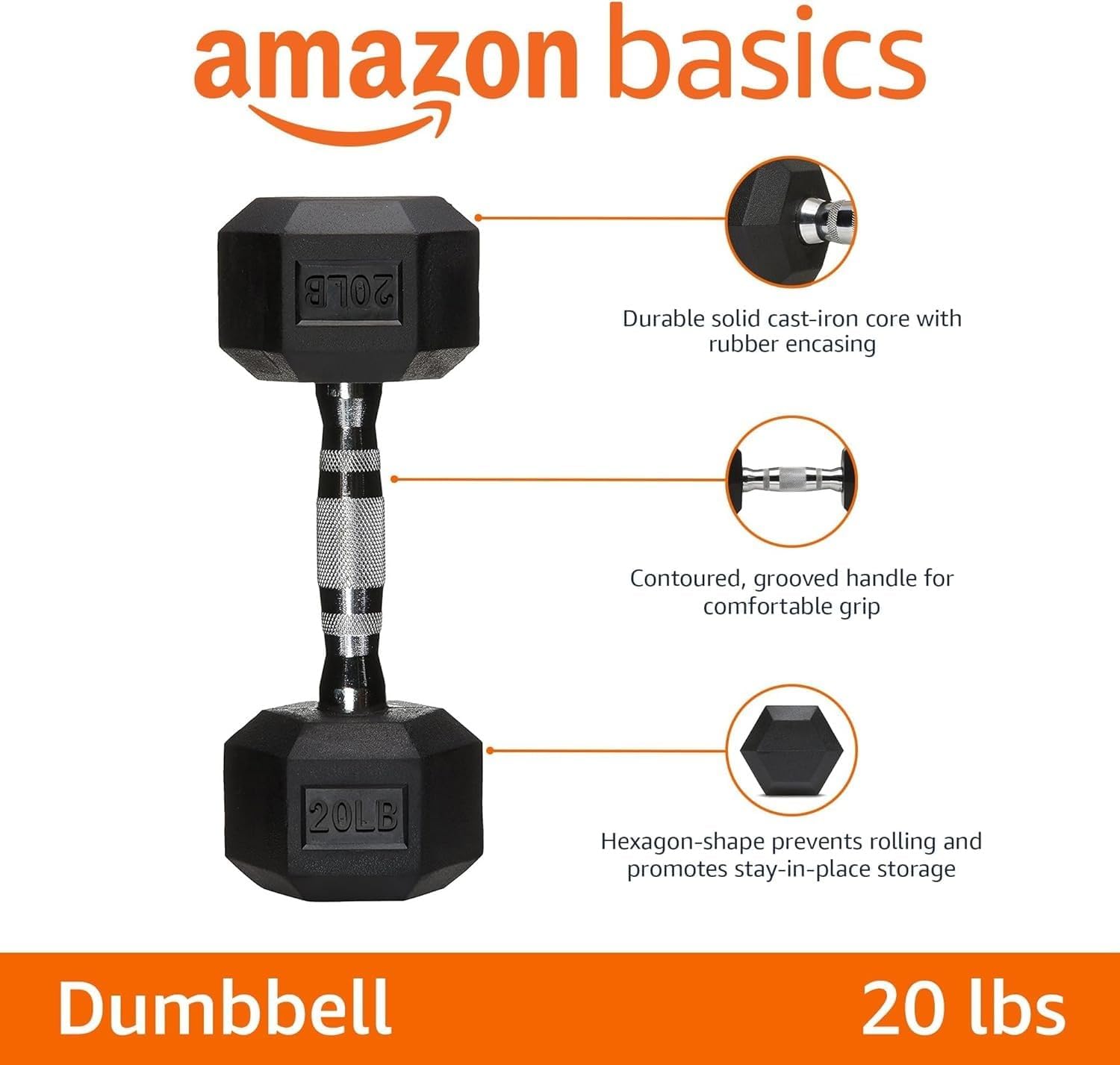
You just unboxed a set of rubber hex dumbbells — the kind with six flat sides on each end (that’s the “hex” shape, designed so they stay put instead of rolling across your floor) and a solid iron core wrapped in a rubber coating. Maybe you ordered Amazon Basics, CAP Barbell, BalanceFrom, or HANDBODE. You set them down and immediately notice two things: a sharp, tire-shop smell and a slightly greasy or oily film on the surface. Your first instinct might be to wonder whether something is wrong. It isn’t. Both of those sensations are a completely normal part of how rubber-coated weights are manufactured, and they resolve quickly with simple steps you probably already have supplies for. This guide walks you through why the smell and oil happen, what owners across thousands of reviews say actually works, and what to expect as your dumbbells settle into everyday use.
| EDITOR'S PICKCAP Barbell 150 LB Coated Hex D… | Mid-tierCAP Barbell Coated Hex Dumbbell… | Budget pickAmazon Basics Rubber Hex Dumbbe… | |
|---|---|---|---|
| Total weight | 150 lb | 30 lb | 20 lb |
| Includes rack | ✓ | — | — |
| Handle finish | Black | Chrome | — |
| Sold as | Set | Single | Single |
| Price | $189.99 | $36.99 | $28.99 |
| See on Amazon → | See on Amazon → | See on Amazon → |
Why New Rubber Hex Dumbbells Smell Like a Tire Shop (And Why That’s Normal)
The short answer: the rubber used to coat hex dumbbells is vulcanized rubber — a process that uses sulfur compounds and heat to harden raw rubber into a durable, resilient shell. That chemistry leaves behind volatile organic compounds (VOCs), which are essentially odor molecules that off-gas from the surface over time. It’s chemically similar to the reason a new car interior, a yoga mat, or — yes — a fresh tire smells the way it does. The rubber hasn’t “gone bad.” It’s simply new.
Across hundreds of verified purchaser reviews for Amazon Basics rubber hex dumbbells, the smell complaint is by far the most consistent first-impression note. Reviewers describe it variously as “rubber,” “sulfur,” “tire,” or “chemical.” The key pattern, though, is what comes after that initial reaction: reviewer after reviewer follows up to say the smell dissipated within days to a few weeks, and the vast majority still rate the product four or five stars. One repeat buyer of Amazon Basics hex dumbbells — someone who has purchased these weights across multiple weight sizes over time — specifically calls out baking soda as a reliable, repeatable smell-reduction method.
The smell is not a quality indicator. Several reviewers explicitly compare their Amazon Basics or CAP Barbell hex sets favorably to more expensive gym-branded dumbbells they’d used before, citing comparable rubber quality and significantly better value. The presence of off-gassing doesn’t correlate with rubber that will crack, flake, or degrade faster. It correlates with rubber that is freshly manufactured and hasn’t had weeks in open air to off-gas before reaching you.
The Oily Coating: What It Is and How to Get Rid of It
The second first-impression issue — a slick or oily surface on the rubber — has a similarly mundane explanation. During manufacturing and shipping, rubber hex dumbbells are sometimes treated with a mold-release agent or a light preservative oil to prevent the rubber from bonding to molds or sticking together in transit. Some of this coating remains on the surface when the product arrives.
The practical consequence is straightforward: the handles can feel slightly slippery, and the rubber surface may leave faint marks on light-colored flooring or mats until the coating is cleaned off.
Reviewers at both HANDBODE and BalanceFrom product listings independently describe the same fix, arriving at it without coordinating: a warm soapy-water wash. The protocol reviewers describe is simple:
- Fill a bucket or use a sink with warm (not hot) water and a small amount of dish soap.
- Wipe down the entire rubber surface — hex ends and any rubber along the handle if present — with a cloth or sponge soaked in the solution.
- Rinse with clean water and dry thoroughly with a towel.
- Let the dumbbells air-dry completely before storing or using them.
Most reviewers report that a single wash resolves both the oily feel and accelerates the smell reduction. The logic makes sense: you’re removing the surface-level residue that both contributes to slip and traps some of the off-gassing compounds near the surface.
For the smell specifically, the repeat Amazon Basics buyer’s baking soda method adds an additional step: after washing, sprinkle baking soda lightly over the rubber surface, let it sit for an hour or two, then wipe it off. Baking soda is a mild alkaline powder that absorbs odor molecules rather than just masking them — the same reason it works in a refrigerator. Reviewers who have used this method describe it as “dramatically” reducing the smell versus air-drying alone.
Break-In Timeline: What to Expect Week by Week
Here’s the honest version of the break-in arc, synthesized from reviewer patterns across Amazon Basics, CAP Barbell, BalanceFrom, and HANDBODE listings:
By the Numbers: Typical Smell-Reduction Timeline
| Timeframe | What Most Reviewers Report |
|---|---|
| Days 1–3 | Strong rubber/sulfur odor, especially in enclosed spaces |
| Days 4–10 | Noticeable reduction after wash + airing; smell mostly background-level |
| Weeks 2–4 | Smell largely gone for most reviewers; nonexistent for some |
| Beyond 1 month | No further complaints in the review record |
A few variables affect where you fall on this timeline:
- Ventilation matters most. Reviewers who store dumbbells in a basement with no airflow consistently report longer off-gassing periods. Reviewers who keep them in a well-ventilated garage or near an open window resolve the smell faster — sometimes within three or four days after washing.
- Weight class affects surface area. Heavier dumbbells have more rubber surface area. A 50 lb hex dumbbell has more rubber than a 10 lb — which means more off-gassing volume. The smell on a set of heavy dumbbells may take slightly longer to fade than a lighter set, all else equal.
- The wash-plus-baking-soda method consistently outperforms air-only. Reviewers who skip washing and just wait it out report longer resolution times than those who actively address the surface.
The practitioner takeaway: if you’re setting up a home gym space that doubles as living space (a spare room, a finished basement), do the wash on day one, apply baking soda, air them near a window for a day, and you’ll likely be training in that space comfortably within the first week.
Floor Protection, Hex Shape, and Daily Durability
Once you’re past the break-in, rubber hex dumbbells earn their reputation through consistent daily use. The hex shape — that six-sided end cap design — is one of the most consistently praised features in reviewer accounts, for a reason that sounds minor until you’ve actually set a round dumbbell down on hardwood: they don’t roll. Reviewers across all four brands (Amazon Basics, CAP Barbell, BalanceFrom, HANDBODE) cite floor stability and noise reduction as genuine daily-use benefits, not marketing language.
On the floor-protection question: the rubber coating does protect hardwood and laminate better than bare iron would. However, reviewers note that dragging the dumbbells rather than placing and lifting them cleanly can eventually scuff finished floors — not from the rubber itself, but from grit and debris that embeds in the rubber surface over time. The consistent reviewer recommendation is to place rather than drag, and to keep the rubber surface clean. A monthly wipe-down with a damp cloth is the maintenance protocol most frequently mentioned.
Chrome handle durability comes up regularly in longer-term reviews. The knurled (textured) chrome handles on rubber hex dumbbells from these brands are spec’d for home-gym use volumes — daily training by one or a few users. The pattern across reviews at GarageGymReviews.com and BarBend.com’s budget dumbbell coverage is consistent: chrome handles on this tier of dumbbell hold up well under normal home-gym conditions, with no significant corrosion or grip degradation reported by reviewers in the one-to-two-year range. What reviewers do flag is that leaving the handles wet — from sweat or washing — and not drying them accelerates any surface wear. Dry the handles after each session; it takes ten seconds.
Frequently Asked Questions
Why do my new rubber hex dumbbells smell like a tire shop? The rubber coating is vulcanized — a manufacturing process that uses sulfur and heat to create durable rubber. The smell is from volatile organic compounds (VOCs) off-gassing from fresh rubber. It’s the same chemistry behind new yoga mats, tires, and rubber flooring. It is not a sign that anything is wrong with your dumbbells.
How do I get rid of the oily coating on new rubber dumbbells? Wash the rubber surface with warm soapy water, rinse thoroughly, and dry completely. HANDBODE and BalanceFrom reviewers both independently describe this as the fix that works. The oily film is a manufacturing residue — mold-release agent or transit preservative — and it comes off with a basic wash.
How long until the rubber smell goes away? For most reviewers, the smell is significantly reduced within the first week and largely gone by weeks two to four. Ventilation and an active wash-plus-baking-soda treatment on day one can push resolution into the three-to-seven-day range. Reviewers who skip the wash and rely on air-only typically wait longer.
Will the rubber coating scratch or damage my hardwood floors? Clean rubber placed and lifted cleanly does not scratch hardwood. The risk is from grit embedded in the rubber surface over time, or from dragging rather than lifting the weights. Keep the rubber surface clean and place the dumbbells deliberately — don’t slide them — and floor protection is not an issue reviewers report.
Is the smell a sign that the dumbbells are defective or low quality? No. The reviewer pattern across Amazon Basics, CAP Barbell, BalanceFrom, and HANDBODE is consistent: reviewers who flag the smell still give four or five stars, and several explicitly note that the build quality matched or exceeded more expensive gym-branded dumbbells they’d used previously. The smell is a production artifact of fresh rubber, not a quality signal.
Does the chrome handle on rubber hex dumbbells hold up over time? The evidence from longer-term reviews — including coverage at GarageGymReviews.com and BarBend.com — suggests the chrome handles on this tier hold up well under home-gym use volumes. The most common reviewer tip: dry the handles after each use. Leaving them damp is the primary risk factor for any surface degradation.
The Decision Frame: If X, Then Y
If you’ve just opened your dumbbells and the smell is strong: wash today, apply baking soda, air near a window. Don’t return them. This is normal, documented, and solvable.
If you’re buying for a space that also serves as living space (bedroom, finished basement, apartment): run the wash protocol before the first use, not after. You’ll avoid a week of unnecessary smell in a shared environment.
If you’re buying for a small studio or multi-user home gym and evaluating whether this rubber tier holds up: the reviewer record supports a yes for home-gym volumes, with the maintenance caveat that the handles stay dry. For commercial multi-session-per-day environments, the durometer (hardness) and handle spec of this tier aren’t designed for that load — that’s where the Perform Better and professional-grade commercial sets earn their price premium.
If you’re a certified group-fitness instructor evaluating this tier for personal-use training versus studio use: these are a strong personal-use choice at the value they represent. For client-facing studio sets that see multiple hands and daily sessions, the rubber and handle spec on this tier is a step below what commercial-grade durability warrants — and that’s worth pricing in before committing.
The smell fades. The oil washes off. What remains is a well-reviewed, practically designed dumbbell that earns its ratings once the first week is behind you.