September 15, 2026 • Renata Solís • 10 min reading time • Specs verified June 5, 2026
Soft Hand Weights for Rebounding, Pilates, and Light Cardio: Which Designs Hold Up
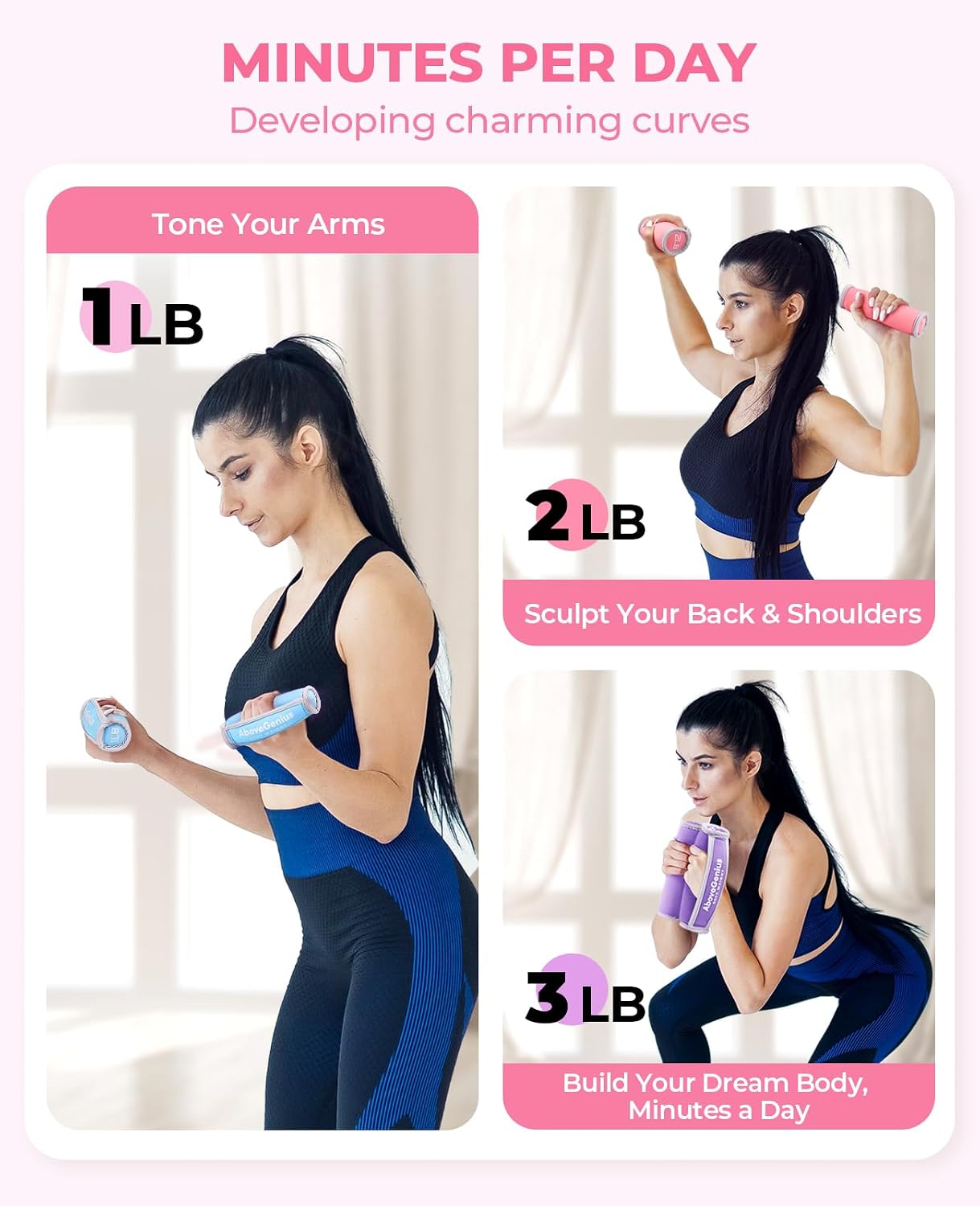
Soft hand weights — the kind wrapped in foam, neoprene, or fabric and filled with sand or iron shot rather than solid iron — look simple on the shelf. You pick one up, it feels pleasant, and you assume the rest is obvious. It mostly is, right up until you’re mid-bounce on a rebounder (a mini-trampoline used for low-impact cardio) and the back-of-hand strap has migrated to your knuckles, or you’re walking with weights at your sides and one arm keeps pulling off-line. The details that look like minor ergonomic quibbles at the store turn into real workflow decisions when you’re running a Pilates or Zumba class six hours a week. This guide works through those details systematically: how the four main soft-weight designs behave in motion, what the published owner record reveals about fit and durability, and a clear decision framework for matching design to activity.
| EDITOR'S PICKBala Bangles Wrist & Ankle Weig… | Mid-tierAmazon Basics Neoprene Dumbbell… | Budget pickGYMENIST Set of 2 Hand Shaped N… | |
|---|---|---|---|
| Weight | — | 10 lb | 3 lb |
| Count | — | Pair | Set of 2 |
| Design | Wrist/ankle bands | Dumbbell | Hand-shaped |
| Coating | Silicone | Neoprene | Neoprene |
| Adjustable | ✓ | ✗ | ✗ |
| Price | $55.00 | $29.99 | $19.99 |
| See on Amazon → | See on Amazon → | See on Amazon → |
The Four Design Types and What They’re Actually Built For
1. Foam-coated iron-core dumbbells (the hex or contoured kind in the $8–$20 range) are the most weight-accurate of the soft-weight category. Because the core is cast iron, the variance between labeled and actual weight is typically negligible — Barbend’s comparison of sand-filled versus iron-core construction notes that iron-core products reliably fall within ±2% of stated weight, while sand-filled products can vary by as much as 5–8% depending on fill density and settling. For Pilates, where a 1-lb difference between your left and right hand is genuinely noticeable over 50 reps, that accuracy margin matters. The tradeoff is tactile: foam-coated iron gets slippery when wet and offers less grip security during high-arc arm movements.
2. Neoprene-coated dumbbells (same price range, different shell) perform better in sweat-heavy environments because the textured neoprene grips dry and damp skin alike. Owners across aggregated reviews consistently note the grip texture holds through a full cardio session in a way that foam does not. The weight accuracy story is similar to iron-core if the fill is iron shot; looser if the manufacturer uses sand. Check the product description for fill material before assuming accuracy.
3. Sand-filled soft weights with fabric covers — products like the Sportneer set with its washable zip cover — trade a small accuracy concession for a dramatically different use profile. The Sportneer’s zip-off, machine-washable cover gets called a “game changer” by owners who have used multiple hand-weight brands, and that’s not hyperbole when you’re running a studio with shared equipment. Sweat contamination in shared weights is a genuine hygiene and longevity problem; a washable outer layer solves it directly. The fill is conformable — it adjusts slightly to your grip — which some users find more comfortable during long Pilates sequences and others find imprecise.
4. Back-of-hand strap weights (sometimes called weighted gloves or hand-strap weights) are the most movement-specific design in the category, and the one with the most documented fit failures. The mechanism: a weighted pad sits across the back of the hand, held by a wrist strap and sometimes a finger loop. This keeps the hands free, which is genuinely useful for rebounder workouts where you need to react to balance shifts without death-gripping a dumbbell. But fit is non-negotiable.
Fit Failures Are Design Failures: What the Owner Record Shows
Two specific failure modes appear repeatedly in owner reviews of strap-style weights, and both are worth naming explicitly before you buy.
The rebounder strap migration problem. An AboveGenius product reviewer specifically documents using their back-of-hand weights on a rebounder and flags that the strap loosens on smaller hands during the vertical bounce cycle. The mechanism is predictable: the bounce impulse is transmitted upward through your arm, which momentarily reduces tension in the strap, allowing incremental migration toward the knuckles. Over a 20-minute session, the weight pad ends up somewhere it wasn’t designed to sit. This is not a user-error problem — it’s a strap geometry problem on hands at the lower end of the size range that a given product was designed for. The fix is to buy strap weights with a dual-anchor system (wrist strap plus finger loop) and to size down if you’re between sizes rather than up.
The walking arm-position mismatch. A Gaiam product reviewer documents something more counterintuitive: their strap-style walking weights work reasonably well during the standard forward-pump arm motion of power walking but actively feel destabilizing when the arms swing at the sides (as happens during some cool-down or recovery segments, or when carrying something). The geometry of the back-of-hand pad shifts load distribution when the wrist angle changes, which the reviewer describes as a pulling sensation. Shape’s roundup of weighted gloves and wrist weights for cardio makes a similar point in general terms: strap designs are optimized for a specific arm-motion arc, not all arm positions. If your workout mixes pumping and free-swing phases, a traditional dumbbell with an ergonomic grip may be safer for wrist neutral alignment.
The Yes4All rebounder safety note. By contrast, Yes4All’s rebounder-specific hand weights collect owner feedback that specifically praises the “no fear of weights flying off” quality — the clearest safety-relevant claim in this product segment. The design difference appears to be a more secure strap architecture with less vertical play. For rebounder users, this distinction is worth treating as a hard filter: secure attachment is not a bonus feature, it’s a prerequisite.
The Sub-1 lb Access Problem (and Why It’s Real)
Practitioners sometimes dismiss very light weights — 0.5 lb and under — as novelty items. That’s a mistake.
A fibromyalgia reviewer on the RitFit 0.5 lb option explains that this specific weight was the only one she could find at that increment, and that the ability to start resistance training at half a pound — rather than the typical 1 lb floor most brands use — was functionally enabling for her. ACE Fitness’s overview of resistance training for special populations notes that for individuals with certain chronic pain conditions or post-surgical recovery protocols, starting load matters at the level of ounces, not pounds. Verywell Fit’s guide to hand weights for walking and low-impact exercise echoes this, recommending that anyone returning from a shoulder injury or managing chronic joint conditions start at the lowest available increment and progress by 0.5 lb rather than 1 lb steps.
By the numbers:
| Weight tier | Primary use case | Typical accuracy tolerance |
|---|---|---|
| 0.5 lb | Rehab, fibromyalgia, post-surgical re-entry | ±5–8% (sand-fill) |
| 1–2 lb | Pilates, rebounding, walking | ±2–5% depending on fill |
| 3–5 lb | Light cardio, step aerobics, barre | ±2% (iron-core) |
| 6–8 lb | Weighted cardio circuits, interval training | Iron-core recommended for accuracy |
The practical takeaway: if you’re sourcing weights for a studio with a mixed-ability client population, having even one or two 0.5 lb options available is a meaningful access provision, not just a product curiosity.
The “Recliner Weight” Use Case Is Worth Taking Seriously
One pattern in GYMENIST product reviews that gets noticed — and then sometimes dismissed — is the owner who says they keep their weights “by the recliner” and use them during television time. This is worth acknowledging as a legitimate behavior rather than a punchline. Verywell Fit’s coverage of low-barrier fitness behavior for sedentary adults identifies opportunistic movement — adding light resistance to existing sedentary activities — as a documented entry point for people who otherwise wouldn’t exercise at all. A 1 lb soft weight used for 20 minutes of arm circles during an evening show is more than zero. Soft hand weights are one of the very few resistance tools that are genuinely safe and practical in this use context: no setup, no footprint, no injury risk from distraction. If you’re writing programming for a clinical or post-rehab population, this use case is worth validating rather than correcting.
Decision Framework: If X, Then Y
Here’s where the analysis lands as a practical decision tree:
If you’re buying for a rebounder, prioritize strap security over everything else. Look for dual-anchor designs with both a wrist strap and a finger loop. Avoid single-strap designs unless you have confirmed the fit on your hand size. Yes4All’s rebounder-targeted option is the one with the clearest owner consensus on this.
If you’re buying for Pilates or barre, weight accuracy matters more than softness. Favor iron-core neoprene or foam-coated options over sand-fill. The 1–2% weight variance on iron-core means your bilateral movements stay honest.
If you’re equipping a shared studio, the Sportneer washable-cover design earns its price premium through hygiene maintenance alone. Calculate the cost of replacing weights that have been contaminated versus the cost of a cover you can launder — the math typically favors washable at any multi-session-per-day volume.
If you’re managing a return-to-exercise protocol after shoulder injury, start at 0.5–1 lb and use the ACE Fitness progressive loading guideline: no more than 10% weight increase per week, and only after completing the current increment without compensatory movement (shrugging, elbow flare). RitFit is currently one of the few brands with publicly available 0.5 lb options.
If your workout includes mixed arm-motion patterns (pumping plus free-swing), a standard dumbbell with ergonomic grip will serve you better than any strap design. The Gaiam reviewer’s experience is a real edge case that becomes a real problem if your movement programming includes it.
Frequently Asked Questions
Are soft sand-filled hand weights accurate enough in weight to matter for a workout? For most light cardio and walking purposes, a 5–8% variance in a 1–2 lb weight is inconsequential — a few tenths of an ounce. For Pilates or barre, where bilateral symmetry matters, Barbend’s construction comparison suggests iron-core options are meaningfully more accurate and worth selecting specifically.
Can I use hand weights with a back-of-hand strap on a rebounder safely? Yes, with the right design. The critical variable is strap security during the vertical bounce cycle. Dual-anchor designs (wrist strap plus finger loop) hold position more reliably on a rebounder than single-strap options. Owner reviews on Yes4All’s rebounder-specific weights specifically cite secure attachment as the standout feature.
What is the lightest hand weight that still provides a noticeable training effect? ACE Fitness notes that any added resistance above zero creates a measurable training stimulus when sustained over time. Practically, 0.5 lb is the current accessible floor for most consumers. For most healthy adults, 1 lb provides a noticeable metabolic effect during sustained cardio; 0.5 lb is most meaningful for clinical or post-surgical populations.
Can I wash neoprene hand weights, and how? Standard neoprene-coated dumbbells are not designed for machine washing — the neoprene can delaminate and the iron core can rust if submerged. Wipe-down with a damp cloth and mild disinfectant spray is the manufacturer-recommended maintenance approach for most neoprene products. The Sportneer design with a zip-off fabric cover is the exception: the cover itself is machine washable; the weight insert is not.
Are strap-style walking weights suitable for all arm motion patterns, or only pumping movements? Based on the owner record, strap designs perform best during the forward-pump arm motion of power walking. The Gaiam reviewer’s documented experience shows that free-swing, arms-at-sides motion creates a destabilizing load shift in at least some strap geometries. Verify your intended arm-motion pattern before committing to a strap-only design.
What hand weight range is appropriate for someone returning to exercise after a shoulder injury? Verywell Fit’s low-impact exercise guide and ACE Fitness’s special-populations overview both point toward the same starting position: begin at the lowest available increment (0.5–1 lb), confirm pain-free range of motion before adding load, and progress no faster than 10% per week. Avoid strap designs that fix the wrist in a single position until full range of motion is restored — a traditional ergonomic grip allows the wrist to find its natural angle during movement.