August 19, 2026 • Renata Solís • 12 min reading time • Specs verified June 5, 2026
Soft Hand Weights for Walking and Low-Impact Cardio: Strap Designs Compared
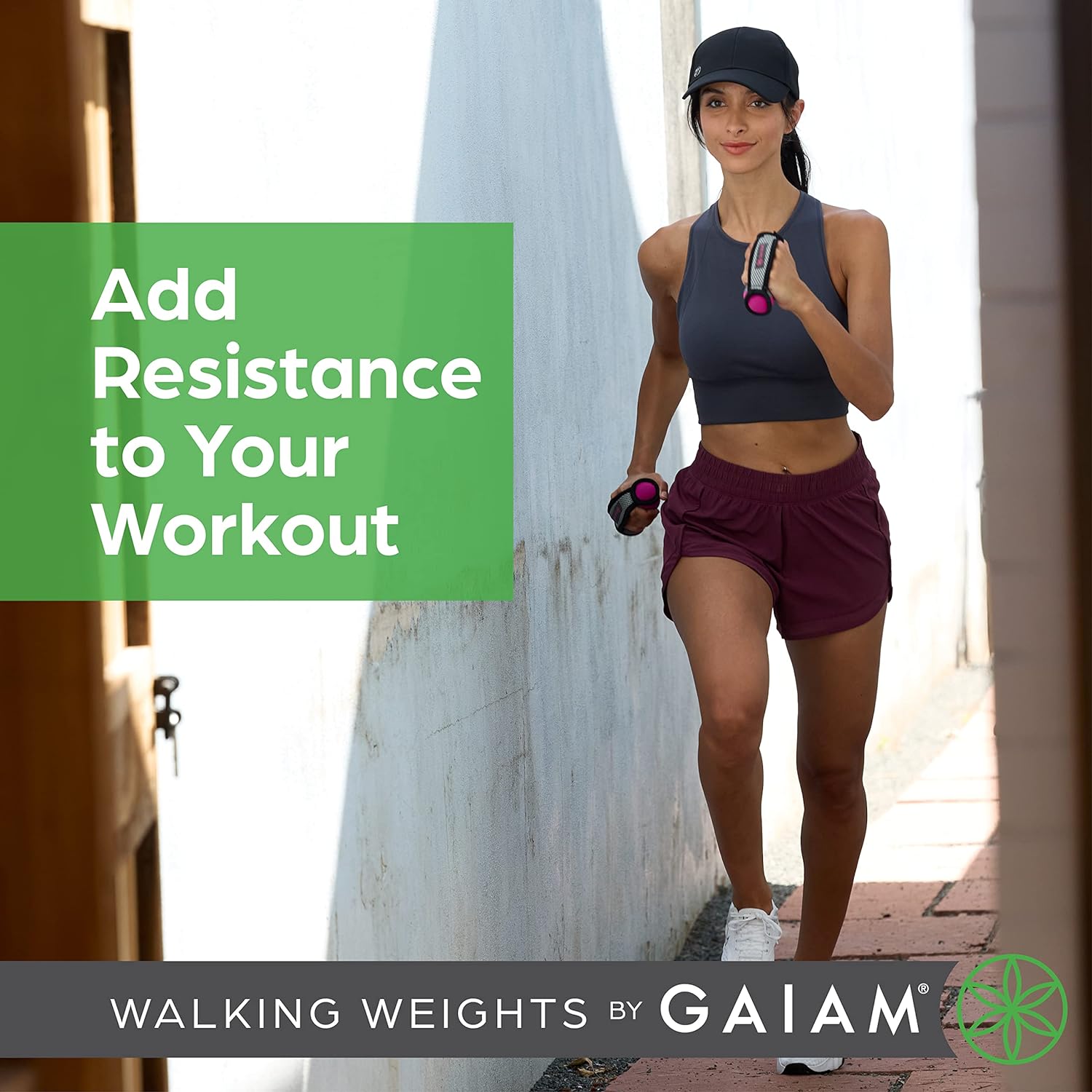
If you’ve ever finished a brisk walk and noticed your hands cramped from gripping small dumbbells the whole time, strap-on soft hand weights exist specifically to solve that problem. The idea is simple: instead of squeezing a handle for 30 or 45 minutes, you slide your hand through a fabric loop or velcro closure — the weight rests across the back of your hand and wrist — so your fingers stay relaxed the entire time. That design shift matters more than it sounds. Grip fatigue is the most commonly cited reason walkers abandon weighted training early, based on aggregated owner feedback across major retail review platforms. This article compares the main strap architectures available in 2026, flags real safety and fit caveats that reviewers have surfaced, and gives you a decision framework — because “which one should I buy” ultimately depends on hand size, intended use, and whether you ever plan to throw them in a washing machine.
Why the Strap Design Is the Whole Product Decision
With a standard neoprene or foam-coated dumbbell, the weight stays in your hand only as long as you keep your fingers wrapped around it. That’s fine for a set of bicep curls. It becomes a liability over a 40-minute power walk, and it’s genuinely problematic for people with arthritis, post-surgical hand weakness, or fibromyalgia — conditions where sustained grip pressure causes pain rather than just discomfort.
Strap-on soft weights shift the load-bearing contact point from your palm and fingers to the dorsal (top) surface of your hand and, depending on the design, your wrist. Verywell Fit, in their article “How to Use Hand Weights While Walking,” notes that this redistribution allows the fingers to move freely — which is why walkers with rheumatoid arthritis and other grip-limiting conditions consistently single out strap designs in long-run reviews as the only format they can use for a full workout duration.
The tradeoff is security and fit precision. A strap that fits one hand size well may feel loose on a smaller hand, which introduces a different risk: the weight shifting during arm swing. That fit variable is where the designs diverge most meaningfully.
The three dominant strap architectures in 2026:
| Architecture | Load contact point | Adjustability | Typical weight range |
|---|---|---|---|
| Velcro wrist strap (over-hand) | Dorsal hand + wrist | Moderate | 1–5 lb per hand |
| Glove-style integrated grip | Palm + dorsal hand | Low-to-none | 0.5–3 lb per hand |
| Zippered soft shell with handle | Palm (optional grip) | None | 1–5 lb per hand |
The Critical Safety Note Every Strap-Weight User Needs to Read First
Before the product breakdown: a use-pattern warning that surfaces in owner reviews and that ACE Fitness addresses directly in their guidance document “Walking With Weights: Benefits and Safety Tips.”
Strap-on hand weights are designed for active arm pumping, not passive arms-at-sides carrying.
When you walk with your arms hanging naturally at your sides — the way you’d carry grocery bags — and add wrist or hand weights to that posture, the load creates a sustained downward traction force on your shoulder joint. ACE Fitness, in “Walking With Weights: Benefits and Safety Tips,” identifies this pattern as a potential contributor to shoulder impingement over time. The population most attracted to strap weights (people managing joint conditions) is also the population most vulnerable to that pattern.
The correct use form is bent-elbow arm pumping — the same mechanics you’d use in race walking or a brisk cardio walk. The weight then becomes part of a controlled swing, not a dead hang. Multiple long-run owners of strap-style weights flag this distinction in their reviews. If your walking form keeps your arms relaxed at your sides for long stretches, lighter weights and deliberate arm-pump intervals are a safer programming choice than simply strapping on and walking normally.
Strap Design Compared: Five Products, Five Use Cases
Gaiam Neoprene Strap Weights — Adjustable Secure Fit for Walkers and Rebounders
Gaiam’s strap weights sit squarely in the velcro-over-hand architecture. Reviewers consistently report a secure fit across a range of hand sizes, with the velcro closure allowing meaningful adjustability. The standout signal in the Gaiam review corpus, though, isn’t about strap quality — it’s the arm-pumping safety cue mentioned above. Multiple long-run owners volunteered that warning unprompted, which suggests Gaiam’s user base skews toward people who’ve already had a physical therapist or trainer walk them through proper form. That’s useful editorial context: this is a product where the instructions matter as much as the hardware.
Gaiam’s velcro closure also earns better marks for rebounder use. Owners who have reported using these on a mini trampoline describe the strap holding position through bounce cycles without shifting — a direct function of the adjustable closure being snug enough to compensate for the brief moments of increased downward force that rebounder landings create.
Best for: Walkers and rebounder users who want meaningful adjustability and a mid-range price point. Watch out for: Following arm-pump form cues; passive arm-hang carry undermines both results and joint safety.
GYMENIST
$19.99
In stock on Amazon
Check price on AmazonSportneer Soft Hand Weights — Long-Term Durability and Washable Covers
Sportneer’s soft set earns a specific callout in this comparison for a feature most budget-tier soft weights ignore entirely: zippered, machine-washable fabric covers. For a product category that spends its time strapped to sweaty hands during sustained cardio, washability is a functional differentiator, not a marketing add-on.
One owner in the review record who deliberately waited several months before submitting their feedback noted that the covers held shape and color through repeated wash cycles, and that the inner fill didn’t shift or clump — the two failure modes that typically degrade soft weights over time. A deferred review like that carries more credibility than a first-week impression, and it’s worth weighing accordingly. Sportneer’s range tops out at moderate weights, keeping it firmly in the walking-and-low-impact lane rather than the strength-training one.
Shape, in their roundup “The Best Hand Weights for Every Kind of Workout,” identifies washability as a consistently underweighted purchasing factor in this category. Sportneer is the clearest answer to that gap in this comparison set.
Best for: Users who prioritize long-term hygiene, frequent washers, and anyone in humid climates or who sweats heavily during cardio. Watch out for: Moderate weight ceiling — not the right choice if you plan to progress toward strength-training loads.
GYMENIST
$19.99
In stock on Amazon
Check price on AmazonRitFit Sub-1-Pound Options — The Right Entry Point for Rehab Protocols
Here’s a segment of the market that larger brands have largely ignored: the under-1-pound range. RitFit’s lightest options fill a genuine product gap that one reviewer specifically called out — their health coach had recommended starting a weighted-arm rehab protocol at sub-1-lb resistance, and the reviewer found no other product on a major retail platform that met that specification.
Verywell Fit, in their article “Progressive Overload: What It Is and How to Use It,” notes that early-stage rehab and deconditioned populations benefit most from very small load increments before advancing to the 1–2 lb entry point most brands treat as their floor. RitFit’s sub-1-lb tier is the right answer for that narrow but real use case. If your starting point is a health professional’s recommendation to begin with almost no added resistance, this is where to look.
Sub-1-lb weights are also the lowest-risk choice for first-time rebounder use with added resistance, since the lower load reduces the consequence of any momentary strap shift during a bounce cycle.
Best for: Rehab protocols starting below 1 lb, highly deconditioned adults, first-time rebounder use with resistance. Watch out for: Limited progression ceiling — plan to size up within weeks to months if strength or cardio conditioning improves.
Gaiam
$17.99
In stock on Amazon
Check price on AmazonAboveGenius Strap Weights — Mid-Range Quality With a Small-Hand Caveat
AboveGenius receives generally positive reviews for build quality and weight distribution, but there is a consistent fit pattern in the female-reviewer segment that this article won’t paper over: the strap runs loose on smaller female hands. Multiple reviewers with smaller hand dimensions describe the weight shifting during arm swings — which, in a product whose entire value proposition is secure hands-free carry, is a meaningful failure mode.
This is a sizing transparency issue, not a quality issue. The strap is the right design for most hands; it simply was not calibrated for the lower end of the female hand-size range. Shape’s “The Best Hand Weights for Every Kind of Workout” notes that strap-fit variance is the primary return driver in this category, and AboveGenius illustrates exactly why.
If your hands are on the smaller side — roughly, if standard athletic gloves feel loose in the fingers — check the strap adjustment range against your hand measurements before committing. For average-to-larger hands, the build quality at this price tier is competitive.
Best for: Average-to-larger hands seeking a solid mid-range strap weight with good weight distribution. Watch out for: Petite or smaller hands; confirm strap minimum dimensions before purchasing.
GYMENIST
$19.99
In stock on Amazon
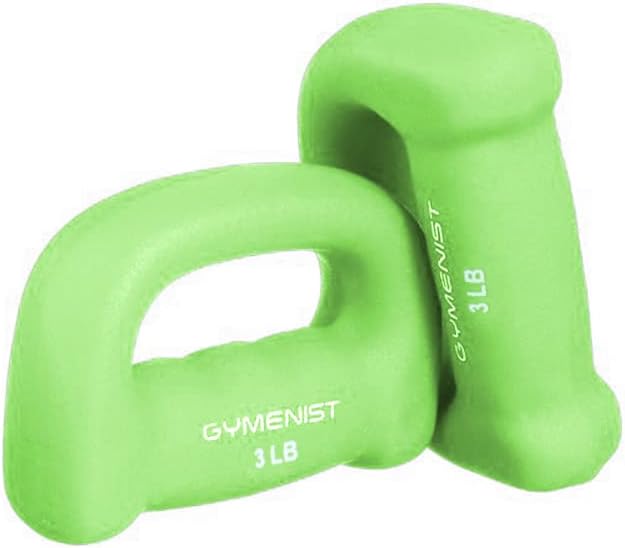
Check price on AmazonGYMENIST Hand-Shaped Grip Weights — Built for Incidental and Passive Movement
GYMENIST’s design takes a different approach: instead of a wrist strap, the weight is molded into a hand-conforming shape that cradles the palm, with a short grip loop rather than a full wrist closure. The weight distribution stays low and centered, which reduces swing torque during relaxed movement.
A reviewer who uses these during television viewing captures a use case that doesn’t get enough coverage in fitness media: incidental or passive exercise. Performing gentle arm movements — overhead reaches, lateral raises, slow curls — during sedentary TV time adds cumulative movement volume without requiring a dedicated workout block. The Arthritis Foundation, in their guidance document “Exercise and Arthritis: A Guide to Staying Active,” identifies exercise accumulation across the day — rather than single concentrated sessions — as a clinically recognized strategy for maintaining joint mobility and muscle activation. GYMENIST’s grip shape is well-suited to that low-intensity, long-duration hold pattern.
Best for: Incidental movement during seated or low-intensity activity; populations who cannot complete dedicated workout blocks. Watch out for: The grip-loop design offers less wrist security than a full velcro strap — not the optimal choice for vigorous walking arm pumps or rebounder use.
Gaiam
$17.99
In stock on Amazon
Check price on AmazonIron-Sand Fill vs. Traditional Weighted Soft Dumbbells — What’s Actually Inside
The practical difference for strap-weight users comes down to two properties:
- Iron-sand fill distributes weight more evenly across the full body of the weight and conforms slightly to hand shape during movement. Reviewers with hand sensitivity consistently prefer this option.
- Traditional core fill (iron plates or cast iron encased in foam or neoprene) is denser and more concentrated, delivering a more stable and positionally predictable feel. Users doing structured arm patterns — walking pumps, rebounder work, step aerobics — often find this easier to control.
Neither fill type is objectively superior. The right answer depends on whether you prioritize tactile comfort (iron-sand wins) or kinesthetic predictability (traditional core wins). Both degrade faster without proper cleaning, which is why washable covers matter regardless of fill type.
Frequently Asked Questions
Are strap-on hand weights safe to use if you have arthritis or grip problems? Yes — the Arthritis Foundation’s “Exercise and Arthritis: A Guide to Staying Active” identifies low-resistance aerobic exercise with minimal grip demand as appropriate for most arthritis presentations, and the strap design directly addresses the grip-pressure problem. Start at the lightest available weight and confirm with your care provider if you have an active flare or recent joint surgery.
What weight should I start with for power-walking arm pumps? Verywell Fit’s “How to Use Hand Weights While Walking” and aggregated walker reviews both point to 1 lb per hand as the standard starting point for deconditioned adults. If a health professional has recommended starting lighter, RitFit’s sub-1-lb options are the only widely available product in this comparison that fills that gap.
Can these be used on a rebounder without flying off? Secure-strap designs like Gaiam and Sportneer hold well for most users. If your hands are smaller and a strap feels loose on a flat surface, it will be loose on a rebounder. Test strap security at rest before bouncing, and start with the lightest available weight for your first rebounder session with added resistance.
How do I wash soft hand weights that get sweaty? Sportneer’s zippered-cover design is the only option in this comparison explicitly built for machine washing. For other soft weights, spot-cleaning with mild soap and air-drying is the standard owner recommendation. Submerging non-washable weights risks degrading the inner fill binding over time.
Is 1–2 lbs actually enough to feel during a workout? For sustained cardio over 20–45 minutes, yes. ACE Fitness’s “Walking With Weights: Benefits and Safety Tips” notes that the cumulative muscular work of carrying even light resistance through thousands of arm cycles is meaningfully different from unweighted walking. The effect is modest caloric and toning; these are not strength-training tools and should not be programmed as substitutes for progressive resistance work.
The Decision Rule
If your primary concern is grip fatigue or hand joint pain: any secure strap design works — prioritize strap adjustability and confirm the closure fits your hand size before the other specs matter.
If you’re starting a rehab protocol at sub-1-lb resistance: RitFit is functionally the only option in this comparison that addresses that use case.
If washability and long-term hygiene are non-negotiable: Sportneer’s zippered covers are the standout choice.
If your hands are smaller than average: approach AboveGenius cautiously until you can confirm strap minimum dimensions match your hand; prioritize Gaiam’s velcro closure or Sportneer’s structured design instead.
If you want to use these on a rebounder: confirm strap security on your specific hand size first; start with the lightest weight available; Gaiam and Sportneer have the better rebounder track record in owner reports.
If you need a weight for incidental, seated, or low-intensity passive movement: GYMENIST’s hand-conforming grip shape is built for exactly that use pattern.
Whatever you choose: use active arm pumping, not passive arms-at-sides carry. ACE Fitness’s “Walking With Weights: Benefits and Safety Tips” makes this point clearly — it is not a brand-specific instruction. It is the use pattern the whole product category was designed for, and skipping it trades the product’s benefits for shoulder risk.