August 8, 2026 • Renata Solís • 9 min reading time • Specs verified June 5, 2026
Strap-On Walking Weights for Cardio That Won't Wreck Your Grip
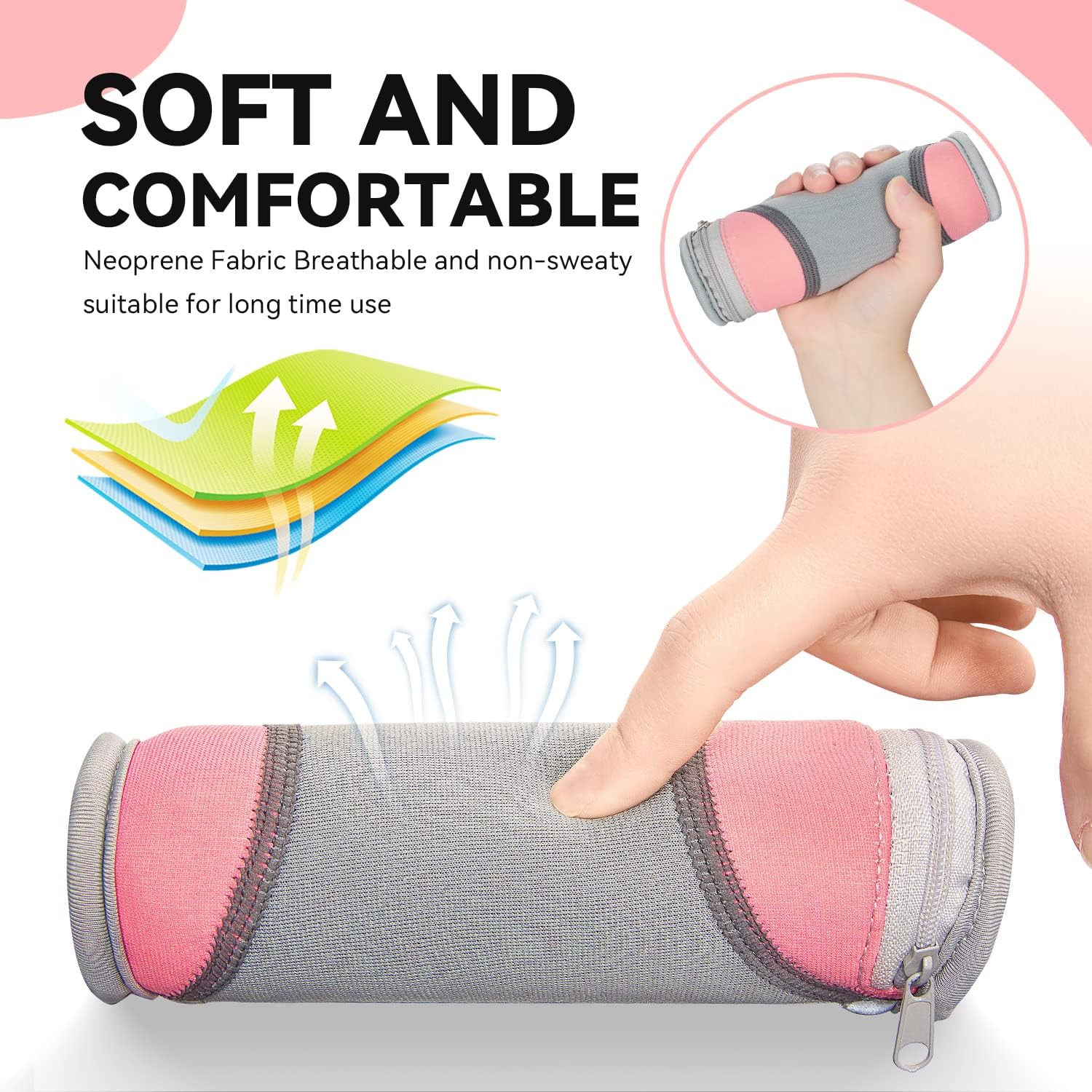
If you’ve ever tried holding a pair of dumbbells — the short, hand-held weights you see stacked on gym racks — through a forty-five-minute walk or aerobics class, you already know the problem: your forearms burn out long before your legs and lungs do. That’s where strap-on walking weights come in. These are wearable resistance accessories — typically fabric cuffs or pouches that fasten around your wrists or ankles with velcro or buckle closures — that let you carry extra load without gripping anything at all. The idea is simple: free your hands, keep the resistance, and let your cardiovascular system (your heart, lungs, and working muscles) do the job you actually want them to do. This guide covers how these products work, what the research-backed fitness community says about using them well, and — if you’re an instructor or coach shopping for multiple units — how to think about the decision as a buying framework rather than a product list.
| EDITOR'S PICKSportneer Hand Weights for Women | Mid-tierGYMENIST Set of 2 Hand Shaped N… | Budget pickGaiam Hand Weights for Women &… | |
|---|---|---|---|
| Set includes | 6 pcs | 2 pcs | 1 pc |
| Weights per piece | 1, 2, 3 lb | 3 lb | — |
| Grip shape | — | Hand-shaped | — |
| Hand strap | ✓ | — | ✓ |
| Material | — | Neoprene | — |
| Color | — | Green | Purple |
| Price | $39.99 | $19.99 | $17.99 |
| See on Amazon → | See on Amazon → | See on Amazon → |
Why Grip Fatigue Is the Real Enemy of Weighted Cardio
Here’s the mechanic worth understanding before you buy anything: grip strength is governed by small forearm flexor muscles that fatigue relatively quickly under sustained, low-to-moderate load. When you hold a half-pound to three-pound hand weight for a forty-five-minute Zumba class or brisk walk, those muscles accumulate fatigue faster than your larger muscle groups — glutes, quads, shoulders — that you’re actually trying to train. The result is that you drop your weights or modify your arm movements well before you’ve hit a meaningful aerobic or muscular stimulus.
ACE Fitness, in their published overview of weighted walking, notes that handheld weights during walking can actually alter natural arm swing mechanics in ways that stress the elbow and shoulder joints over longer distances, particularly at weights above two pounds. The fix isn’t to go lighter — it’s to redistribute the load off the hand entirely.
Strap-on wrist weights solve this by transferring force to the wrist and forearm cuff rather than to the fingers and palm. Ankle weights solve a different but related problem: they add resistance to the leg-swing phase of walking or low-impact aerobics without requiring you to hold anything at all. Both types serve legitimate purposes, but they serve different ones — and conflating them is where most buying mistakes happen.
Wrist Weights vs. Ankle Weights: Name the Tradeoff Before You Buy
The single most useful decision frame here is to identify where in the movement cycle you want to add resistance, because wrist and ankle weights don’t produce equivalent effects on the body.
Wrist weights amplify the work your arms and shoulders do during the swing phase of walking or aerobic choreography. Verywell Fit’s overview of walking-with-weights research summarizes the consensus well: wrist weights of one to three pounds meaningfully elevate heart rate and caloric expenditure during brisk walking compared to walking unloaded, without the joint-stress profile associated with heavier handheld dumbbells. That range — one to three pounds — is where most wrist-strap products live, and it’s appropriate for sustained cardio use.
Ankle weights add inertia to the leg swing and increase the muscular demand on hip flexors, glutes, and hamstrings. Runner’s World has reported that ankle weights above two to three pounds noticeably alter gait mechanics in ways that can accumulate stress at the knee and hip over distance — a meaningful concern for anyone using them on long walks versus short aerobics intervals. The practical ceiling for walking use, based on practitioner community consensus surfaced in reviews and coach-facing publications, sits at two pounds per ankle for sustained sessions, scaling up cautiously for circuit or interval contexts.
The honest tradeoff table:
| Type | Best for | Weight range (cardio use) | Primary risk |
|---|---|---|---|
| Wrist strap | Aerobics, Zumba, arm-swing cardio | 0.5–3 lb each | Shoulder/elbow mechanics if overloaded |
| Ankle strap | Walking, low-impact intervals | 0.5–2.5 lb each | Knee/hip stress above ~3 lb per leg |
| Wrist + ankle combo | Full-body light-cardio circuits | 1–2 lb per limb | Accumulated systemic load; monitor RPE |
What to Actually Look For in a Strap Weight (Without a Lab)
Since no one buying strap weights is going to run biomechanical testing on their purchase, the useful evaluation criteria are the ones that surface reliably across owner reviews and instructor reports. Here’s what the aggregated record points to:
Closure security. Velcro closures are near-universal at the entry tier ($8–$25 per pair), and owners consistently report that hook-and-loop quality varies dramatically. Shape magazine’s roundup of wrist weights specifically flagged closure longevity as the primary failure mode in lower-cost products — velcro that degrades after six to eight weeks of daily sweat exposure. Instructors running multi-session days should weight this heavily: look for double-wrap velcro panels or secondary buckle closures.
Weight distribution. Strap weights come in two basic architectures: a single-pocket design where the weight sits in one discrete mass on the top of the wrist or ankle, and a distributed-fill design where weight material (iron sand, steel shot) is spread across a wider cuff. Owner reports and instructor reviews on fitness educator forums consistently favor distributed-fill designs for long-duration cardio use, citing reduced “shifting and clunking” during dynamic arm movements.
Sweat management. Neoprene cuffs feel secure and are easy to wipe down, but owners in warmer climates and studio environments report significant moisture accumulation under neoprene after twenty minutes of aerobic activity. Terry-lined or mesh-backed designs ventilate better, though they typically require more careful drying after use to prevent odor buildup.
Adjustability and size range. Wrist circumference varies enough across a group fitness class that one-size velcro solutions regularly fail on clients with smaller or larger-than-average wrists. Garage Gym Reviews’ guide to adjustable ankle weights specifically recommends looking for products with at least a four-inch adjustment range to cover the practical spread of adult wrist and ankle sizes in a mixed instructor-client setting.
The Increment Question: Micro-Loading in a Strap Format
For anyone sourcing strap weights as part of a progressive overload program — meaning a systematic plan to gradually increase resistance over time to keep the body adapting — the increment precision of strap weights matters more than the marketing suggests.
Most entry-tier strap weights are fixed at a stated weight (e.g., “1 lb” or “2 lb”), and owner reports across Amazon and fitness retail review boards note meaningful variance between stated and actual weight at the low end of the range: a stated “1 lb” product may actually weigh 0.85 lb or 1.1 lb depending on fill consistency. For casual walking this is irrelevant. For an instructor programming progressive load increases across a six-week client protocol, it’s a real variable.
The segment worth knowing about: several manufacturers now offer strap weights with removable steel bar inserts or modular pocket systems that allow you to increment load in half-pound or quarter-pound steps. These products sit in the $30–$55 per pair range and represent a meaningful value proposition for practitioners who want to move clients from one pound to one-and-a-half pounds without buying a second pair of fixed weights.
By the numbers:
- Entry fixed wrist weights (1–3 lb): $8–$18/pair
- Adjustable insert-style wrist weights (0.5–5 lb range): $28–$55/pair
- Studio bulk sets (6–10 pairs, mixed weights): $90–$180/set
- Per-session break-even on adjustable vs. fixed (at 3x/week): roughly 8–10 weeks
Studio and Instructor Buying: When Per-Unit Cost Yields to Longevity
If you’re buying six to twenty pairs for group use, the calculus shifts entirely away from sticker price. The failure modes that matter at scale are velcro degradation, fill migration (weight material moving to one end of the cuff over time), and closure odor that clients find off-putting in a shared-equipment context.
The practitioner community’s revealed preference — surfaced in instructor forums and fitness educator product discussions — consistently lands on a few principles for institutional purchase:
Buy one step above the entry tier. The $8 pair that holds up fine for a home user doing three sessions a week will show closure fatigue within two to three months of multi-session daily studio use. Products in the $18–$30 single-pair range typically use denser velcro panels and more durable fill enclosures, and owner-operators consistently report they survive the wear cycle that entry-tier products don’t.
Standardize on one weight denomination per cohort. Mixed-weight studio sets sound flexible but create choreography drift — some clients are using one pound, others two, and the instructor loses the ability to cue arm movements uniformly. Most experienced group fitness instructors land on a single weight for a given class level, purchasing enough pairs of that weight to equip everyone and stepping the whole group up when the program calls for it.
Factor cleaning protocol into the spec. Wipe-clean neoprene is the easiest to maintain in a shared context, but as noted above, it traps heat. Fabric cuffs that are machine-washable are increasingly available and address the hygiene concern that neoprene surfaces, at the cost of a longer drying window between sessions.
Decision Rules: If X, Then Y
The pattern in the research and the practitioner record is clear enough to codense into actual decision logic:
If you’re adding wrist weights to existing walking or low-impact cardio for the first time: start at one pound per wrist, fixed denomination, and prioritize fit over brand. Any product with a four-plus-inch velcro adjustment range and a distributed-fill design will serve you. The Shape and Verywell Fit resources both corroborate this entry point.
If you’re programming progressive overload across a multi-week protocol: spend the extra $15–$25 per pair on an adjustable insert-style product. The precision is worth it when you need to document a half-pound increment change.
If you’re running a group fitness class and buying for shared studio use: buy commercial-tier or upper-consumer-tier products at a single target weight, plan for a twelve-month replacement cycle in your per-unit cost model, and spec for wipe-clean closure systems. Budget $18–$30 per pair rather than $8–$12, and the longevity math favors the higher spend before month four.
If a client reports shoulder discomfort with wrist weights during arm-swing movements: drop the wrist weights entirely and shift to ankle weights for that session. ACE Fitness’s guidance on weighted walking specifically flags this swap as the appropriate modification — ankle weights preserve the elevated metabolic demand without loading the shoulder joint chain.
The fundamental case for strap walking weights is sound: they extend the range of load-bearing cardio available to people who can’t or won’t grip a dumbbell for forty-five minutes, and the research backing their efficacy for heart-rate elevation and caloric expenditure is consistent. The buying decision reduces to knowing which failure modes matter for your use context — and choosing the product tier that addresses those before the first pair wears out.