September 28, 2026 • Renata Solís • 10 min reading time • Specs verified June 5, 2026
Weighted Vests for Bone Density and Osteoporosis: What Real Owners Report
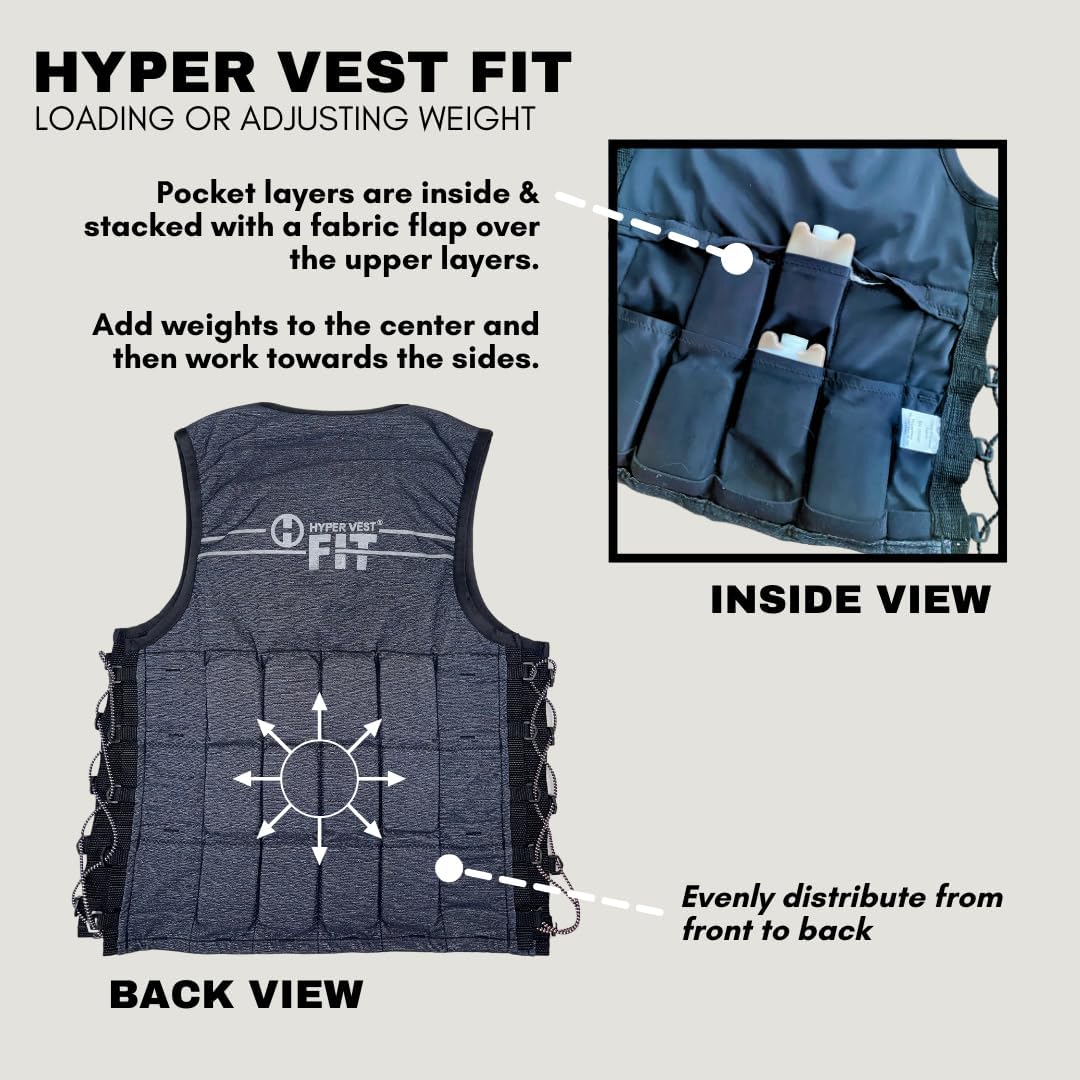
If you’ve been told by a doctor — or read enough about bone health — that adding gentle extra weight to your daily walks might help slow bone loss, you’re already ahead of most people. Bone density (how solid and strong your bones are from the inside) naturally declines with age, and for people with osteoporosis or its early-stage predecessor osteopenia, that decline can accelerate. One evidence-backed strategy is weight-bearing exercise: walking, climbing stairs, or doing light housework while your skeleton carries some extra load. A weighted vest — essentially a padded jacket you fill with small weights and wear during ordinary activity — is a practical way to add that load without changing your exercise routine at all. This article is specifically about how that works in practice: which vests owners are actually using for this purpose, what they love, what surprises them, and what the published research community says about doing it safely.
| EDITOR'S PICKHyperwear Hyper Vest FIT Weight… | Mid-tierEMPOWER Weighted Vest for Women… | Budget pickTB3C Adjustable Weighted Vest W… | |
|---|---|---|---|
| Weight options | 5 lb or 10 lb | 8 lb fixed/4-10/10-16 | 4-10/11-20/20-30 lb |
| Reflective strips | — | ✓ | — |
| Machine washable | ✓ | — | — |
| Chest weights | ✗ | — | — |
| Price | $114.99 | $32.44 | $21.99 |
| See on Amazon → | See on Amazon → | See on Amazon → |
Why the Research Points Toward Weighted Vests Specifically
The Bone Health and Osteoporosis Foundation’s clinical overview on exercise for bone health makes a distinction that matters here: not all exercise is equally useful for stimulating bone remodeling. Impact and load — specifically, the mechanical stress placed on bone — is what triggers osteoblasts (the cells that build new bone) to get to work. Walking is already weight-bearing, which is why it’s almost universally recommended. Adding even a modest vest load multiplies that stimulus without requiring you to change your gait, take on a new skill, or go to a gym.
ACE Fitness’s guide for personal trainers working with clients who have osteoporosis notes an important nuance: the goal for this population is usually to increase bone stimulus while keeping spinal flexion and impact risk low. A vest distributes load across the trunk, which is preferable to loaded carrying exercises that can torque the spine unevenly. Verywell Fit’s overview of weighted vest use confirms the same rationale — proximity of the load to the center of mass keeps gait mechanics relatively clean compared to handheld weights.
Outside Online’s feature on weighted vest training, drawing on sports science literature, puts the effective loading range in practical terms: stimulus appears to accumulate at loads as low as 5–10% of bodyweight for sedentary or older adults, well within the range of a 4–8 lb vest. That’s important context for the owners we’ll discuss below, many of whom started at 4–6 lbs and found even that modest weight more challenging than expected over a full day of wear.
By the numbers:
- Bone Health and Osteoporosis Foundation guidelines suggest weight-bearing activity most days of the week for bone maintenance
- Research cited in Verywell Fit’s overview suggests vest loads of 5–10% bodyweight as a starting stimulus range for older or deconditioned adults
- Barbend’s 2025 weighted vest roundup notes that most daily-use owners report starting at 4–8 lbs and increasing incrementally over 8–12 weeks
What Owners Actually Report: Patterns Across Multiple Vests
The most useful thing about aggregated owner reviews in this category is that buyers are unusually forthcoming about why they bought — and a recurring pattern across multiple vest models is the phrase “my doctor recommended this.” That’s not common in fitness equipment reviews, where motivation usually goes unstated. When someone writes “my rheumatologist told me to add weight to my daily walks,” they’re also telling you what they evaluated the vest on: daily wearability, fit on smaller or older frames, and the absence of pressure points. Performance metrics like max load capacity or plate-change speed are almost irrelevant to this buyer.
On starting lighter than you think you need: Across reviews of every vest in this category, a near-universal pattern emerges — owners consistently underestimate how taxing even 4–6 lbs feels after 45–60 minutes of continuous wear. One reviewer of the BAGAIL weighted vest noted she wears it for HIIT, walks, and bodyweight work without significant issues, but specifically called out that she started lower than she expected to need and was glad she did. This aligns directly with the ACE Fitness guidance that progressive loading — starting conservatively and adding weight in small increments over weeks — is both safer and more effective for bone stimulus than jumping to a higher weight immediately.
On fit for smaller and shorter frames: This is where owner reviews diverge most sharply by vest model. The Hyperwear FIT vest draws concentrated praise from petite owners specifically. One reviewer notes she returned a medium for a small and describes the fit as feeling “like a second skin” — snug against the torso without sliding or shifting during movement. Critically, multiple reviewers of the Hyperwear FIT note that it doesn’t dig into the shoulders or neck during extended wear, which is the primary failure mode that makes other vests unwearable for therapeutic daily use.
The TB3C weighted vest occupies a different but notable space in this segment. Reviewers include a couple aged 78 and 76 who walk a mall daily for bone health and describe the build quality as excellent — that’s a meaningful signal about durability under genuinely daily use by exactly the population this article is for.
On fit for full-busted women: The Empower crisscross-style vest earns specific and repeated praise in this regard. Reviewers note it doesn’t compress the chest and allows full arm range of motion during both walking and household tasks. One reviewer states directly that her doctor prescribed it for house and yard use — making it one of the few vest models with documented clinical recommendation in its review base. The crisscross strap design bypasses the chest entirely, which solves a comfort problem that conventional front-zip vests create for many women.
On chemical odor: Multiple vest lines, including BAGAIL and some Empower variants, receive early complaints about an initial chemical smell from the neoprene or foam materials. Owners consistently report the odor fades after a few days of airing out or a machine wash. It’s a minor friction point at unboxing, not a durability signal.
The Fit and Washability Factors That Separate Daily-Use Vests from Training Vests
There’s a meaningful product distinction that doesn’t get discussed clearly enough: vests designed for performance training (higher max loads, plate pockets, tactical-style construction like MOLLE webbing — that’s the grid of loops you see on military-style vests used for attaching gear) are not optimized for all-day therapeutic wear. For bone density use specifically, two features matter more than any weight spec.
Snug torso contact: A vest needs to sit flush against the body — not dangling, not riding up — to distribute weight evenly and not create repetitive pressure points during extended movement. Reviewers of the Hyperwear FIT consistently note this as its primary advantage for shorter women. The soft construction conforms rather than holds a rigid shape. The BAGAIL vest earns similar praise for even weight distribution and a soft neoprene feel that doesn’t create hot spots during longer sessions.
Machine washability: For a vest worn daily — including during housework, yard work, and mall walking — machine washability is not a nice-to-have. It’s a hygiene requirement. The Hyperwear FIT is explicitly machine washable, and reviewers note this as a critical factor for daily therapeutic use. Not all vests in this segment share that feature; check the care instructions for any vest you’re evaluating.
The Starting-Weight Decision: A Framework for Bone Health Use
If you’re approaching this as a progressive-overload protocol — which is the right frame — the decision rule is simpler than it looks:
Start with the lowest increment the vest allows, wear it for 20–30 minutes of your normal activity, and assess joint comfort (especially shoulders and neck) the following day. The Bone Health and Osteoporosis Foundation’s exercise guidance explicitly cautions against rapid loading increases for people with existing bone loss. A reasonable progression for daily walkers: hold any given weight for 2–3 weeks before adding more. Most vests in this category add weight in 1–2 lb increments.
The “if X, then Y” version:
- If you’re petite, shorter than 5’4”, or returning vests for fit reasons: The Hyperwear FIT small or the Empower crisscross are the two models where owner reviews specifically confirm fit resolution for this frame type.
- If chest compression is a problem: The Empower crisscross design is the only model in this segment with documented reviewer consensus that it solves this problem.
- If daily machine washing is non-negotiable: Confirm washability before purchase; the Hyperwear FIT is explicitly confirmed by reviewers and manufacturer documentation.
- If you’re starting above age 70 with limited exercise history: Start at 4 lbs or below, regardless of what the vest’s max load spec says. Owner reports and ACE Fitness guidance both point toward the same conclusion: the stimulus is real even at low loads, and the adaptation timeline is slower than for younger adults.
Frequently Asked Questions
How much weight should I start with for bone density walking? Owners and exercise physiologists cited by ACE Fitness and Verywell Fit consistently point to 4–6 lbs as a reasonable entry range for adults new to weighted vest use. Many owners report this feels more demanding than expected after 30–45 minutes of continuous wear. Starting lighter and building gradually over 6–8 weeks is both safer and more effective than jumping to a higher load.
Will a weighted vest cause shoulder or neck pain during long daily wear? It can, if the vest shifts or if the shoulder straps aren’t designed for extended contact. The most common complaint pattern in reviews involves vests that ride up or dig in at the shoulder seam. Vests with soft construction that conforms to the torso — particularly the Hyperwear FIT — receive notably fewer of these complaints from daily-use owners.
Which vests fit petite or small-framed women without sliding around? The Hyperwear FIT in small is the model most specifically praised by petite owners for torso-length fit and snug contact. The Empower crisscross vest also earns positive notes for fit on smaller frames, particularly because of its adjustable strap design.
Are any of these vests machine washable for daily use? The Hyperwear FIT is explicitly machine washable and reviewers confirm this as a major factor in daily therapeutic use. The BAGAIL vest’s soft neoprene construction is also noted as easy to clean, though verify the current care documentation before assuming machine-wash compatibility on any specific model.
Can I wear a weighted vest all day while doing housework? Some owners do exactly this — the reviewer who noted her doctor prescribed the Empower vest specifically for house and yard use is the clearest documented example. Most owners in therapeutic-use reviews wear vests for 30–90 minute sessions rather than truly all-day, citing comfort and the cumulative fatigue of even light loads. Starting with shorter sessions and building duration alongside weight is the pattern that works.
Does the vest need to be snug against the body to be effective? Yes, and for two reasons: load distribution and movement efficiency. A vest that sags or shifts puts uneven pressure on specific contact points (usually the shoulders) and can alter gait mechanics. Reviewers who describe the best fit experiences — particularly with the Hyperwear FIT — consistently use language about the vest moving with them rather than against them. Snug contact across the full torso is what makes the weight feel manageable rather than burdensome.