August 7, 2026 • Renata Solís • 13 min reading time • Specs verified June 5, 2026
Weighted Vests for Daily Walking: Comfort and Chafe Reality Check
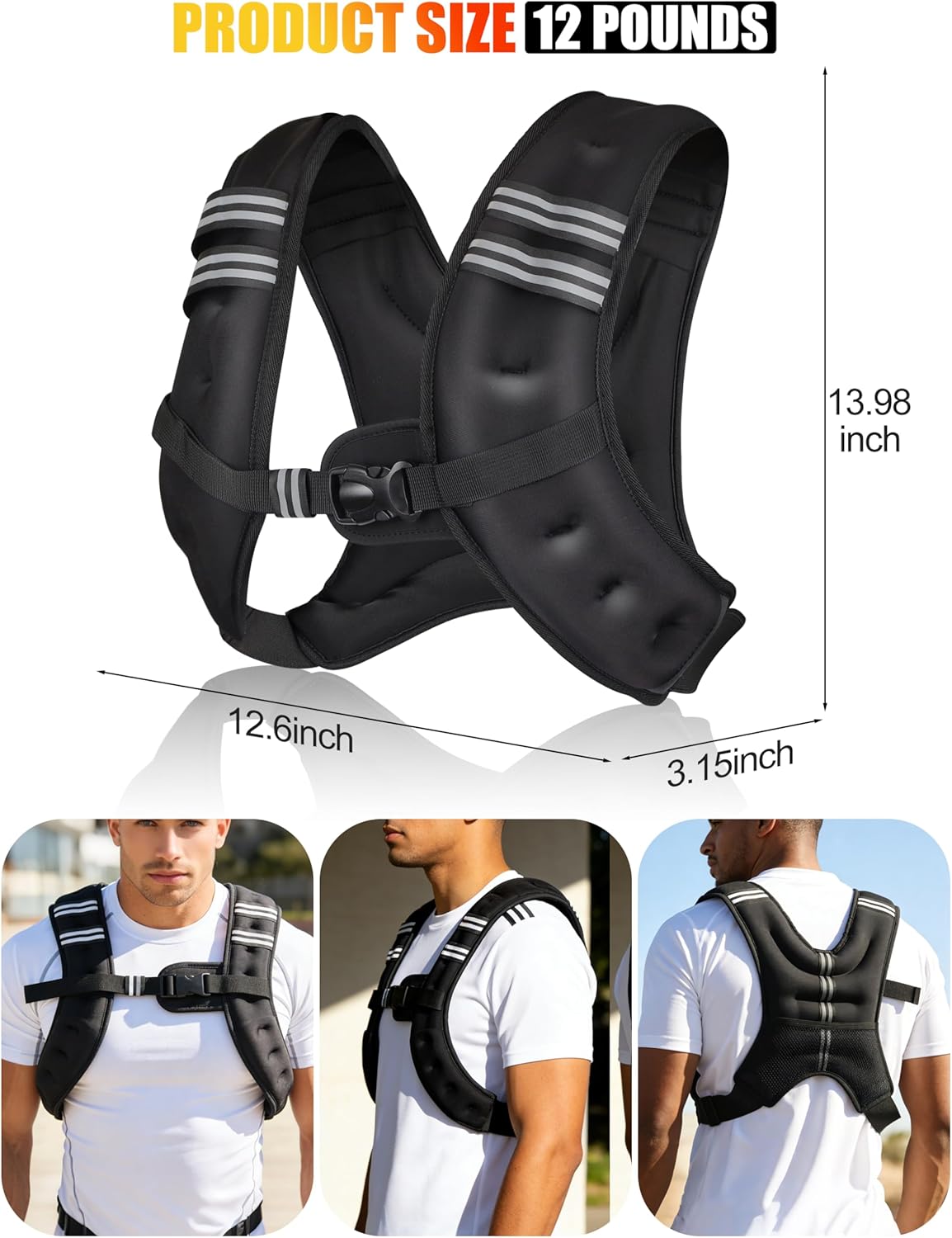
A weighted vest is exactly what it sounds like: a snug-fitting vest — like a sleeveless jacket — that holds small weight plates or sand packets against your torso so your body has to work harder during everyday movement. For walking, the appeal is simple: you cover the same distance, burn more calories, and — this is the part that surprises most people — potentially strengthen your bones over time without stepping into a gym. But “any vest will do” is where new buyers get into trouble. A vest designed for a 20-minute tactical drill behaves very differently on a 45-minute neighborhood loop. It can bounce, chafe, pull your shoulders forward, or arrive smelling like a tire fire. This article breaks down what daily-walking comfort actually requires, names which designs the owner community trusts, and answers the questions that keep showing up in every review thread — so you can pick once and wear it every morning without regret.
| EDITOR'S PICKBAGAIL Adjustable Weighted Vest… | Mid-tierEMPOWER Weighted Vest for Women… | Budget pickHenkelion Weighted Vest Weight… | |
|---|---|---|---|
| Weight range | 4–10 lb | 8 lb fixed / 4–16 lb | 12 lb |
| Weights included | 6 removable | Fixed or 4-in-1 | ✓ |
| Reflective strips | ✓ | ✓ | — |
| Storage pocket | ✓ | — | — |
| Neckline | U-neck | — | — |
| Ideal user | Women | Women | Men, women, kids |
| Price | $39.99 | $32.44 | $14.99 |
| See on Amazon → | See on Amazon → | See on Amazon → |
Why “Walkable” Is a Distinct Vest Category
Most weighted vests on the market are designed around short, intense efforts — HIIT circuits, pull-up ladders, box jumps. Those sessions rarely last longer than 20 minutes, and the wearer is too breathless to notice a little bounce. Walking at a steady 3–4 mph for 30–60 minutes is a completely different stress test. You have time to notice every millimeter of movement, every seam against your underarm, and every gram of weight that wants to slide toward your collarbone.
The owners who figure this out the hard way almost always describe the same failure modes: forward pull, underarm chafe, and vest bounce on heel strike. Let’s name each one precisely.
Forward pull happens when a vest loads more weight on the front panel than the back — or when the front plates are positioned high on the chest rather than distributed across the torso. According to Verywell Fit’s editorial overview titled “How to Use a Weighted Vest for Walking,” front-heavy loading shifts your center of gravity anteriorly, forcing your upper back and neck muscles to compensate over a long walk. Aggregated owner reviews consistently name front-to-back balance as the single biggest factor separating a “walkable” vest from one that causes fatigue. The BAGAIL adjustable vest earns specific praise in this regard — reviewers report that its even front-and-back weight distribution actively improves posture on 3-mile walks compared to rucking with a loaded backpack, which by design loads weight entirely on the posterior.
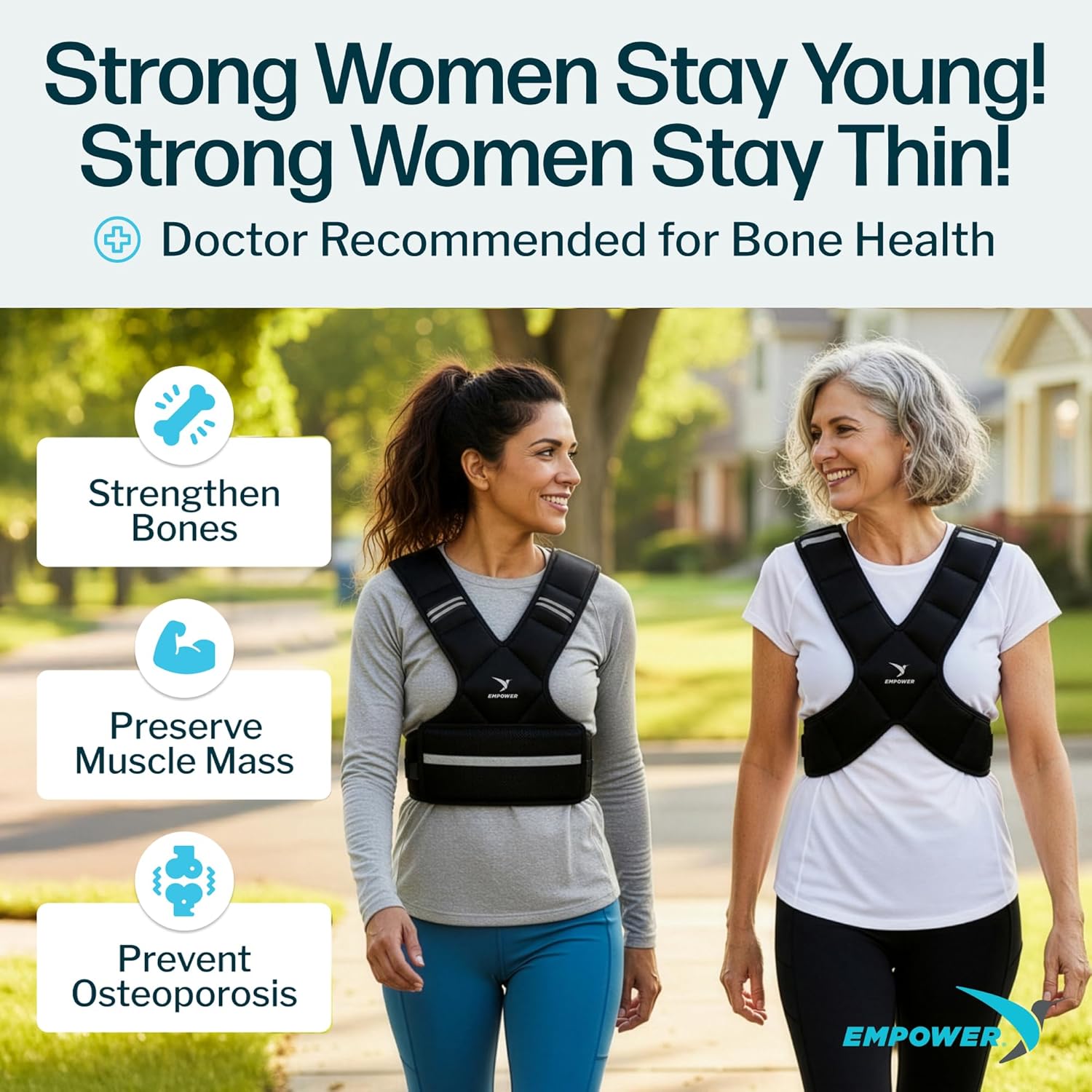
Underarm chafe is the complaint that disproportionately affects full-busted wearers and anyone choosing a boxy, squared-off shell design. The armhole geometry on tactical-style vests — think rigid MOLLE-compatible shells (MOLLE stands for Modular Lightweight Load-carrying Equipment, a grid of webbing loops designed for attaching gear pouches) — is typically cut for a narrow male torso. The EMPOWER X-design vest surfaces repeatedly in full-busted owner reviews as a vest that fits comfortably and does not rub the underarms, a complaint that the same reviewers document against boxy competitors. That is a consistent pattern across independently written reviews, not marketing copy.
Vest bounce on heel strike is an engineering problem: if the shell is too long, too loose at the hem, or loaded with weights that can shift inside their pockets, the vest oscillates with every step. The fix is a combination of snug lower-strap cinching, contoured shell geometry, and fixed (non-removable) weight placement. Sand-fill vests — like the ZELUS Z-Fit — tend to outperform iron-plate vests on bounce because the sand conforms to body shape and distributes inertia across a larger contact patch rather than clunking as a single mass.
The Smell Problem Nobody Puts in the Title
Here is the unsexy truth that shows up in nearly every honest first-impression review: a significant percentage of new weighted vests — particularly iron-sand fill and rubber-coated iron plate designs — arrive with a pronounced chemical or rubber odor. Owners describe it as “burning tire,” “new sneaker factory,” and occasionally “industrial solvent.” It fades, but it can take several days of airing out, and if you’re planning to wear the vest inside or under clothing, the wait matters.
The FUFF vest and the ZELUS Z-Fit receive specific, unprompted praise across owner reviews for arriving smell-free — or close enough that buyers don’t mention it. That is a genuine differentiator when you are buying for daily indoor walking, post-rehab use, or supervised fitness classes where ambient odor is a real concern.
If your vest does arrive smelly, the practitioner-community consensus is: unbox immediately, hang outdoors or near an open window for 48–72 hours, wipe down with a diluted white vinegar solution, and let dry fully before first wear. Do not seal it in a bag to “air out” — that traps the off-gassing instead of dissipating it.
The Bone Density Dimension: What the Medical Community Actually Says
A notable and growing segment of weighted vest buyers are purchasing on doctor’s recommendation — specifically for bone density maintenance and post-surgery rehab. ACE Fitness, in its published article “Weighted Vest Training: Benefits and Risks,” notes that impact loading — the mild skeletal stress created by walking with added weight — is one of the stimulus types associated with bone mineral density maintenance, particularly in post-menopausal women and older adults in supervised programs. Shape, in its editorial piece “Is Walking With a Weighted Vest Worth It?,” similarly flags this as a growing clinical use case.
What these buyers need is different from what a Zumba instructor needs. They are not chasing maximum load — they are chasing consistent, tolerable, daily compliance. Vest weight for this population typically falls in the 5–10% of bodyweight range per general practitioner guidance (confirm with the prescribing physician; the range varies by individual bone health status). Comfort is not a luxury feature for this group — it is the mechanism by which the therapy actually works. A vest that causes shoulder strain or chafe gets taken off. A vest that disappears on the body gets worn.
The ZELUS Z-Fit’s reported ability to be worn under clothing is specifically relevant here: multiple owners call it out as a benefit for maintaining a normal appearance during rehab-prescribed walking programs, including commutes and grocery runs where a visible tactical-looking vest would feel conspicuous.
Comparison: Three Vest Profiles for Daily Walking
Garage Gym Reviews, in its buyer’s guide “Best Weighted Vests,” and Outside Online, in its gear feature “The Best Weighted Vests for Every Kind of Workout,” both note that vest shoppers consistently underestimate how much use-pattern matters when choosing between designs. The three profiles below represent the clearest divisions in the daily-walking category.
Best for Posture-Focused Walkers: BAGAIL Adjustable Weighted Vest
The BAGAIL adjustable vest is built around bilateral weight distribution — equal load on the front and back panels — which is the single attribute owner reviewers return to most often when evaluating walkability over 3-plus miles. Compared to rucking with a loaded backpack, which trains a posterior lean, a front-and-back loaded vest forces bilateral torso engagement and actively supports upright posture over the duration of a long walk. Adjustable straps at the chest and waist allow the shell to conform to a range of torso lengths without the hem riding up during the gait cycle.
This is the pick for walkers whose primary complaint is upper-back fatigue and forward shoulder rounding on longer routes.
EMPOWER
$32.44
In stock on Amazon
Check price on AmazonBest for Full-Busted Wearers and Chafe-Prone Torsos: EMPOWER X-Design Weighted Vest
The EMPOWER X-design vest earns its reputation almost entirely on armhole geometry. Boxy tactical shells are engineered for a narrow male torso; the armhole opening sits in the wrong position for a wider chest or a fuller bust, creating contact pressure on the underarm with every arm swing. The EMPOWER’s contoured shell repositions the armhole cutout to reduce that contact, and the pattern surfaces consistently in independently written owner reviews from full-busted wearers who had previously abandoned other vests due to chafing.
This is the pick for anyone who has historically struggled with vest fit and has chalked it up to “vests just don’t work for my body” — the problem is armhole geometry, not your body.
EMPOWER
$32.44
In stock on Amazon
Check price on AmazonBest for Rehab and Medical-Prescribed Walking Programs: ZELUS Z-Fit Weighted Vest
The ZELUS Z-Fit earns its place in the rehab-and-bone-density segment on three attributes that matter specifically to that population: sand fill, low arrival odor, and under-clothing wearability. Sand fill conforms to the body and resists bounce better than loose iron plates on heel strike, which matters when the wearer is walking daily rather than training intermittently. The low odor at arrival — confirmed by multiple unprompted owner reviews — makes it viable for indoor clinical settings and home rehab without a long off-gassing wait. And its low visual profile under a light jacket allows wearers to maintain a normal appearance during commutes, grocery runs, and other daily activities where a tactical-looking vest would feel conspicuous.
Per ACE Fitness’s guidance and the general framework in Verywell Fit’s editorial overview “How to Use a Weighted Vest for Walking,” anyone using a vest for medical reasons should confirm target weight with their prescribing physician rather than applying a general editorial guideline.
Henkelion
$14.99
In stock on Amazon
Check price on AmazonBy the Numbers: Comfort Factors at a Glance
| Factor | Why It Matters for Daily Walking | Vest Designs That Owners Flag |
|---|---|---|
| Front-to-back weight balance | Prevents forward posture pull over 30+ min | BAGAIL adjustable, EMPOWER X |
| Armhole geometry | Reduces underarm chafe on full busts / wider torsos | EMPOWER X |
| Sand vs. iron plate fill | Sand conforms, reduces bounce on heel strike | ZELUS Z-Fit |
| Odor on arrival | Critical for indoor / under-clothing use | FUFF, ZELUS Z-Fit praised for low odor |
| Machine washability | Hygiene compliance for daily users | Check individual shell care tags |
Decision Framework: Matching the Vest to the Walk
At the intermediate-practitioner level, you are past the “just get any vest” stage. You have a specific use pattern in mind — probably a daily walk of 20–60 minutes — and you want to match the vest to the use, not retrofit your use to the vest you happened to buy. Here are the explicit tradeoffs:
If your priority is posture correction and you walk 3+ miles: The BAGAIL adjustable vest’s front-and-back load distribution is the attribute reviewers keep returning to. The comparison to rucking backpacks is instructive — a vest that loads weight on both panels forces bilateral engagement rather than training a posterior lean.
If you are full-busted or have historically had armhole chafe with vests: The EMPOWER X-design’s armhole geometry is the differentiator the community names. Boxy tactical shells are not designed for this body; the EMPOWER is.
If you are purchasing on medical recommendation for bone density or post-surgical rehab: Comfort compliance is your primary metric, not load capacity. The ZELUS Z-Fit’s sand fill, low odor reports, and under-clothing wearability make it the most consistently recommended option in this segment of the owner community. Start at the lower end of your prescribed weight range and build tolerance before increasing load.
If odor is a disqualifying factor for your use environment: The FUFF and ZELUS Z-Fit have the cleanest arrival-odor track records in aggregated owner reports. For any other vest, budget 48–72 hours of outdoor airing before first use.
If you plan to machine wash the vest regularly: This is a shell-material question, not a brand question. Check the care label before purchase — rubber-coated iron plate vests almost universally prohibit machine washing because the coating degrades, while fabric-shell sand vests more commonly allow gentle machine cycles. Outside Online’s gear feature “The Best Weighted Vests for Every Kind of Workout” notes this as a common post-purchase frustration among buyers who did not check before ordering.
Frequently Asked Questions
How heavy should a weighted vest be for daily walking without hurting your back? The general guidance cited in Verywell Fit’s editorial overview “How to Use a Weighted Vest for Walking” and echoed in ACE Fitness’s published article “Weighted Vest Training: Benefits and Risks” is to start at 5–10% of your bodyweight and only increase load when that weight feels unremarkable on a full walk. For a 150-pound person, that is 7.5–15 lbs. If you are walking daily rather than occasionally, err toward the lower end of that range initially — cumulative spinal load across seven walks per week adds up faster than most buyers expect.
Will a weighted vest bounce or shift during a 30-minute walk? It depends on fill type and strap adjustment. Sand-fill vests like the ZELUS Z-Fit conform to the body and resist bounce better than loose iron plates. Any vest — regardless of fill — will shift if the lower straps are not cinched properly. Snug but not compression-tight is the right feel at the waist and lower chest. If you can grab the hem and pull it away from your body more than an inch, tighten up.
Which vests are safe to machine wash? There is no universal answer — it varies by shell material and fill type. Fabric-shell sand vests are more likely to be machine-washable on a gentle cycle; rubber-coated iron plate vests generally are not. Check the care label on the specific vest before purchasing if washability is a priority.
Can a weighted vest help with bone density, and what weight do doctors recommend? Per ACE Fitness’s article “Weighted Vest Training: Benefits and Risks,” impact-loading activities — including weighted walking — are associated with bone mineral density maintenance. The weight prescription varies significantly by individual. Anyone purchasing for bone density on medical advice should follow their prescribing physician’s specific guidance rather than a general editorial guideline.
How do I get rid of the smell when a new vest arrives? Unbox immediately, hang outdoors or in strong ventilation for 48–72 hours, and wipe down with diluted white vinegar if the odor is strong. Avoid sealing the vest in any enclosed space during this period. The FUFF and ZELUS Z-Fit are the designs owner reviews most often cite as arriving with minimal odor.
Is there a vest that fits well on a petite or plus-size frame without gapping? Fit is the most underserved spec in the vest category — most shells are sized for a medium male torso. The EMPOWER X-design earns consistent praise from reviewers across a wider body-size range, particularly for its armhole geometry. For petite frames, look for adjustable straps at both the chest and waist, and prioritize vests with a shorter overall length so the hem does not extend past the hips and cause ride-up during the gait cycle. For plus-size frames, maximum strap extension measurements — not just “fits up to X lbs” marketing language — are the spec to request from the manufacturer before ordering.
The core takeaway: daily walking stress-tests vest comfort in ways that a 15-minute HIIT circuit simply does not reveal. Front-to-back weight balance, armhole geometry, fill type, and odor on arrival are the four variables that determine whether you actually wear the vest every morning — or whether it becomes expensive closet furniture. Match the vest to the walk, not the marketing photo.