September 22, 2026 • Renata Solís • 10 min reading time • Specs verified June 5, 2026
Weighted Vests for Women With Larger Chests: Fit, Comfort, and What Actually Works
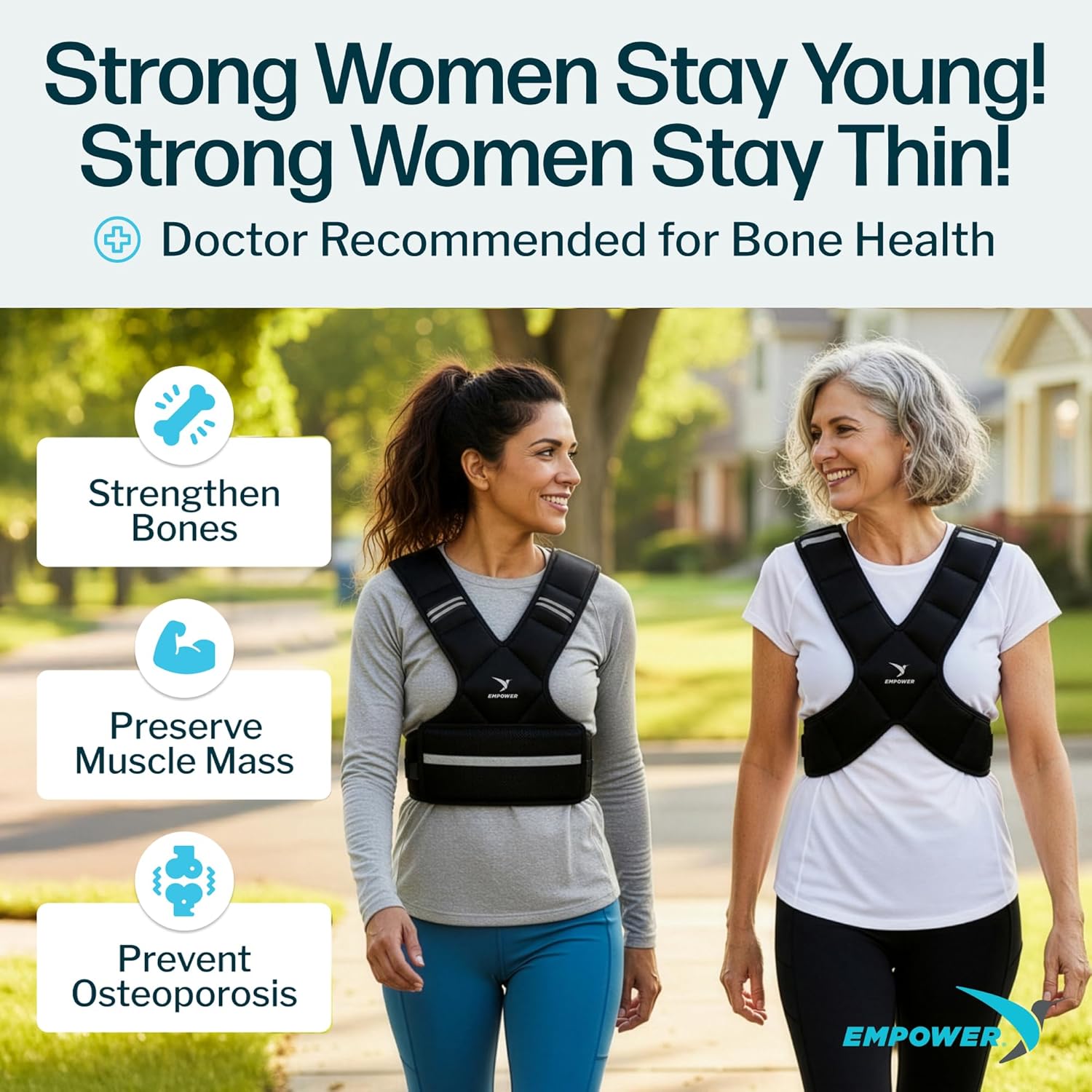
A weighted vest is exactly what it sounds like: a close-fitting garment — somewhere between a tactical carrier and a padded jacket — that holds small iron or sand weights against your torso so your body has to work harder during walking, bodyweight exercises, or cardio. Adding even five to ten pounds of load (the resistance the vest creates) can meaningfully increase calorie burn, bone-loading stimulus, and muscular demand without changing your routine at all. That sounds simple. The catch is fit — and for women with a larger or fuller bust, fit is where most vests fail before the first workout is finished. This guide is written specifically for that shopper: someone who already understands why she wants a vest and is now trying to figure out which one won’t gap at the chest, dig under the arms, or require a return within a week.
| EDITOR'S PICKEMPOWER Weighted Vest for Women… | Mid-tierEMPOWER Weighted Vest for Women… | Budget pickTB3C Adjustable Weighted Vest W… | |
|---|---|---|---|
| Adjustable range | 4–10 lb (4-in-1) | 4–10 lb (4-in-1) | 4–10 lb |
| Fixed option | 8 lb | 8 lb | ✗ |
| Fixed weight | 8 lb | 8 lb | — |
| Reflective strips | ✓ | ✓ | — |
| Colors | — | — | Black |
| Price | $69.95 | $32.44 | $21.99 |
| See on Amazon → | See on Amazon → | See on Amazon → |
Why Fit Is the Whole Game for Fuller Busts
Most weighted vests are engineered around a male torso template — a relatively flat chest, a tapered waist, and narrower hips. The standard panel-style vest (a solid front slab with a back slab, joined at the shoulders and sides) can work fine on that geometry. On a woman with a D-cup or larger chest, the same design creates predictable problems: the front panel sits proud of the body rather than lying flat, creating pressure points at the underarm edges and gaps at the sternum that let the vest shift side-to-side during movement.
The practical consequence isn’t just discomfort. A shifting vest redistributes weight unevenly, which undermines the core reason you bought it. ACE Fitness, in their overview of weighted vest training, notes that consistent load distribution is essential for the cardiovascular and musculoskeletal stimulus to work as intended — a vest that rides up or rotates is delivering inconsistent resistance, not a clean overload stimulus.
Reviewers in the owner community have made this exact translation from theory to lived experience. Multiple purchasers of the EMPOWER weighted vest specifically identify as “full-busted” in their reviews and single out the X-shaped cross-chest strap design as the reason the vest doesn’t rub under the arms. The X-design routes the load-bearing straps diagonally across the chest rather than in a straight horizontal line, which accomplishes two things: it follows the natural contour of a fuller bust, and it anchors the vest at the sternum and shoulders simultaneously, limiting the lateral drift that causes armpit chafing on panel designs.
This is one of the most concrete, repeatedly corroborated fit claims in the entire weighted vest review corpus — not marketing copy, but a pattern that shows up across independent buyer reviews over multiple purchase cohorts.
The Design Architectures That Actually Work (and Why)
X-cross and diagonal-strap vests are the most consistently praised category among full-bust reviewers. The geometry is the mechanism: diagonal straps can bridge over breast tissue rather than compressing across it, and the anchor points sit higher on the chest and lower on the ribs, avoiding the zone where chafing most commonly occurs.
Adjustable side-cinch vests are the second viable category. Vests that cinch at the sides — rather than relying purely on front-panel rigidity — can be tightened after the vest is seated correctly on the chest. The ZELUS Z-Fit draws a notable narrative from reviewers who specifically went through several vests before landing on it: the “Goldilocks” framing that appears in owner reviews describes a vest that, after adjustment, neither compresses the chest uncomfortably nor gaps enough to shift. That cinch-to-fit functionality is doing real work for a body type that most vest sizing charts aren’t built to accommodate.
Contoured front panels — meaning a front section that is cut with a slight outward curve rather than a flat slab — appear in higher-end vests and make a detectable difference. The TB3C vest draws reviews from owners with chest measurements in the 40D range who confirm fit with room to expand during exertion (chest expansion during cardio breathing is a variable that most buyers don’t anticipate, but it matters).
Standard rigid panel vests are the design to approach with caution. They are the most common style and the most likely to gap at the sternum, compress across the chest uncomfortably, or shift laterally. This doesn’t mean they never work — but without trying one on first, the return risk is high for full-bust shoppers.
By the Numbers: What the Review Record Shows
| Vest / Design Type | Full-bust reviewer pattern | Key fit callout |
|---|---|---|
| EMPOWER (X-cross) | Multiple D+ reviewers confirm no armpit rub | Diagonal strap geometry named explicitly |
| ZELUS Z-Fit (adjustable cinch) | “Goldilocks” narrative after 3+ vest attempts | Side cinch allows post-placement adjustment |
| TB3C (contoured panel) | 40D reviewer confirms fit with expansion room | Contoured front, not flat panel |
| FUFF (lightweight wrap) | Petite + full-bust reviewer: no armpit or chest rub | Wrap-style eliminates rigid edge pressure |
Verywell Fit’s overview of weighted vest walking notes that for general health and bone-loading benefits, vests as light as 5–10% of body weight are sufficient — meaning a lighter, better-fitting vest worn consistently will outperform a heavier, poorly-fitting vest that gets abandoned.
The Bone Density Angle — and Why It Changes the Calculus
At least one BAGAIL vest reviewer explicitly names bone density as the underlying reason for switching to a weighted vest, rather than general fitness or calorie burn. This is worth unpacking because it shifts the fit-vs-weight tradeoff.
Bone density stimulus — specifically, the kind of mechanical loading that prompts the skeleton to maintain or increase mineral density — requires consistent, sustained load applied through walking or weight-bearing movement. The research base, summarized in Verywell Fit’s bone health resources, points to regularity and load contact time as the primary variables, not peak weight. A vest you wear for 45-minute daily walks three to five times per week, because it fits without discomfort, delivers more total bone-loading stimulus than a heavier vest you wear twice before the chafing wins.
For this buyer — the one motivated by long-term skeletal health rather than performance metrics — the decision frame is simple: fit is the primary filter, and weight is secondary. Start light (five to ten pounds), confirm the vest stays put and doesn’t create pressure points during a full range of motion, and add weight incrementally from there.
Garage Gym Reviews’ weighted vest roundup reinforces this framing for the general fitness buyer: the reviewers consistently note that new vest users underestimate how much even a modest load changes daily activity, and that starting too heavy is a common reason buyers stop using vests within the first month.
How to Measure Yourself When Listings Only Show Chest Circumference
Most vest listings show a single chest circumference range — “fits 32”–44” chest,” for example — which tells you almost nothing useful if you’re shopping for fit over a full bust. Here’s a practical measuring sequence:
1. Measure your full-bust circumference. Wrap a soft tape measure around the fullest part of your chest, parallel to the floor. This is the number most vest listings are referencing when they say “chest circumference.”
2. Measure your underbust circumference. This is the measurement around your ribcage directly beneath your bust. If a vest has a lower band or cinch point, this number matters more than your full bust.
3. Note the difference. A large difference between full-bust and underbust (5 inches or more) signals that a flat-panel vest will almost certainly gap at the sternum. Look specifically for X-design or wrap-style options.
4. Check for side-strap adjustability. If the listing shows a side-cinch or side-buckle, that’s a signal the vest can accommodate your full-bust circumference at the front while the side cinch is tightened to prevent shifting.
5. Check the weight pocket placement. Front-weighted vests concentrate load directly on the chest; side-distributed or evenly-split designs allow the vest to sit higher on the sternum, above the fullest part of the bust, which reduces compression.
Barbend’s weighted vest guide notes that for women in particular, checking whether front pockets sit above or across the bust is a step most buyers skip and most regret skipping.
Wearing a Vest Over or Under Clothing
A genuine concern that appears in the review record — and that deserves a direct answer — is whether a vest can be worn under regular clothing if you’re self-conscious about the look. The practical answer is that lightweight wrap-style and low-profile vests (the FUFF vest is one that reviewers specifically describe as low-profile) can be worn under a loose layer for walking. Heavier vests with rigid weight pockets are not realistically concealable.
Shape’s weighted vest roundup notes the emergence of more fashion-neutral colorways and slimmer profiles in the mid-range vest category as of 2025–2026, which has expanded the practical options for women who want to walk in public without the vest reading as tactical gear. This is a legitimate design evolution, not a trivial cosmetic one: if the visual profile of a vest is a reason women avoid using it, a lower-profile design removes that barrier.
Frequently Asked Questions
Will a weighted vest compress or flatten my chest during exercise? It depends entirely on the design. Rigid panel vests with no front contour or side adjustment can press across the chest, especially as your breathing deepens during cardio. Wrap-style, X-cross, and side-cinch designs are specifically noted by full-bust reviewers as avoiding this. If compression is a concern, prioritize vests with adjustable side straps and avoid front-loaded panel designs.
How do I know if a vest will rub under my arms before buying? Look for two signals in the listing: whether the strap or panel edge terminates at the armpit, and whether the front panel is wide or narrow. Wide front panels on standard vests almost always produce armpit contact on a fuller bust. The EMPOWER’s X-cross design and the FUFF’s wrap design are both specifically credited in owner reviews for eliminating armpit contact — these are the design categories to search within.
Can I wear a weighted vest over or under regular clothing if I am self-conscious? Low-profile and lightweight vests can realistically go under a loose layer for walking. Heavy vests with rigid pockets are not concealable. If this matters to you, filter for vests under 15 lbs with a slim profile and neutral colorway.
What is the lightest adjustable starting weight that still provides a noticeable benefit for walking? Verywell Fit’s walking and weighted vest resources point to 5–10% of body weight as the threshold where most people notice a difference in cardiovascular effort. For a 150-pound person, that’s 7.5–15 lbs. A vest that starts at 4–6 lbs and adds weight in 1–2 lb increments lets you build to that threshold while confirming the vest fits before you commit to heavier use.
Is the X-shaped vest design actually better for larger busts than a standard panel vest? Based on the review record, yes — consistently. The X-design routes straps diagonally, which accommodates breast tissue rather than compressing across it, and anchors the vest at multiple points to prevent lateral shifting. Multiple independent reviewers with full busts name this geometry as the specific reason the vest works where others didn’t.
How do I measure myself correctly for a weighted vest when the listing only shows chest circumference? Take three measurements: full-bust (around the fullest point), underbust (directly under the bust), and the difference between them. A difference of five inches or more means a flat panel will almost certainly gap. Bring your underbust measurement to the side-strap range if the listing provides one — that’s the number that predicts actual secure fit, not the full-bust maximum.
The right weighted vest for a full bust isn’t a compromise — it’s a design match. The review record is clear enough that the decision framework is straightforward: if you are a D-cup or larger, filter first for X-cross, wrap-style, or adjustable side-cinch designs, confirm the front pocket placement sits above rather than across your bust, and start at a weight you can wear comfortably for 45 minutes before adding load. A vest that fits is the one that gets used — and consistent use is the entire point.